



Oregon Health & Science University researchers found sensitive caregiving in infancy can offset ADHD risk linked to higher maternal inflammation in pregnancy, a new study shows.
Oregon Health & Science University researchers found sensitive caregiving in infancy can offset ADHD risk linked to higher maternal inflammation in pregnancy, a new study shows.
A Look at PBM Reform and Transparency: Payer, Provider and Patient Impact
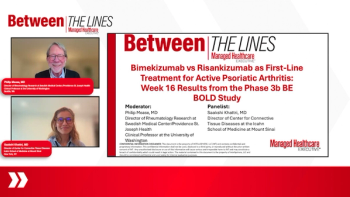
In this installment of the Managed Healthcare Executive Between the Lines series, Philip Mease, MD, of Swedish Medical Center, Providence St. Joseph Health, and the University of Washington, walks through the actual 16-week efficacy and safety results from the BE BOLD head-to-head trial of bimekizumab versus risankizumab in active psoriatic arthritis.

Aligning payer criteria with the FDA label, rather than the trial's narrower enrollment rules, may determine how many patients with this costly, progressive disease actually gain access to treatment.
The FDA label reaches further than the pivotal trial's inclusion criteria, and DUPLEX's own subgroup data reveals where the treatment effect holds strongest and where it does not.
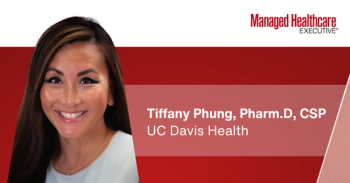
Tiffany Phung, Pharm.D., CSP, of UC Davis Health, discusses an alternative approach to clinical research and practice improvement ahead of HSES 2026.
Continuing the Managed Healthcare Executive Between the Lines series, moderator Philip Mease, MD, of Swedish Medical Center, Providence St. Joseph Health, and the University of Washington, and guest Saakshi Khattri, MD, of the Icahn School of Medicine at Mount Sinai, shift from the broader disease burden discussion to how biologics are actually being used in practice today, before laying out the design of the BE BOLD trial.

Will Carroll, Pharm.D., chief pharmacy officer at Sutter Health, discusses strategic priorities and his vision for specialty pharmacy growth.

Joseph Savasta, founder and CEO of pharmacy benefit manager HarmonyRx, discusses why the company keeps rejecting acquisition offers amid PBM consolidation.

Patel, senior vice president of trade relations and supply chain at MedImpact, discusses his career path and current responsibilities. at MedImpact.

Robyn S. Crosson, J.D., VP of government relations at Navitus Health Solutions, has won the PBMI Innovators Award for her work advancing transparency in pharmacy benefits.
A closely watched safety profile and a REMS program built for vigilance define how clinicians should approach monitoring patients starting on this dual receptor antagonist.
A missed primary endpoint obscured a proteinuria signal strong enough that regulators reconsidered what counts as meaningful evidence in FSGS, a recalibration with real implications for future trial design.

Ashley Holzworth-Nash, Pharm.D., head of product strategy and solutions at Evernorth, discusses her path from the pharmacy counter to shaping care models.

Raechele McMahan of Prescryptive Health says a cancer diagnosis at 17 and her son's type 1 diabetes made health care access personal before professional.

Patrick Gleason, Pharm.D., of Prime Therapeutics was named a 2026 PBMI Innovator for his work on cost-effective formulary strategy and real-world evidence generation.

Under CMS's new Medicaid work rule, a qualifying medical condition alone won't exempt enrollees. They must also show impairment in a daily living activity.

David Chen, Pharm.D., of Kaiser Permanente discusses how PBM reform could speed biosimilar adoption and lower drug costs.
Welcome back to another Managed Healthcare Executive Between the Lines series. In this opening episode, moderator Philip Mease, MD, Director of Rheumatology Research at Swedish Medical Center, Providence St. Joseph Health, and Clinical Professor at the University of Washington, is joined by Saakshi Khattri, MD, Director of the Center for Connective Tissue Diseases at the Icahn School of Medicine at Mount Sinai, to lay the groundwork for a discussion on the BE BOLD head-to-head trial of bimekizumab versus risankizumab in active psoriatic arthritis (PSA).
Eric Levine, M.P.H., principal at Avalere Health, explains why a diagnosis alone won't exempt someone from the Medicaid work requirements that go into effect in 2027.
CMS's new interim rule sets an 80-hour monthly work requirement for many Medicaid enrollees but leaves states some latitude on setting medical exemptions and verification processes.
Behind sparsentan's approval sits a trial built on stringent inclusion criteria and evolving endpoint science, raising hard questions about which real-world FSGS patients the data actually represents.
As sparsentan enters practice, corticosteroids and RAS inhibitors retain a role for select patients, while clinicians weigh how and when to transition existing therapy toward the newly approved option.
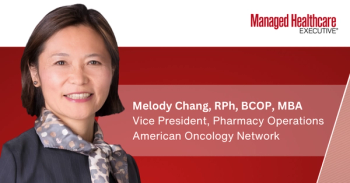
Melody Chang, RPh, BCOP, MBA, of the American Oncology Network, discusses building outpatient infrastructure for bispecific antibody and CAR-T therapy.

Tufts researcher James Chambers, Ph.D., says IRA’s Medicare price negotiation program should target drugs that are unlikely to face biosimilar competition.

The Great 340B Debate

AVAC's Mitchell Warren argues PEPFAR and the Global Fund’s goal to reach 3 million people with lenacapavir PrEP by 2028 is far too small and too slow.
The move toward integrating HIV services with other healthcare services was already underway before the PEPFAR cuts, says Warren, executive director of AVAC.
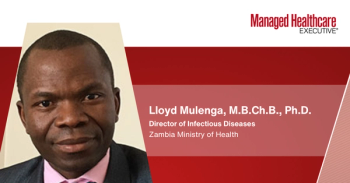
Zambia's Lloyd Mulenga, M.B.Ch.B., Ph.D., says U.S. funding cuts pushed African governments toward domestic financing, but he fears for HIV prevention.
Zambia's infectious disease director says data and specimen sharing, not mineral rights, are what's holding up its still-unsigned U.S. health memorandum of understanding.