



In this interview, Luis Ortiz, M.D., explains how burdensome a narcolepsy diagnosis can be for a patient and why listening to their experiences helps shape new guidelines and treatments.
In this interview, Luis Ortiz, M.D., explains how burdensome a narcolepsy diagnosis can be for a patient and why listening to their experiences helps shape new guidelines and treatments.

Julie Kendle, Pharm.D., senior director of clinical pharmacy at IPD Analytics, explains how managed care organizations can support patients at risk of HIV.

Brian MacDonald, Pharm.D., of Prime Therapeutics discusses the low utilization of the gene therapies for hemophilia. Pfizer and BioMarin have pulled their FDA-approved hemophilia gene therapies from the market, citing low demand.
Pfizer and BioMarin have pulled their hemophilia gene therapies, citing low demand.

As CAR-T therapy expands into earlier stages of treatment and new care settings, payers are weighing access, cost savings and utilization management strategies.
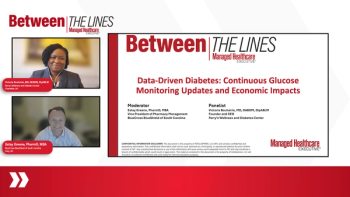
See how continuous glucose monitors replace painful finger sticks, deliver real-time alerts, and help prevent dangerous highs and lows.
CGM delivers real-time glucose trends and alerts, enabling personalized diet changes, fewer fingersticks, and proactive care that can reduce medications, complications, and costs.
In this interview, Luis Ortiz, M.D., explains how narcolepsy type 1 is now diagnosed and how it differs from type 2.


At the AMCP Annual Meeting, experts from Prime Therapeutics said education, policy alignment and collaboration can help improve access to precision testing while managing costs.
Julie Kendle, Pharm.D., senior director of clinical pharmacy at IPD Analytics, explains where managed healthcare organizations should look if they want to improve PrEP access and align with public health goals.

In this video interview, Julie Kendle, Pharm.D., senior director of clinical pharmacy at IPD Analytics, provides an overview of the HIV preventative medicine landscape.
In this first part of a video interview series, Abby Kim, Pharm.D., of Prime Therapeutics shows how advances such as precision medicine and CAR T therapy are improving outcomes while requiring managed care leaders to rethink value through a long-term lens of cost, toxicity and patient access.

In Applying EMPOWER-Lung 3 to Clinical Practice: Population Relevance, Histology, and PD-L1 Considerations, our panel delve into the following critical questions: Is the study population similar to what you see in your clinical practice and why is this an important group to examine? Why was it important to delineate between squamous and non-squamous histologies? How does the level of PD-L1 expression impact your management decisions in patients with NSCLC?

Welcome back to another Managed Healthcare Executive Population Health Perspectives series. In this episode titled, Clinical Impact of JAK Inhibition in Vitiligo: Efficacy, Repigmentation, and Safety Insights, Dr. Seemal Desai led the conversation about the following questions: Which inflammatory chemokines associated with melanocyte destruction are reduced with JAK inhibition? What percentage of patients achieved F-VASI75 at week 24 in the TRuE-V1 and TRuE-V2 trials? What improvements in repigmentation were observed after 52 weeks of treatment with ruxolitinib cream? What were the most commonly reported adverse events associated with ruxolitinib cream in clinical trials and how are you monitoring/managing these?
Discover ADA CGM updates, real-time glucose benefits, and the long-term savings from fewer complications and hospital stays.
Diabetes drives 25% of U.S. healthcare spending; see how CGM tech cuts finger sticks and shifts costs for patients and payers.

PBM reform is here. What do new transparency and fiduciary rules mean for the industry? Federal legislation, new state laws and proposed reforms are placing pharmacy benefit managers under growing scrutiny. Managed Healthcare Executive® partnered with Drug Topics® on a timely webinar, PBMs, Transparency and Fiduciary Responsibility, examining how emerging PBM transparency requirements, fiduciary responsibilities and policy reforms could reshape relationships among payers, pharmacies and PBMs. Watch the recorded discussion now to hear expert perspectives on the evolving regulatory landscape and what these policy changes may mean for managed care strategy and pharmacy benefit operations.
In this episode, Checkpoint Inhibitors in NSCLC: FDA-Approved Immunotherapies, Pivotal Trials, and Insights from EMPOWER-Lung 3, the lung cancer experts explore the following questions: What are the FDA-approved immunotherapies for NSCLC and can you provide a high-level overview of the clinical trials that led to their approval? What was the key background information from EMPOWER-Lung 3?

Dermatology performance measures need to be streamlined and redesigned to better capture meaningful patient outcomes while reducing administrative burden and aligning with value-based care.
Van Beek, a dermatologic surgeon at University of Iowa Health Care and a clinical professor at the university’s Carver College of Medicine, spoke to MHE about what she sees as the major shortcomings of MIPS and AAD's DataDerm.
Experts reviews how NSCLC was historically treated with chemotherapy, radiation, and surgery, highlights the limitations and unmet needs of those approaches, and explains how these challenges led to the development of immunotherapies to improve patient outcomes.

Doctors should consider both cultural habits and genetic differences when diagnosing skin conditions in Asian children, according to Joseph Lam, M.D., as some are linked to traditions, others to inherited risks and some remain not fully understood.
Lack of measures that take into account severity hinders participation by dermatologists, says the University of Iowa Health Care dermatologic surgeon.


Barbieri, director of the Advanced Acne Therapeutics Clinic at Brigham and Women's Hospital in Boston, discusses the complexities of figuring out cost-effect acne treatment.
Studies have shown that routine monitoring for hyperkalemia has limited usefulness, says Barbieri, director of the Advanced Acne Therapeutics Clinic at Brigham and Women's Hospital in Boston.