


Early pharmacy leadership helps health systems build safe, sustainable cell and gene therapy programs, aligning contracts, workflows, regulations and payer realities.
Early pharmacy leadership helps health systems build safe, sustainable cell and gene therapy programs, aligning contracts, workflows, regulations and payer realities.
Health systems learn why cell and gene therapy success depends on workflows, staffing, and finances—not just science—and how to build them.

In this video interview, Joseph Kleiman, president of Buzz Health, says that patients should always “do their homework” to see if they are paying the lowest possible price for their prescription, whether that’s through TrumpRx or another website.

Jessica Vazzaz, a doctoral researcher and tutor in psychology at the University of Sussex, shared that health plans should require large, well-designed randomized trials before covering sonic sleep aids. She added that benefits are likely fair and could vary by individual, making it critical to understand who these tools actually help and under what conditions.

GLP-1 drugs boost health but challenge plastic surgery as rapid weight loss triggers facial sag and skin changes, prompting new options and lifestyle guidance.
Clinicians weigh sonic sleep tools: who benefits, how to use phone-based audio safely and why CBT-I stays first-line for insomnia.
GLP-1 weight-loss drugs can trigger facial fat loss, deepening wrinkles and sagging; experts warn appearance concerns may reduce adherence and affect health outcomes.

Recent research compares sleep aids in apps—sonic sleep sounds, white noise and pink noise—and warns weak evidence may waste money and delay proven insomnia care.

Patients using GLP-1 medications may notice facial changes due to fat loss. Vasyukevich stresses education and options for maintaining a youthful appearance.
Self-administered HPV screening promises greater patient comfort and higher detection rates, though solutions for large-scale rollout and follow-up are still needed.

A look back, a look ahead. In this webinar, Luke Greenwalt, MBA, of IQVIA and Jeff Casberg, RPh, M.S. of IPD Analytics will be discussing the MFN policy, the direct-to-consumer channel, the GLP-1 demand, the drug pipeline and more.


Colton Jones, M.D., of The University of Texas San Antonio, discusses aspirin for colorectal cancer prevention after presenting research comparing GLP-1s with aspirin at the 2026 ASCO Gastrointestinal Cancers Symposium earlier this month in San Francisco.

In 2024, U.S. health care spending rose to $5.3 trillion, driven by increased per capita use and demand for medical services as utilization rebounded following the COVID-19 pandemic.

Long-term Medicaid expansion was linked to substantial growth in PrEP prescribing, with earlier expansion states seeing far higher PrEP uptake relative to new HIV diagnoses, according to a recent study.
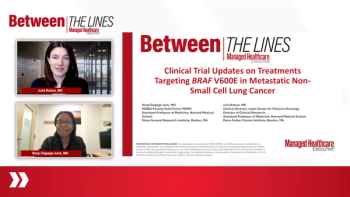
This segment summarizes practical guidance for patients, providers, and payers, emphasizing the need for comprehensive genomic testing and rapid access to targeted therapies.
This segment analyzes key limitations of current evidence—including the non-randomized design of PHAROS and challenges of cross-trial comparison—while underscoring the ongoing need for better strategies in non-V600E mutations.
This segment examines treatment considerations for patients with CNS involvement, stressing individualized decisions due to limited dedicated CNS data for encorafenib/binimetinib in lung cancer.
A forward-looking analysis of how nonfactor therapies are transforming patient quality of life, clinician-patient collaboration, and the broader healthcare ecosystem for hemophilia management.
Sanofi introduces Qfitlia earlier this year, a groundbreaking hemophilia treatment, offering flexible dosing and support for patients transitioning from existing therapies.
Jeff Schaffnit discusses Sanofi's advancements in BTK inhibitors and promising results for hemophilia A therapies at ASH 2025, enhancing treatment options.
Clinicians are moving toward managing mild (Grade 1) cytokine release syndrome on an outpatient basis.
The CAR T Vision Steering Committee members wish to double the number of eligible patients receiving chimeric antigen receptor (CAR) T-cell therapy by 2030 through disease awareness and sustainable financing options, according to George Eastwood, Executive Director of the Emily Whitehead Foundation and recent CAR T Vision Steering Committee member.
As the number of patients with multiple myeloma and lymphoma treated with CAR-T therapy increases, health systems are shifting post-infusion care from inpatient to outpatient settings. Research presented at the annual meeting of the American Society of Hematology shows the change slices costs by $19,180.
Chimeric antigen receptor (CAR) T-cell therapy can cure certain types of blood cancer, but cost and a general lack of awareness around the therapy are barriers to care, according to George Eastwood, Executive Director of the Emily Whitehead Foundation.
This segment centers on key safety takeaways from the PHAROS study and how those findings influence real-world clinical practice when initiating BRAF-MEK-directed therapy.
This segment explores why multiple efficacy endpoints are essential when evaluating targeted therapies and transitions into a discussion of safety outcomes from the PHAROS study.

Early results from the LINKER-MM4 trial show high response rates for linvoseltamab, offering new hope for newly diagnosed patients.