
Phase 3 data fueled buzz about Moderna’s personalized melanoma “vaccine.” paired with Merck's Keytruda. The drama surrounding intismeran included an embargo violation and headlines that the treatment hadn't lived up to its hype.

Peter Wehrwein has been the lead editor of Managed Healthcare Executive since February 2020.
Phase 3 data fueled buzz about Moderna’s personalized melanoma “vaccine.” paired with Merck's Keytruda. The drama surrounding intismeran included an embargo violation and headlines that the treatment hadn't lived up to its hype.

Robotic lobectomies grew from 49% to 70% of cases from 2020 to 2024 as access and training expanded, says Staci Beamer, M.D., of HonorHealth.

The American College of Chest Physicians and the European Respiratory Society issued bronchiectasis guidelines recently. Here is a comparison.

Experts discussed guidelines from the American College of Chest Physicians and the European Respiratory Society at the 2026 CHEST meeting in Phoenix earlier this week.

Garza, an expert on hidradenitis suppurativa at Johns Hopkins, says increasing incidence of the disease on the Japanese island of Okinawa offer some "tantalizing clues" about reasons for the rising incidence.

Pooja Roy, M.D., of Houston Methodist Hospital, discusses how Precedex (dexmedetomidine), an ICU sedative, sometimes triggers noninfectious fever, sparking costly sepsis workups, and the need for a test could help clinicians identify the drug as a cause of fever in ICUs.

Pope Leo early-stage adenocarcinoma is a reminder that lung nodules often cause no symptoms and that people who never smoked can get lung cancer.
Young-onset lung cancer often strikes nonsmokers, and current screening based on smoking is not likely to find it, says Singhi, an assistant professor at UT MD Anderson Cancer Center in Houston. New risk-based screening, liquid biopsies, and breath tests aim earlier detection.

Research findings presented at CHEST meeting show COPD hospital readmission drops with discharge checklists and navigation. Other research suggests targeting readmission prevention efforts on patents discharged to post-acute facilities.

Research findings presented at the CHEST meeting show that false positives may make patients more adherent to screening. Qualitative research shows that patients want more explanation and results communicated verbally.

10 research abstracts presented at the CHEST meeting are split on whether hospital admission during the weekend is assoicated with worse outcomes than admission on weekdays.

Research findings scheduled to be presented at the CHEST meeting show broad positive cardiopulmonary effects from GLP-1s and an association with a reduced risk of acute respiratory failure.

Healthcare spending for employer-insured Americans rose by nearly 19%between 2019 and 2023, driven by higher prices, surging drug costs, and spending on hospital care, says the president and CEO of the Health Care Cost Institute.

Luis Garza, M.D., Ph.D., a Johns Hopkins professor, says hidradenitis suppurativa is neither an infection nor a classic autoimmune disease but an auto-inflammatory condition.
Hidradenitis suppurativa is becoming more common, and a Johns Hopkins expert suspects an unidentified chemical in processed foods may be one reason.
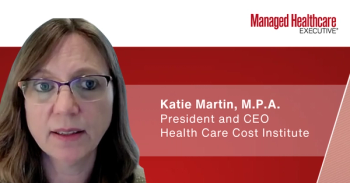
The financial pain from your healthcare cost is real, you are uniquely placed to negotiate prices down, and hospitals, at 46% of spending, are where to look, says the CEO and president of the Health Care Cost Institute, which issued its annual cost and utilization report today.
Spending on prescription drugs grew by 40%, faster than spending on inpatient care, outpatient care and professional services, according to a new report from the Health Care Cost Institute.
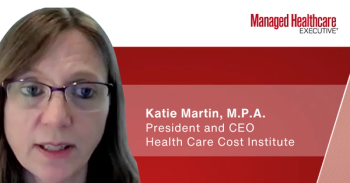
A new Health Care Cost Instittue report finds prices, not utilization, drove spending growth in employer coverage from 2019 to 2023, echoing the group's very first report — and the title of Uwe Reinhardt's famous article.

This is a written summary of the conversation between Kirk Campbell, M.D., and Howard Trachtman, M.D., about FSGS, the DUPLEX trial, and sparsentan, sold under the brand name Filspari.

The Health Care Cost Institute’s annual healthcare cost and utilization report on healthcare spending by those with employer-based health insurance shows that price increases, not utilization, account for soaring cost increases. HCCI CEO Katie Martin says employers should focus on bringing down hospital prices.

Real-world research using the PEDISTAD registry makes up for the gap left by relatively low enrollment of children with skin of color in the pivotal trials of Dupixent (dupilumab).

The research results suggest that exposure to smoke may possibly tip the balance and trigger the onset of hidradenitis suppurativa in some children and adolescents

The purchase comes as the "big 3" drug wholesalers are coming under scrutiny for their market dominance and the possible perils of vertical integration.

High prices and cutbacks in ACA and Medicaid coverage leave many patients unable to medical bills.

Rand researchers identify standardizing supplemental benefits, limiting the number of plans an insurer can market and reforming broker commissions as policy proposals that would benefit beneficiaries while not harming the government or the plans.

Bill Kerr of Avalon Healthcare Solutions says incorporating Z codes into CPT coding for lab and genetic testing would add needed specificity, reduce waste and possibly head off fraud.

Some predicted that drugmakers might boost launch prices to make up for Medicare drug negotiations shrinking profits. Harvard researchers find no evidence of that happening so far.

Philip Mease, M.D., of the Swedish Medical Center, Providence St. Joseph Health in Seattle, and Saakshi Khattri, M.D., of the Icahn School of Medicine at Mount Sinai in New York, discussed the Be Bold trial.

Dunn of NeosRx says a 340B shift from discounts to rebates likely won't affect rebate erosion affecting plan sponsors.
Steering claims away from 340B-eligible pharmacies is one option but also the most disruptive, said Jeff Dunn, Pharm.D., MBA, of NeosRx.

Published: September 13th 2026 | Updated: October 3rd 2026

Published: August 1st 2026 | Updated: August 4th 2026

Published: May 31st 2026 | Updated: June 1st 2026

Published: March 4th 2026 | Updated: April 8th 2026

Published: February 25th 2026 | Updated: April 8th 2026