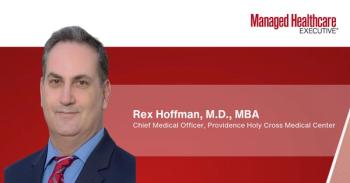
Rex Hoffman, M.D., MBA, says physician shortages and burnout are the most underestimated pressures on health system.
Clinicians are moving toward managing mild (Grade 1) cytokine release syndrome on an outpatient basis.
The most common and often the most serious side effect of chimeric antigen replacement T cell (CAR-T) therapy is
In an interview, Christopher Ferreri, M.D., of the Atrium Health Levine Cancer Institute in Charlotte, North Carolina, discussed how outpatient care of patients treated with CAR-T has evolved to take into account cytokine release syndrome and manage it when it occurs. Ferreri was the lead author of an abstract presented at the American Society of Hematology that summarized research showing the cost advantage of post-infusion outpatient care of patients treated with
Ferreri said he and his colleagues also try to manage mild (grade 1) cases of cytokine release syndrome on an outpatient basis, whereas in the past, if there was even an "inkling" of cytokine release syndrome, patients were admitted to the hospital.