



University of Vermont Health dermatologists argue that is wasteful and causes undue worry to routinely test patients taking isotretinion for elevated liver enzymes and triglycerides.

Peter Wehrwein has been the lead editor of Managed Healthcare Executive since February 2020.
University of Vermont Health dermatologists argue that is wasteful and causes undue worry to routinely test patients taking isotretinion for elevated liver enzymes and triglycerides.

The findings from a matched cohort study add to the body of evidence that people with vitiligo are likely to contend with other health problems.

There are lots of clues. But far more research is needed to find out whether metabolic dysfunction-associated steatotic liver disease (MASLD) plays a causative role in breast cancer.

Results from the DAPHNe trial point to ctDNA as having a role in guiding treatment, but the researchers and a commentator say more research needs to be done before determining exactly what it is.

Kutscher says MDVIP is expanding into specialty care and eyeing pediatrics.

If prospective studies of clinical outcomes confirm the findings, one near-term application of the research might be using automated analysis of speech samples to monitor patients with schizophrenia.

The Lown Institute’s annual social responsibility index gave the Ohio and Philadelphia systems the highest marks.

A study participant in the trial of daraxonrasib felt like he was part of something special, says UT MD Anderson's Shubham Pant, "and he is."

Peterson Philanthropies announced a commitment of $50 million to set up the public benefit company that will provide employers with healthcare pricing and quality data.

C. Brooke Adams, Pharm.D., BCOP, of Orlando Health discusses bispecific antibody therapies for multiple myeloma.

Mike Badome is chief actuary of Arcadia, an outcomes company that helps healthcare organizations improve cost, quality and operational performance.

Bahar Davidoff, Pharm.D., MBA, is founder and principal of Davidoff Strategy and Consulting, a healthcare advisory firm focused on healthcare operations, pharmacy strategy and artificial intelligence (AI) integration.

Sham Firdausi, M.P.H., M.Sc., MBA, is deputy chief financial officer of the Santa Clara Valley Healthcare, one of the largest public health systems in the country and California’s second-largest county-owned health and hospital system.

Manjula D. Jayabalan, Pharm.D., MBA, is senior director of pharmacy at WTW, a multinational advisory and brokerage firm.

Zach Jones, Pharm.D., is senior director of clinical formulary strategy, Prime Therapeutics, a Minnesota-based pharmacy benefit manager.
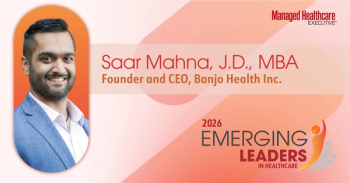
How Banjo Health uses generative AI to speed prior authorizations, cut paperwork, and scale fair, transparent utilization management across plans.

HaVy Ngo-Hamilton, Pharm.D., senior pharmacy director, Buzz Health, a healthcare technology company offering prescription savings solutions that integrate with health systems to promote price transparency and cost-effectiveness.

Mike Nguyen is senior director of external affairs at AlohaCare, a community-led nonprofit health plan in Honolulu, Hawaii.

Brianna Oddi, Pharm.D. Brianna Oddi, Pharm.D., is senior clinical account manager of PANTHERx Rare Pharmacy
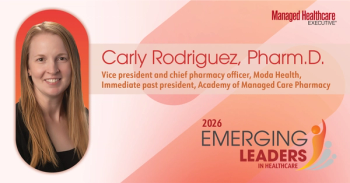
Carly Rodriguez, Pharm.D., is vice president and chief pharmacy officer, Moda Health and immediate past president of the Academy of Managed Care Pharmacy

Alyana Samai, M.P.H., is corporate vice president, neuroscience and musculoskeletal services, at LCMC Health, an eight-hospital, New Orleans-based nonprofit health system.

Lorece Shaw, Pharm.D., is director of clinical account consulting at Capital Rx, a pharmacy benefit and management company.
The second-line drug for metastatic pancreatic cancer is pan-RAS inhibitor that recruits cyclophilin A to stick to RAS proteins, explains Subham Pant, M.D., M.B.B.S., of The University of Texas MD Anderson Cancer Center.

The pan-RAS inhibitor met primary end points of overall survival and progression-free survival as a second-line therapy for patients with metastatic pancreatic cancer.
Treatment after treatment for second-line treatment for pancreatic cancer has failed in clinical trials. Daraxonrasib seems to have broken the losing streak, says MD Anderson's Shubman Pant, M.D., M.B.B.S.



Nubeqa (darolutamide) may have fewer negative cognitive side effects because it doesn't cross the blood-brain barrier.
Self-insured employers and other payers are the startup's customers, but Aradigm CEO and co-founder Will Shrank says the company is looking to bridge the gaps among all stakeholders in burgeoning cell and gene therapy category.
Shrank, a longtime member of the MHE editorial advisory board, discusses the mainstreaming of CAR-T therapy and still-unique aspects of gene therapy