As PBMs plan for 2028 rollout of the PBM transparency provisions of the Consolidated Appropriations Act of 2026 (CAA 2026) cost-plus pricing will flip how drug costs look on paper, requiring far more data, says Milliman principal Kessler.

Peter Wehrwein has been the lead editor of Managed Healthcare Executive since February 2020.
As PBMs plan for 2028 rollout of the PBM transparency provisions of the Consolidated Appropriations Act of 2026 (CAA 2026) cost-plus pricing will flip how drug costs look on paper, requiring far more data, says Milliman principal Kessler.
Kessler, a principal at Milliman, says employers need to pay attention to their claims and pharmacy benefit contracts.

The president of Vivid Clear Rx says PBMs should limit point solutions early on and warned against farming out too many services to vendors that a PBM should provide itself.
Yes, breaking up is hard to do, acknowledged the president of Vivid Clear Rx. But employers should be "brave" about severing their ties to one of the “big three” pharmacy benefit managers (PBMs) and contracting with mid-size PBMs like hers, says Amy Wadstrom, RPh.
A principal and product owner at Milliman, Kessler discusses some of the reasons for heightened attention and scrutiny of plan sponsor fiduciary responsibility when it comes to pharmacy benefits.
The president of Vivid Clear Rx says finding a GPO partner whose goals align with a PBM's moves transparency forward for clients.
The president of Vivid Clear Rx says meaningful PBM transparency means pairing access to data with help from an educational partner.

Researchers and drug developers are targeting pathways that activate mast cells as a way to treat cholinergic urticaria and other forms of inducible urticaria.
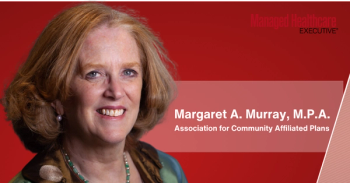
People may not be fully aware of added cost exposures if they shift to bronze Affordable Care (ACA) plans, says Margaret A. Murray, M.P.A., CEO of the Association for Community Health Plans. Murray says the nonnetwork plans that the Trump administration is promoting will result in underinsurance.

In a wide-ranging interview, the CEO of the Association for Community Affiliated Plans (ACAP) discusses Medicaid enrollment, Medicaid work requirements, the ACA marketplace plan, her 25 years at the helm of ACAP and whether she is burnt out.
Margaret A. Murray, M.P.A., CEO of the Association for Community Affiliated Plans, says outreach and texting will be key to keeping eligible Medicaid enrollees covered under new redetermination and work requirements.
Margaret A. Murray, M.P.A., CEO of the Association for Community Affiliated Plans, says ACAP opposes Medicaid work requirements but seeks common ground with CMS on issues such as program integrity.

Some dermatologists are calling for the switch because resistance to antifungal medications is growing.

Line-field confocal optical coherence tomography (LC-OCT) and reflectance confocal microscopy (RCM) have good specificity and sensitivity. Cost may be an issue.

Perry Cohen, Pharm.D., speaks with Dipak Patel, CEO of Globo, about communication in healthcare, particuarly translation services.

Patel, senior vice president of trade relations and supply chain at MedImpact, discusses his career path and current responsibilities. at MedImpact.

Ashley Holzworth-Nash, Pharm.D., head of product strategy and solutions at Evernorth, discusses her path from the pharmacy counter to shaping care models.

A survey with just over 400 employer respondents showed a declining percentage use one of three large pharmacy benefit managers (PBMs) to manage their drug benefits and coverage.

Robyn S. Crosson, J.D., of Navitus Health Solutions, Elizabeth Mitchell of Purchaser Business Group on Health and Kathy W. Oubre, M.S., of the Pontchartrain Cancer Center, discussed PBM reform and transparency during an MHE webinar today.

Under CMS's new Medicaid work rule, a qualifying medical condition alone won't exempt enrollees. They must also show impairment in a daily living activity.
Eric Levine, M.P.H., principal at Avalere Health, explains why a diagnosis alone won't exempt someone from the Medicaid work requirements that go into effect in 2027.
Levine, a principal at Avalere Health, explains some of the details of Medicaid work requirements, including how activities of daily living may factor in and some of the leeway states have in how they are applied.
CMS's new interim rule sets an 80-hour monthly work requirement for many Medicaid enrollees but leaves states some latitude on setting medical exemptions and verification processes.

The finding is not novel, but it adds to the evidence base that atopic dermatitis makes people more susceptible to developing shingles.

Christine M. Lovly, M.D., Ph.D., of City of Hope, and Alice Shaw, M.D., Ph.D., of Dana-Farber Cancer Institute, discussed the seven-year follow-up results from the phase 3 CROWN trial in a "Between the Lines" video series.

The researchers used efficiency frontier analysis, an alternative to quality-adjusted life years (QALYs), to rank adalimumab, secukinumab and bimekizumab, biologics used for hidradenitis suppurativa.

Pharmacy benefit managers are adopting new business models to adjust new transparency rules, but Holzworth-Nash says, "We're still focused on getting members to the right healthy outcomes. We’re still focused on empowering pharmacists. We are still focused on getting members to the lowest-cost therapies and helping members navigate their benefits.”

Patel says pharmacy benefit managers are better off using a low list price approach "because it’s simpler, it’s less opaque and, frankly, it’s more predictable.”

AVAC's Mitchell Warren argues PEPFAR and the Global Fund’s goal to reach 3 million people with lenacapavir PrEP by 2028 is far too small and too slow.
The move toward integrating HIV services with other healthcare services was already underway before the PEPFAR cuts, says Warren, executive director of AVAC.

Published: August 1st 2026 | Updated: August 4th 2026

Published: May 31st 2026 | Updated: June 1st 2026

Published: March 4th 2026 | Updated: April 8th 2026

Published: February 25th 2026 | Updated: April 8th 2026