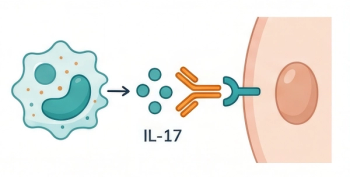
Elevated levels of immunoglobulin G (IgG) drive “inflammaging” processes that take a toll on skin tissue as people age, according to research results reported by Japanese researchers. Reducing IgG may mitigate the loss of collagen and elastin.
The researchers used efficiency frontier analysis, an alternative to quality-adjusted life years (QALYs), to rank adalimumab, secukinumab and bimekizumab, biologics used for hidradenitis suppurativa.
The researchers used efficiency frontier analysis, an alternative to quality-adjusted life years (QALYs), to rank adalimumab, secukinumab and bimekizumab, biologics used for hidradenitis suppurativa.
Adalimumab came out ahead of secukinumab and bimekizumab as a treatment for
Instead of relying on controversial quality-adjusted life years, the approach used in the study, called efficiency frontier analysis, uses clinical benefit and pricing data to determine which drugs are on the “efficiency frontier.” A drug is considered “nondominated” and on the frontier if no alternative provides greater benefit at the same or lower cost or equivalent benefit at a lower cost. The researchers wrote in the journal article that the drugs on the efficiency frontier can be thought of as those that represent the “most efficient allocation of health care resources under the observed cost and effectiveness assumptions.”
The results reported today showed that adalimumab at 40 milligrams (mg) weekly was on the efficiency frontier using pricing data from the five countries included in the study — the U.S., Canada, France, Germany and Australia — for two efficacy measures commonly used in clinical trials assessing treatments for hidradenitis suppurativa, Hidradenitis Suppurativa Clinical Response (HiSCR) 50, indicating a 50% reduction in the condition from baseline, and HiSCR-75, indicating a 75% decrease from baseline. Secukinumab at a dosage of 300 mg every four weeks made it on the efficiency frontier when the U.S. whole acquisition cost (WAC) was used in the calculations but not when the U.S. National Average Drug Acquisition Cost was used.
Because the researchers collected drug pricing data from five countries, this study also provides a window into the wide disparity between the prices in the U.S. and the prices in the other countries. For example, the annual cost of adalimumab using the NADAC price was $87,417.33 compared with the Australian Pharmaceutical Benefits Scheme price of $11,345.25. Bimekizumab was, by far, the most expensive of the three drugs, with an annual cost of $411,990.28 using the WAC price. That cost was seven times higher than the annual costs using the Australian prices ($411,990.28 vs. $57,811.92).
Hidradenitis suppurativa, also called acne inversa, is a chronic skin disease that causes painful lumps under the skin. By some estimates, between 1% and 2% of the U.S. population is affected by the condition. Women and people who are Black or biracial are
To conduct this study, lead author James Pham, M.D., M.S., of the School of Clinical Medicine at the University of New South Wales in Australia, assembled pricing data from the U.S. and the other countries using a variety of sources. In Canada, prices are set at the province level, so they settled on prices paid by the Ontario Drug Benefit Program because Ontario is the most populous province. NADAC prices, which are calculated from the average prices that pharmacies pay for prescription drugs, are publicly available. They used results from the PIONEER 1 and PIONEER 2 trials to assign HiSCR-50 and HiSCR-75 scores to adalimumab. For secukinumab, they used the two SUNRISE studies, and for bimekizumab, the results from the BE HEARD 1 and BE HEARD 2 studies.
Adalimumab emerges from this cost-efficiency frontier research as the pretty clear winner. When Pham and his colleagues did some calculations that factored in rebates and, therefore, net costs as opposed to stated costs, the cost-efficiency case for adalimumab got stronger, they noted. This analysis focused on drug costs, not any downstream costs associated with hospitalizations and the like. But Pham and his colleagues argued that including downstream costs might also strengthen the case for adalimumab because of its superior efficacy. Another variable to consider is the severity of the person’s hidradenitis suppurtiva. Pham and his colleagues say the difference between adalimumab’s efficacy and bimekizumab’s narrows once severity is factored in.