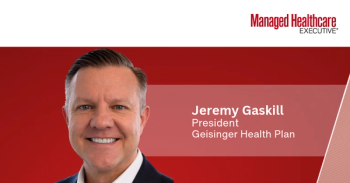
As other insurers pull back, Geisinger Health Plan isn’t exiting any Medicare Advantage plans for 2027 and expects to grow, President Jeremy Gaskill says.
The second part of our interview with Jeremy Gaskill, the president of the Geisinger Health Plan. Gaskill discusses trends in the various segments of the health insurance market—Medicaid, Medicare Advantage, the employer-based commercial market and the ACA marketplace.
Second of two parts
This transcript has been edited for clarity and length.
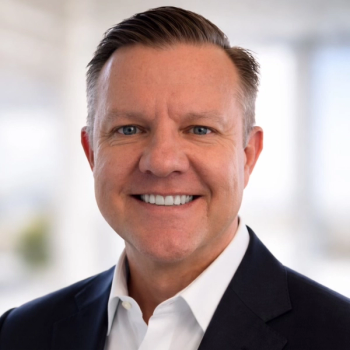
Jeremy Gaskill was named the president of Geisinger Health Plan in February 2026 after more than two decades of holding positions of increasing responsibility at Humana. The Geisinger Health Plan, which covers approximately 550,000 people in Pennsylvania, is part of Geisinger Health, a nonprofit health system headquartered in Danville, Pennsylvania, in the northcentral part of the state, with a reputation for value-based care.
We published the
Let’s talk about Medicaid. You have about half a million members. Maybe half are covered by Medicaid.
Just over half.
Medicaid is going through a lot of changes. There are work requirements coming into play. Some people call them community engagement requirements. And more frequent determinations of eligibility are going to be required. The number of people covered by Medicaid is widely expected to go down. Geisinger, I believe, expects to lose maybe approximately 40,000 Medicaid members as a result of these changes. What are you expecting, and what offsetting efforts are you making?
We’re still working through it. There’s still a lot of unknowns. To your point, there’s a significant amount of change coming down the pipe specific to Medicaid. There’s a significant amount of change coming down the pipe relative to healthcare in general, just the whole entire spectrum, but, in particular, to Medicaid. We are still wrapping our arms around what we think these changes are going to drive. We do anticipate that our membership is going to shrink because the pool of Medicaid eligibles is going to shrink in the state. I don’t know if I would define it as significant.
We’ll have a better line of sight on it as we get toward the end of the year and get more clarity.
But quite honestly, there’s just going to be some of it that we’re going to learn on the fly as H.R. 1 kicks in, and we actually see what are the real impacts. But more importantly, beyond just the impacts, just what’s the timing of the impacts? When is it really going to occur throughout the year and the years to come?
What about this figure that I saw that Geisinger expects the Medicaid enrollment in your plan to decline more than 10% of the Medicaid population? Is that a rough estimate that you’re working off of?
That’s a directionally accurate projection. We’re still working through it, but that is directionally accurate.
I’ve talked to other people involved in Medicaid managed care, and there’s some notion that states and plans like Geisinger could help with community engagement so that people could meet the requirements and stay covered. Does Geisinger have any role in community engagement? Are you talking to state officials about how enrollment wouldn’t decline as much if community engagement efforts are enhanced?
The simple answer to your question is yes. There’s a lot of engagement around how do we work with our community partners to do what needs to be done to ensure that those that are needed to be covered can be covered and meet the requirements. That’s also one of the advantages — going back to one of your earlier questions — of working with a large integrated provider like Geisinger, who has very, very deep roots in the community. Geisinger as an organization, as an enterprise, is extremely important to the community. It’s important that the clinical side continue to have success. It’s important that the health plan side continues to have success. Because of those deep roots, we have very good connections with various community organizations. We’re thinking through what the role is that we have at the health plan, but also what the role is that the provider has on the clinical side of the enterprise in working with these patients, working with these members, and making the connections that are needed. I absolutely think that both sides do play a role and have a role in helping to ensure that those that should be covered remain covered with these new requirements.
Shifting to Medicare Advantage, as you know, there’s a lot of turmoil there. Insurers are canceling plans and exiting markets, partly because of unanticipated increases in utilization that you’re familiar with. So what is Geisinger doing in Medicare Advantage? Are you staying in the market? Have you pulled any plans back?
We are absolutely committed to that marketplace, and we are absolutely committed to having a controlled growth environment. About 2027, I would define what we’ve done with our product mix as stable. We did not have any wide swings one way or the other. We are not exiting plans in ’27. We are investing in the benefits, and we are anticipating growth.
We feel like we’re in a very good position within our footprint to continue to be stable and to have growth in the Medicare Advantage space.
How many different Medicare Advantage products do you have?
We have eight. We have HMOs [health maintenance organizations] and PPOs [preferred provider organizations]. And we have directionally just around 100,000 members.
And do you expect that number to grow then in 27? Are there other MA plans pulling out of your market, so you might soak up some more members?
Yes, we are anticipating growth in ’27 in our Medicare Advantage space. I’m not directly aware of any specific payers that have fully pulled out of our footprint, but we have seen, you know some payers pull back in their investments but not pull products out.
Is your benefit mix changing? Have you had to pull back on some benefits?
What I would say is changing — and I don't think it's anything unique to Medicare Advantage — is that we are seeing more growth in PPOs in recent years than we did prior. It used to be HMOs that were growing significantly. We're now seeing PPO growth, and those are different animals: HMOs versus PPOs. And we need to think differently about the PPO versus the HMO. But I don't think that that's anything unique to Geisinger. It’s just the population that's aging into Medicare. That was different 15 to 20 years ago.
How are you managing to stay in this market and even increase your Medicare Advantage membership? Is there something about the Medicare Advantage market in your part of Pennsylvania? Or is there something about Geisinger that is enabling you to see this as an area of growth where other people are retrenching in various ways?
I would answer that a couple different ways. It absolutely is an advantage for us to have a provider like Geisinger in our footprint. In order to be successful in Medicare Advantage, there has to be a real partnership between the providers and the payer, and they have to be aligned with embracing value-based care and managing that population differently than you would manage a commercial population. Geisinger, the clinical organization, is very much both feet in, embracing value-based care, recognizing that we need to manage that population differently, very aligned on the things that make Medicare Advantage successful, which is high patient satisfaction with healthcare, which is Stars, in ensuring that we recognize and understand the health status of the patient. That's what drives our risk score so that we can then address the comorbidities of that population.
Having a Geisinger — 40% of our membership goes to Geisinger, 60% of our membership goes to other network providers — that very much allows us to be successful in Medicare Advantage.
Then we have other providers that embrace value-based care and recognize that in order to be successful, they have to manage that business differently. So that's what's allowing us to continue to focus in the Medicare Advantage space and be successful.
I would suggest that where you see environments where you have payers that are pulling out of markets, where they're successful in other areas, what drives that decision, and this is my opinion, is that there's not a provider in that area that is willing to embrace value-based care. It creates an environment where the payer can't be successful. And quite frankly, the provider will not be successful. So you'll see the provider say, "We don't want to be in Medicare Advantage. We don't like it. We're not accepting it." And then the payers are saying, "Yeah, we're out of it too," because. Again, you've got to have that provider that's fully embracing value-based care.
That said, are you putting products out there with some of the benefits trimmed back?
We've had to pare back some over the last couple years. In 2027, we invested in our plans. We didn't cut, so we improved our benefits. But we have to be thoughtful about where we improve benefits: dental, vision, those types of benefits — we want to invest in.
We need to be more thoughtful around other ancillary benefits that could potentially be abused and not used in the way that they were intended, so it ultimately doesn't drive a better healthcare environment. So that's where we've got to be very disciplined and make sure that we’re investing in items that will help drive a healthier perspective for the member.
Do you have a particular benefit in your mind?
You saw it in the industry, but not specific to Geisinger, when, a few years ago, we were investing in these cards, they were loaded with money. You heard the stories about members going out buying golf clubs and things like that. That’s not the intent of what you're trying to drive with that benefit. That’s an example of what I mean.
On to the commercial part on the market. I’ve spoken with people at employer groups, and they are feeling the burden of their healthcare costs. They pay far more for the same services than the public payers, Medicaid and Medicare, do. The cost is just getting to be unsupportable, some say. So, how are you addressing the affordability issue in the commercial market for plan sponsors?
Commercial is a different healthcare environment than Medicare and Medicaid, and the biggest differentiator is there’s no fee schedule. There’s a fee schedule in Medicaid, and there’s a fee schedule in Medicare. Everybody starts off knowing exactly what everybody’s paying for a service. It’s an even playing field, and then you build your value from there.
In the commercial space, that’s where, going back to some of my earlier comments, diversification helps because our ability to sit down with a provider and negotiate a fair and reasonable fee for a particular service, which then is literally just transferred directly to the employer, and that’s what they’re paying for those services. The diversification allows us to be in a better spot to be able to do that because we have Medicaid and Medicare members. Those are revenue streams that are coming into the provider. If we’ve done a good job with partnering with them, they can be successful there, and that allows us to have a more constructive conversation on the commercial space.
Having a Geisinger that fully understands and appreciates the need to provide very cost-efficient, high-quality healthcare for our commercial employers. Geisinger has a commitment to the community. This is the area that we live in. We want commercial businesses to come to this area. We want the employers to grow in this area, and it is our responsibility to the community to ensure that we’re providing an affordable environment.
But it is a challenge, and it’s a challenge we don’t see in the Medicare and Medicaid space, and that’s why you’re seeing creative plan designs, that’s why you’re seeing cost shifting to the employees, and that’s why you’re seeing the increase in usage of HSAs [health savings accounts] and other funding vehicles to help fund healthcare.
But it's a real issue because. You can look at the publicly traded provider organizations. They primarily make their money in the commercial space because of what they can charge for that cost. We're lucky to have an organization like Geisinger that is very disciplined as an anchor, and then we have good relationships because of our diversification with our network providers to help keep costs down.
Is there a different sort of product you're putting out there in the commercial space? Any new wrinkle that you've added?
I wouldn’t say that there’s any secret, special product that we have out there. We’re seeing interest grow in what is called level funding, which is kind of a hybrid between a fully insured environment and a self-funded environment for kind of a mid- to small-size employer. But that’s not unique to Geisinger. You’re seeing that in the industry almost everywhere. That’s just the employers trying to find a way to control their costs better and, you know be able to pull those levers. But no, there's nothing unique, that I would say, from a product design standpoint, that we’re doing that is a wow factor.
As you know there's a lot of discussion about other sorts of novel forms of health insurance—maybe not novel, but expanding on them. So making catastrophic products that could be long-term catastrophic insurance. There are non-network plans. There's a lot of discussion. Do you have any general opinion about these approaches, particularly as the ACA marketplace may start to shrink?
I think it’s appropriate that the industry experiments with alternative ways to fund healthcare. I am of the mindset that we do need to change the way that we're managing and delivering healthcare in the commercial environment because the costs continue to go up. We’ve got to be thoughtful about that.
That’s a very easy statement to make. It’s a hard one to solve. I embrace that we need to experiment with some alternative ways to think about funding it. I have yet to see a new one come out, since level funding, that is groundbreaking that I think is going to really drive things.
But we continue to consider it. We continue to poke around on it and be flexible to try different ways every year. We think about it.
Are you in the ACA [Affordable Care Act] individual market? Do you have marketplace plans?
We are.
How is the end of the enhanced subsidies affecting you and Geisinger?
We have seen that subset of eligibles and participants shrink in the state as a whole.
However, at the Geisinger Health Plan, we have actually grown in the ACA exchange space. So while the market itself has shrunk, we've seen individuals and small groups migrate toward our plans. It's allowed us to grow. I think that's driven by the fact that we had a very low increase in our premium for ’26. We're in a very good position for ’27.
We've had an extremely disciplined approach to how we price that business, how we manage that business, and it’s allowed us to be more competitive than some of our competitors, which has allowed us to grow. As people leave higher-cost plans, they migrate to ours. So it's an interesting dynamic. Markets have shrunk, but we have actually grown.
Stepping back a little, are you concerned that we’re entering an era — a new era — in American health insurance that’s far more turbulent, and that one outcome might be a growing number of Americans who are uninsured?
The healthcare system has always been some rough waters. It’s a challenging environment to be successful in. It’s the reason why, in particular in the commercial space, you don’t see a lot of new entrants coming into that space because it’s a hard business to be in, and in the Medicare Advantage space, the Medicaid space, you need to manage that very disciplined because the margins are very, very slim. There are big dollars, but the margins as a percentage are very, very slim. And so it continues to be turbulent.
Disciplined organizations need to manage through the uninsured environment. That is concerning because that creates a tremendous amount of pressure on our provider partners because that increases what we define as bad debt. So they then need to go and work to try to recover dollars that are due to them, and much of that gets written off in some environments, and so it is something that we, as a payer partner with our providers, clearly with Geisinger, as a clinical organization, but also our network providers, are thinking through how we can support them and ensure that the dollars that are due to them are paid to them.
That is something I have sleepless nights thinking about. How do we manage the uninsured and the potential that pool could increase, because it is going to put a tremendous amount of pressure on our provider partners?