
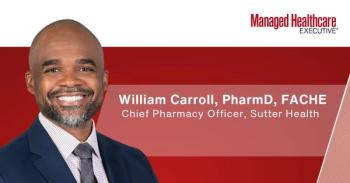
Will Carroll, Pharm.D., of Sutter Health says future pharmacy leaders need business, finance and AI skills, and health systems need real sponsorship.
Will Carroll, Pharm.D., of Sutter Health says pharmacy is often handed strategy to execute instead of shaping it, and must show value in C-suite terms.
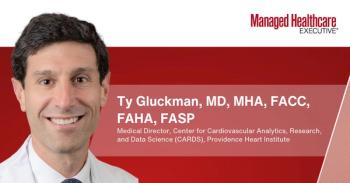
Ty Gluckman, M.D., says undertesting and undertreatment are the biggest gaps in lipid care and calls on leaders to invest in cardiovascular prevention.
Ty Gluckman, M.D., says the 2026 dyslipidemia guideline brings back risk-based LDL goals, and clinical inertia, not access, is now the biggest barrier.
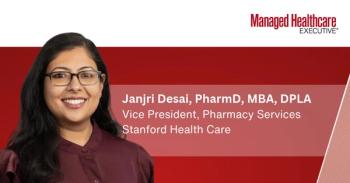
Stanford Health Care’s Janjri Desai, Pharm.D., says pharmacists improve outcomes but often can’t bill for it, making billing parity key to growing services.
Stanford Health Care’s Janjri Desai, Pharm.D., says pharmacy should be treated as a clinical service line, not just a 340B financial workhorse.
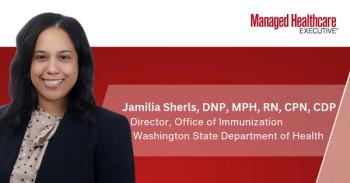
Jamilia Sherls, DNP, MPH, RN, CPN, CDP, of Washington’s health department says health systems should look to AAP and AAFP schedules and build on patients’ trust in providers.
Jamilia Sherls, DNP, MPH, RN, CPN, CDP, of Washington’s health department says a stayed schedule overhaul cutting recommended child vaccines from 17 to 11 could upend coverage.
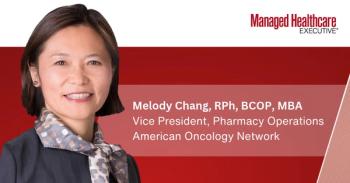
Melody Chang, R.Ph., says payers cover bispecific and CAR-T drugs but not the monitoring that lets community practices deliver them safely at lower cost.
American Oncology Network’s Melody Chang, R.Ph., says 18% of its first 70 outpatient bispecific patients had CRS, all low grade with no hospitalizations.
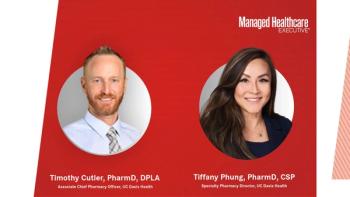
UC Davis Health’s Tiffany Phung, Pharm.D., and Tim Cutler, Pharm.D., say staff-driven ideas protect research independence in industry partnerships.
UC Davis Health’s Tiffany Phung, Pharm.D., and Tim Cutler, Pharm.D., say research justifies services and opens doors to limited distribution drugs.
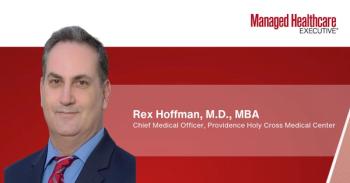
Rex Hoffman, M.D., MBA, says physician shortages and burnout are the most underestimated pressures on health system.
Rex Hoffman, M.D., MBA, of Providence Holy Cross walks through a CMO’s day in a hospital that often runs 85% to 100% full, from safety huddles to discharges.

As the pharmacist pipeline tightens, leaders from UC Davis Health, UCSF Health, and Sutter Health say financial sustainability now depends as much on capacity as on cost.

A City of Hope-American Oncology Network panel on what community practices actually need — clinical governance, pharmacy authority, and hospital agreements — before they can safely deliver CAR-T and bispecifics outpatient.
New data from Sutter Health suggest the real gap in GLP-1 access is physician awareness, not insurance coverage — and fixing it closed outcome disparities across every racial and ethnic group.
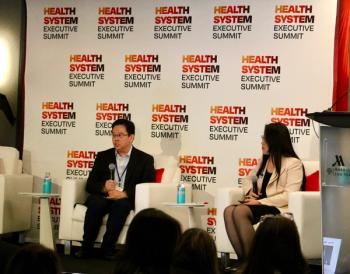
David Chen, PharmD, explains how physician-led formulary decisions — not rebates — power Kaiser Permanente’s biosimilar strategy, and why he thinks other health systems could do the same.
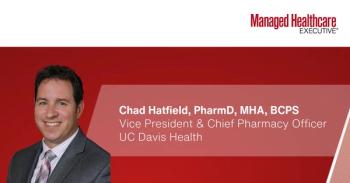
Chad Hatfield, Pharm.D., of UC Davis Health, says rebate model readiness starts with a spend review and data that pharmacy and IT can pull consistently.
Chad Hatfield, Pharm.D., of UC Davis Health, says 340B savings fund free clinics and mental health care that could shrink as the program’s future shifts.
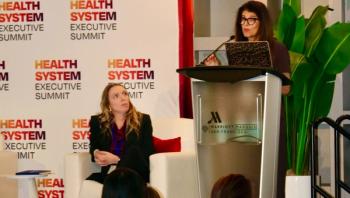
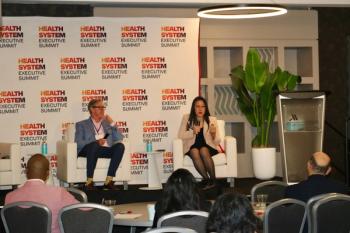
During the Health System Executive Summit, Candy Tsourounis, PharmD, and Elise Wozniak, PharmD got candid about the barriers and financial risk surrounding this innovative therapy.