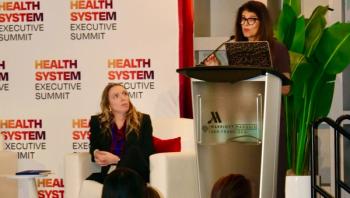
During the Health System Executive Summit, Candy Tsourounis, PharmD, and Elise Wozniak, PharmD got candid about the barriers and financial risk surrounding this innovative therapy.
Chad Hatfield, Pharm.D., of UC Davis Health, says 340B savings fund free clinics and mental health care that could shrink as the program’s future shifts.
The future of the
Hatfield described the program as stuck in a holding pattern, with open questions about whether it will move to a rebate model, whether legislation will change it and how cases moving through the courts will be resolved. “It’s a lot of hurry up and wait and anticipate,” he said. “We might go left field, we might go to right field, but ultimately we’re going to go to some field at some point in time.”
Asked about the biggest pain points, Hatfield said it is hard to single out one. “It’s really, really a death by 1,000 cuts, and it’s all coming down at the same time,” he said. Health systems, he added, are trying to navigate those pressures while building models of financial sustainability for their patients.
At UC Davis Health, 340B savings support a wide range of services, Hatfield said, including uncompensated care for patients who can’t pay their bills, mammography and colonoscopy for people who can’t afford them, free clinics and free drug programs. Much of that would shrink if the savings declined. He also pointed to mental health, which he said is not funded to the level the need demands. “A lot of those things are things that we pump money into in order to cover,” he said.
For patients, Hatfield said, the biggest concern is access to medications and a health system’s ability to dispense them so care stays coordinated within the system. Restrictions from both payers and manufacturers complicate that, he said, but most health systems are working their way through those access points.
In this video, Hatfield discusses where 340B may be headed and what is at stake for the patients health systems serve.