



Dunn of NeosRx says a 340B shift from discounts to rebates likely won't affect rebate erosion affecting plan sponsors.
Dunn of NeosRx says a 340B shift from discounts to rebates likely won't affect rebate erosion affecting plan sponsors.
Steering claims away from 340B-eligible pharmacies is one option but also the most disruptive, said Jeff Dunn, Pharm.D., MBA, of NeosRx.
340B discounts preclude rebates paid to pharmacy benefit managers for their payer clients. Dunn says new transparency and cost pressures have created awareness of “340B rebate erosion.”

Sova, a clinical advisor for Employers Health, expects more employers to exclude GLP-1s for obesity but urges a look at coverage for specific cardiometabolic conditions.
Employers Health’s Alexis Sova says employers excluding GLP-1s now lean on weight management programs and direct-to-employer deals, not a hard cutoff.
Approximately two-thirds of Employers Health clients now exclude GLP-1s for obesity, up from a roughly even split at launch as cost drives coverage decisions.
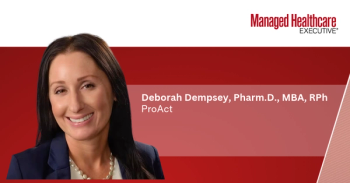
ProAct Chief Operating Offier Deborah Dempsey says plan sponsors still lack the data and visibility to know whether they were shorted on a 340B claim.
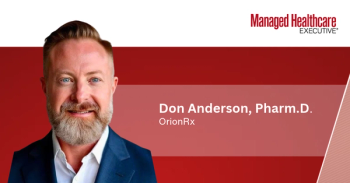
OrionRx's Don Anderson, Pharm.D., says a GLP-1 access model built around mandatory wellness coaching resulted in a six-point drop in body mass index and improved mental health.
ProAct's Deborah Dempsey, Pharm.D., MBA, RPh, explains how 340B discounts to healthcare entities are in conflict with rebates that manufacturers pay to health plan sponsors.
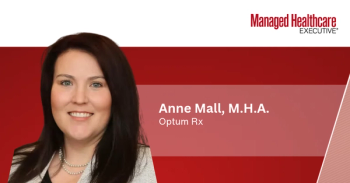
Optum Rx's Anne Mall, M.H.A., says her company's AI is surfacing clinical details buried in providers' chart notes so clinicians can decide on therapy faster.
Optum Rx's PreCheck Prior Authorization tool automates 64% of approvals in under 30 seconds, getting patients onto therapy four days faster, Anne Mall, MHA, says.
OrionRx's Don Anderson, Pharm.D., outlines near-term and long-term fixes for the blind spots created when members buy medications outside their pharmacy benefit.
OrionRx's Don Anderson, Pharm.D., says drugs filled outside a member’s pharmacy benefit could result in excessive and duplicative prescriptions.

As PBMs plan for 2028 rollout of the PBM transparency provisions of the Consolidated Appropriations Act of 2026 (CAA 2026) cost-plus pricing will flip how drug costs look on paper, requiring far more data, says Milliman principal Kessler.

GLP-1 therapies now drive nearly half of prescription drug sales growth, IQVIA's Scott Biggs told PBMI 2026 attendees, reshaping diabetes treatment and pharmacy dispensing economics nationwide.
Kessler, a principal at Milliman, says employers need to pay attention to their claims and pharmacy benefit contracts.

The president of Vivid Clear Rx says PBMs should limit point solutions early on and warned against farming out too many services to vendors that a PBM should provide itself.
Yes, breaking up is hard to do, acknowledged the president of Vivid Clear Rx. But employers should be "brave" about severing their ties to one of the “big three” pharmacy benefit managers (PBMs) and contracting with mid-size PBMs like hers, says Amy Wadstrom, RPh.
A principal and product owner at Milliman, Kessler discusses some of the reasons for heightened attention and scrutiny of plan sponsor fiduciary responsibility when it comes to pharmacy benefits.
The president of Vivid Clear Rx says finding a GPO partner whose goals align with a PBM's moves transparency forward for clients.
The president of Vivid Clear Rx says meaningful PBM transparency means pairing access to data with help from an educational partner.

Federal and state laws now require PBMs to report drug pricing, rebates and prior authorization data, creating compliance challenges, said panelists at PBMI's annual meeting in Orlando.

PBM, employer and pharmacy leaders at the Pharmacy Benefit Management Institute annual meeting said actionable data and real-time technology, not just transparency, are needed to control rising costs.

Scripius formulary executive Cody Olsen, Pharm.D., discusses some of the key ingredients to a successful switch to biosimilars.




Panelists at a session at the Pharmacy Benefit Management Institute’s annual meeting in Orlando discussed how stop-loss insurance addresses rising costs from cell therapies, oncology treatments, and orphan drugs affecting self-funded employer plans.
Jennie Barlow, Pharm.D., MBA, associate vice president, pharmacy industry relations for Scripius, discusses cost savings from removing Jardiance (empagliflozin) as a preferred SGLT2 inhibitor and replacing it with Brenzavvy (bexagliflozin).
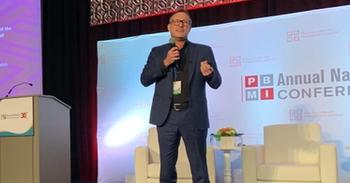
Serge Perras, MBA, says AI has made a meaningful difference in medication therapy management processes at Abarca, but he warned against repeating the overexuberance about technology for its own sake that led to the dot-com boom and bust.