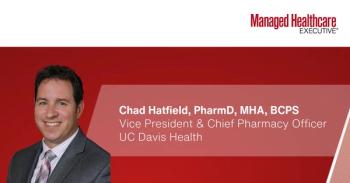
Chad Hatfield, Pharm.D., of UC Davis Health, says 340B savings fund free clinics and mental health care that could shrink as the program’s future shifts.
Chad Hatfield, Pharm.D., of UC Davis Health, says rebate model readiness starts with a spend review and data that pharmacy and IT can pull consistently.
Health systems preparing for a possible
Hatfield said the 340B program is complex, was written quite a while ago and has evolved in how it is interpreted. Today, he said, manufacturers and health systems each read the rules differently, on top of the fundamentals of administering the program, such as ensuring claims qualify and preventing duplicate discounts. “It takes a decent amount of work, and even though there are programs out there, it still takes people and human capital in order to make sure that data is appropriate,” he said.
His first piece of advice is to get a quick education. A rebate model would apply to certain drugs from certain manufacturers, so he recommends that health systems review their spend on those drugs, estimate the impact on upfront costs and then work through data management.
That data work is what people find hardest to wrap their heads around, Hatfield said, because of the sheer number of data elements. Pharmacy probably owns the operations, but it needs to work with IT teams so data fields are readily retrievable and can be pulled consistently, since that is what health systems will submit under a rebate model to get their rebates back. “I think people underestimate where that stuff is,” he said.
AI can help, Hatfield said, but it is built on appropriate data, and he expects “some trials and tribulations” along the way. UC Davis Health is still curating some of the data it flows today and checking it for errors, work he said AI could help speed along. The health system already uses AI in its 340B work on claim submissions and on making sure it is paid what it is owed, and it uses AI outside the program for prior authorizations.
Asked what he wants payers and health system leaders to take away, Hatfield said partnerships are important and take time. He also urged leaders to look through the lens of the patient. “We all need care at some point in time,” he said, which is why keeping health systems viable matters.
In this video, Hatfield discusses what health systems should do now to prepare operationally for a 340B rebate model.