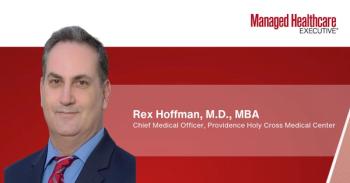
Rex Hoffman, M.D., MBA, says physician shortages and burnout are the most underestimated pressures on health system.
Rex Hoffman, M.D., MBA, of Providence Holy Cross walks through a CMO’s day in a hospital that often runs 85% to 100% full, from safety huddles to discharges.
For Rex Hoffman, M.D., MBA, chief medical officer at Providence Holy Cross Medical Center in Los Angeles, the job is less about ranking priorities than managing several at once.
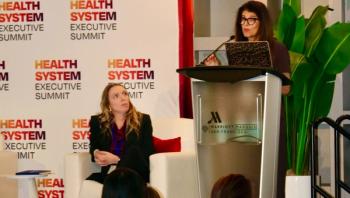
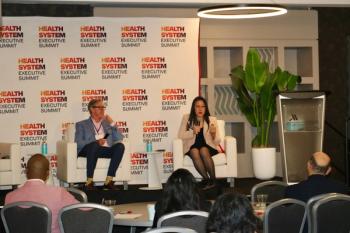
“It’s really about dealing with several priorities simultaneously, and then figuring out how one decision is going to impact potentially another decision,” Hoffman said in an interview with Managed Healthcare Executive at the 2026
Hoffman’s day starts at 8 a.m., when the executive leadership team reviews overnight issues involving patients, providers or caregivers and decides how to respond. A 9 a.m. safety huddle follows, focused on census and staffing. Providence Holy Cross often runs 85% to 100% full, which can leave patients boarding in the emergency department and raises the question of whether others can be discharged sooner, safely. The huddle also covers staffing gaps, such as nurses calling out sick, within the nurse staffing ratios California requires.
At 10 a.m., a case management huddle brings together care coordination, ancillary services such as imaging and physical therapy, operating room staff and the hospitalists who oversee most of the hospital’s patients. A recurring challenge is patients who are ready for discharge but have nowhere to go, because skilled nursing or long-term acute care facilities won’t accept them for insurance reasons or are at capacity.
Sometimes the hospital pays to place a patient in a board and care facility, Hoffman said, but “we want to make sure that’s the right thing to do in taking care of the patient, not just to move them from the hospital somewhere else.”
The team also weighs transfers to higher levels of care and delays in the OR or imaging. Afternoons turn to resource allocation and productivity, and the end of the day to workforce issues or emerging crises, such as an infection in the hospital.
The role itself has changed considerably, Hoffman said. Around 1980, CMOs focused on quality, utilization review, accreditation and patient safety. By 2000, the role had expanded to service line performance, organizational priorities and financial sustainability. COVID-19 added crisis management, capacity, infection prevention and staffing. Today, CMOs increasingly work across the enterprise, integrating hospitals with medical groups and ambulatory settings.
At the summit, Hoffman used four case studies — dyslipidemia, vaccinations, 340B and Medicare Part D — to illustrate those competing priorities across four dimensions: access, prevention, innovation and economics. Each, he said, requires the physician executive to wear several hats, “not just the physician, but also the organizational strategist, also the ethicist.”
In this video, Hoffman walks through a typical day as CMO and how the role has evolved.