


A monthly pill would add to the growing number of choices for HIV preexposure prophylaxis, which is now seen as the best hope for curbing the number of new infections.

Peter Wehrwein has been the lead editor of Managed Healthcare Executive since February 2020.
A monthly pill would add to the growing number of choices for HIV preexposure prophylaxis, which is now seen as the best hope for curbing the number of new infections.

A larger role for China, perhaps, and the fraught issue of integrating HIV services into services for other diseases.

Experts, such as Lloyd Mulenga, M.Sc., M.B., Ch.B., Ph.D., discuss long-acting injectable HIV PrEP's potential in Zambia, emphasizing community involvement and sustainable rollout amid funding challenges.
The use of preexposure prophylaxis lags far behind a 2025 target of 21.2 million people.

Alarice Marsh, M.P.H., a deputy director in the National Department of Health of South Africa and program lead of HIV testing services, spoke with MHE editors about her thoughts on the new recommendations for HIV and sexually transmitted diseases that were issued by the World Health Organization (WHO) today.



A World Health official says there wasn’t enough evidence at this point to support a recommendation.
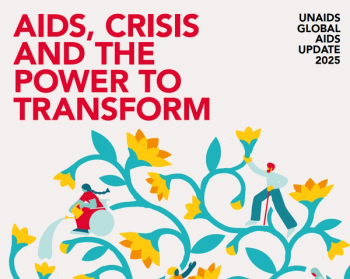
But 25 low- and middle-income countries have responded with plans for increased allocation of HIV funds, says the UNAIDS executive director. "...countries, governments and civil society are not lying down and waiting to die..."
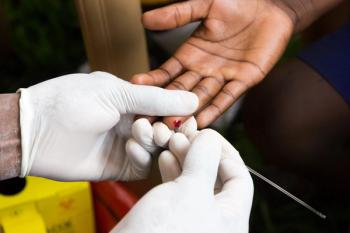
“Millions of lives and decades of progress hang in the balance,” says the president of the International AIDS Society (IAS) during a premeeting press conference.

Peripheral blood stem cell transplants are safer and easier for the donor and with contemporary graft-vs-host disease (GVHD) prophylaxis, they don't appear to pose any additional GVHD risk for the recipient.

Although improved prophylaxis with post-transplant cyclophosphamide has reduced the chances of graft-vs-host disease developing, the problem has not disappeared entirely, says Antonio Jimenez Jimenez, M.D., of the Sylvester Comprehensive Cancer Center at the University of Miami Miller School of Medicine.

"We're trying to move away a little bit from the notion that seven out of eight or six out of eight is better than five out of eight," say Antonio Jimenez Jimenez, M.D., of the Sylvester Comprehensive Cancer Center, about HLA matching.

Less emphasis on full HLA matching means clinicians can find an appropriate donor for any patient, says Antonio Jimenez Jimenez, M.D., of the Sylvester Comprehensive Cancer Center at the University of Miami Miller School of Medicine, and a leading stem cell transplant researcher.

The healthcare provisions include Medicaid work requirements and a broadening of the exemption to Medicare drug price negotiation

Health insurers and others decry the steep cuts in Medicaid spending that are projected to total approximately $1 trillion over the next 10 years.

Cuts to Medicaid have divided Republicans in the Senate

Independent prescribing by health system pharmacists has decreased, but a survey shows greater involvement in emergency departments and an expanding role for pharmacy technicians.

Results presented at the 85th Scientific Sessions of the American Diabetes Association in Chicago highlight the potential for AI to detect disease before signs and symptoms occur.

There has been no or some progress in most areas since a National Institute of Health consensus development project in 2020, according to a group of experts. But exception is important: Prevention of moderate or severe chronic graft-vs.-host disease.

All the patients in the phase 2 study received cyclophosphamide, tacrolimus and mycophenolate mofetil for graft-vs-host disease prophylaxis.

The findings were consistent with those seen in a study of Western study participants.

Experts and advocates say that twice-a-year HIV PrEP injections have the prevention potential of a vaccine — and that a once-a-year version of lenacapavir would be even better. But will Yeztugo be available to the people who would benefit most from HIV PrEP?



Giving small-molecule drugs the same 13-year exemption from price negotiation as biologics would cost the federal government billions of dollars, argue three Harvard researchers