



About 1,700 hospitals will receive lump sums after the Supreme Court ruled that CMS was wrong when it cut reimbursement rates for Part B drugs.

Peter Wehrwein has been the lead editor of Managed Healthcare Executive since February 2020.
About 1,700 hospitals will receive lump sums after the Supreme Court ruled that CMS was wrong when it cut reimbursement rates for Part B drugs.

Nemolizumab quelled the itching caused by prurigo nodularis, a rare skin condition. By inhibiting interleukin-31, the experimental drug seems to have a downstream effect on other interleukins secreted during type 2 inflammation.

Shawn Gremminger, M.P.P., has worked for a variety of healthcare organizations in legislative affairs and policy roles.


When interleukin (IL)-31 stimulates nerves that create itchiness it may also have a downstream effect that tempers inflammatory processes, according to mouse model research done by investigators at the University of California, San Francisco.

Managing Editor of Managed Healthcare Executive, Peter Wehrwein, had a discussion with William Shrank, M.D., a venture partner with Andreessen Horowitz, a venture capital firm in Menlo Park, California, about how artificial intelligence's role is improving healthcare, where we are today with value-based care and the ongoing efforts of reducing waste in the healthcare space for this episode of the "What's on Your Mind" podcast series.

Results of a randomized trial reported in The Lancet Digital Health suggest a role for internet-based cognitive behavioral therapy, but many of the study volunteers were left with symptoms that would classify them as having major depressive disorder.

The Minnesota-based pharmacy benefit manager says a program that resulted in patients switching from two incretin therapy prescriptions to one yielded $7,500 in savings per patient and a total of $3.5 million.

The program yielded savings of $25,000 per patient in its pilot phase but is not expected to produce savings as a routine offering because reimbursement for home infusion was matched to reimbursement at a facility. Horizon executive Timothy O’Shea, Pharm.D., M.S., says cost savings were a “secondary outcome” of the program and noted the high patient satisfaction.

Just over 160 patients have participated in the insurer's oncology home infusion program since it started in late 2020. Patient satisfaction is high, according to Horizon officials, who are looking to expand the program with other providers in its market and to include more drugs that patients could be treated with at home.

Melissa Andel, M.P.P., sees delinking of administrative fees to drug prices and various transparency and disclosure provisions as likely to make it into a final pharmacy benefit manager (PBM) legislation making it into a final bill.

The increase is close to inflation and wage growth but much steeper than the atypically small increase in 2022.

Melissa Andel, M.P.P., of CommonHealth Solutions LLC, says there has been some retreat from earlier proposals for severe regulation to an emphasis on disclosure and transparency.

Melissa Andel, M.P.P., of CommonHealth Solutions LLC, thumbnailed the four pieces of legislation advancing through Congress that would tighten regulation and oversight of pharmacy benefit managers (PBMs).

Mark Dybul, M.D., the keynote speaker for the closing session of the IDWeek meeting in Boston, delivered an impassioned defense of the U.S. President's Emergency Plan for AIDS Relief (PEPFAR) as its reauthorization by Congress has got ensnarled in abortion issues.
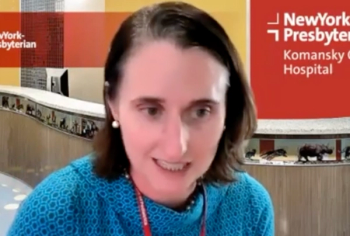
Cytomegalovirus (CMV) expert Sallie Permar, M.D., Ph.D., of NewYork-Presbyterian/Weill Cornell Medical Center spoke about the phase 3 trial of Moderna’s mRNA vaccine against CMV and another candidate being developed by Merck that showed some promise in a phase 2B trial.
Cytomegalovirus (CMV) expert Sallie Permar, M.D., Ph.D., of NewYork-Presbyterian/Weill Cornell Medical Center says lack of awareness and funding as well as some characteristics of the virus itself have slowed development of vaccine against CMV.
Cytomegalovirus (CMV) expert Sallie Permar, M.D., Ph.D., of NewYork-Presbyterian/Weill Cornell Medical Center says the epidemiology of congenital CMV hasn’t varied much over the years and that the condition does disproportionately affect lower socioeconomic populations and communities of color in the U.S.
Cytomegalovirus (CMV) expert Sallie Permar, M.D., Ph.D., of NewYork-Presbyterian/Weill Cornell Medical Center says that as the most common infectious cause of long-term disability CMV should be the number one target of vaccine development.

Su Wang, M.D., M. P.H., of Cooperman Barnabas Medical Center says liberalizing and simplifying hepatitis B treatment guidelines would elevate patient-centered decision-making and help reduce transmission of the virus.

Opill (norgestrel) is expected to be available early in 2024. Whether it truly broadens access to daily contraception will depend on Medicaid coverage, which is spotty, requirements under the ACA and pharmacist prescribing.

Two-thirds of patients with renal comorbidities achieved “clinical success” with the new fecal microbiota treatment for C. difficile.
Patients with chronic kidney disease and other renal impairments tend to have worse outcomes from C. difficile infections.


The new chief scientific officer of the Crohn’s and Colitis Foundation talked about the search for what triggers the chronic inflammation of Crohn’s disease and ulcerative colitis.

The chair of Harvard Medical School’s bioinformatics department says the deterministic, discrete data of billing and reimbursement means that artificial intelligence’s first big impact in healthcare is likely to be in “the business of healthcare.”
The new chief scientific officer of the Crohn’s and Colitis Foundation talked about what motivated him to pursue a career researching and taking care of Crohn’s and colitis patients.


A hemophilia expert makes some comparisons between the two approved gene therapies for hemophilia.

The authors of a case series reported in today's edition of JAMA Ophthalmology say silicone oil droplets from silicone used to lubricate the McKesson syringes is the most likely cause of the droplets presumed to cause the floaters. Of the 55 patients treated with Syfovre, 16 developed floaters.