



The AAO 2025 meeting ends Monday afternoon with presentations on possible ocular side effects from the GLP-1s.
The AAO 2025 meeting ends Monday afternoon with presentations on possible ocular side effects from the GLP-1s.

An expert discusses how the lack of transparency in medication pricing creates a "black box" between actual drug costs and patient expenses, negatively affecting both patient care and the health care system's ability to provide effective vitiligo treatments.

In ER+/HER2- metastatic breast cancer, treatment in later lines focuses on extending disease control while managing resistance and maintaining quality of life.
An expert discusses how chronic kidney disease (CKD), often underdiagnosed and poorly recognized, is intricately linked with cardiovascular and metabolic conditions, emphasizing the urgent need for earlier detection, integrated care across specialties, and a more holistic approach to reduce the widespread impact on both heart and kidney health.
The EMERALD trial evaluated elacestrant, an oral SERD, as a potential new standard for patients with ER+/HER2– advanced breast cancer resistant to prior endocrine therapies.

In this interview, Steven Buslovich, M.D., CMD, MS, chief medical officer of senior care at PointClickCare, explains the growing role of AI in healthcare, particularly in managing patient transitions between care settings.

In this video interview, Francesca Bridge, MBBS, neurologist at Alfred Health in Melbourne, Australia, and Ph.D. candidate at Monash University, shares why the results of her latest research were reassuring, but surprising.

An expert discusses how treatment decisions must balance short-term burden with long-term benefits while avoiding protocol-driven step therapy requirements, as future comparative effectiveness trials and real-world evidence will better inform individualized patient care strategies.

Panelists discuss how guselkumab demonstrated a very reassuring safety profile with no new safety signals or unexpected adverse events compared with placebo and consistent with safety data from other disease indications, requiring no different monitoring protocols than standard care for Crohn’s disease patients on advanced therapies, while emphasizing that uncontrolled disease itself represents the biggest safety concern.
Panelists discuss how the GALAXI trial results demonstrated guselkumab’s durability, efficacy, rapid onset and clean safety profile with superiority over ustekinumab across most objective end points, including endoscopic response and deep remission. The clinical and endoscopic end points align with STRIDE-2 treatment targets and translate to meaningful patient outcomes, including symptom resolution and reduced future hospitalizations, surgeries and disease flares.

An expert discusses how nonstatin therapies serve as essential tools when patients can’t tolerate statins or need additional LDL cholesterol-lowering agents. These include ezetimibe (a cholesterol absorption inhibitor), bempedoic acid (a liver-specific prodrug) and PCSK9-interfering therapies (both injectable monoclonal antibodies and inclisiran), with treatment selection based on patient comorbidities, cardiovascular risk level and specific LDL cholesterol targets.
Some menopause symptoms may be mistaken for multiple sclerosis symptoms in older women, new research finds.
An expert discusses how insurance coverage barriers for Janus kinase (JAK) inhibitors in vitiligo treatment can be overcome by demonstrating medical necessity, especially for visible areas such as the face and hands, while emphasizing the cultural and social stigma that makes treatment essential rather than cosmetic.
An expert discusses the growing burden of atherosclerotic cardiovascular disease (ASCVD) in the U.S., emphasizing the importance of prevention through lifestyle modification and risk factor management while highlighting the need for proactive public health strategies as prevalence continues to rise.
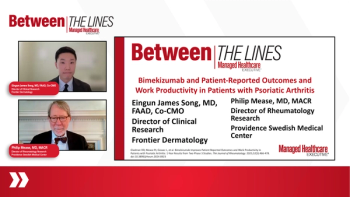
Panelists discuss how bimekizumab represents a valuable addition to the psoriatic arthritis treatment armamentarium, given its novel dual mechanism, ability to address multiple disease domains and potential to benefit patients who have lost response to other biologics, reducing healthcare burden and improving societal economic outcomes.
Panelists discuss how the GALAXI trials enrolled a broadly generalizable population of adults with moderate to severe Crohn’s disease (CDAI 220-450) requiring objective evidence of active inflammation, including both bio-naive and bio-experienced patients with approximately 40% to 50% having previously failed advanced therapies, although patients previously exposed to ustekinumab or other p19 inhibitors were excluded due to the active comparator design.
An expert discusses how long-term durability data at one to two years, rather than short-term three-month responses, provides greater confidence in treatment selection and influences formulary decisions based on comparative efficacy and toxicity profiles.
Panelists discuss how the GALAXI-2 and GALAXI-3 trials represented a landmark study design for Crohn’s disease research through their rigorous triple-dummy active comparator methodology, treat-through model without rerandomization, inclusion of both bio-naive and bio-experienced patients, composite primary end points measured at individual patient levels, and the unique ability to conduct pooled analyses comparing guselkumab directly with ustekinumab as an active comparator.
An expert discusses how systemic treatments for vitiligo often have better patient adherence than topical treatments, though they require blood work monitoring and careful consideration of cardiovascular and other health risks.

HHS Secretary Robert F. Kennedy Jr.’s vaccine policies, the federal government shutdown, most-favored-nation drug pricing and the future of Medicare Advantage were among the topics discussed by a panel of Washington, D.C., healthcare policy professionals during a Managed Healthcare Executive webinar. Ryann Hill, M.P.H., of Indigo Hill Strategies; Patrick Cooney of The Federal Group; and Lindsay Greenleaf, J.D., MBA, of ADVI Health, provided insights and observations about the Trump administration’s approach to healthcare and drug pricing policy. Peter Wehrwein, managing editor of Managed Healthcare Executive, moderated the discussion.
Panelists discuss how bimekizumab treatment preserves workforce participation and productivity while maintaining a favorable safety profile. Oral candidiasis is the main distinguishing side effect compared with other IL-17 inhibitors, although it is rarely encountered in clinical practice.
Panelists discuss how bimekizumab showed significant improvements across multiple health-related quality of life measures, including the Psoriatic Arthritis Impact of Disease (PsAID)-12, Psoriatic Arthritis Quality of Life measure, and Bath Ankylosing Spondylitis Disease Activity Index (BASDAI), demonstrating comprehensive benefits beyond just physical symptoms.
An expert discusses how BCG-unresponsive NMIBC patients have heterogeneous clinical needs requiring individualized treatment strategies, while P&T committees evaluate new therapies by assessing unmet needs and comparing real-world evidence across single-arm trials.
Panelists discuss how the expanding treatment landscape for Crohn’s disease includes multiple mechanisms of action such as anti-tumor necrosis factor (TNF) agents, anti-integrin agents, interleukin inhibitors, and Janus kinase (JAK) inhibitors, with particular focus on guselkumab’s unique dual-acting mechanism as an IL-23 p19 inhibitor that also reduces CD64 expression on intestinal macrophages, although the clinical significance of this dual action compared with other p19 inhibitors remains to be fully determined.
Panelists discuss how maintaining patients on effective single therapies for Crohn’s disease is preferable to switching between different mechanisms of action, while addressing access challenges created by insurance step-therapy requirements and biosimilar policies that can interfere with optimal treatment selection.
An expert discusses how primary and secondary prevention differ in atherosclerotic cardiovascular disease, with secondary prevention targeting patients who have already had events such as heart attacks or strokes and primary prevention addressing high-risk patients with multiple risk factors. He explains that statin intolerance can be complete (due to severe complications such as rhabdomyolysis) or partial (ranging from mild to severe muscle aches), while statin resistance occurs when patients tolerate the medication but don’t achieve expected LDL cholesterol reductions.
Panelists discuss how bimekizumab demonstrated significant improvements in pain scores (from baseline levels around 60/100) and fatigue measures, with meaningful percentages of patients achieving clinically important reductions that translate to noticeable real-world benefits.
Panelists discuss how the clinical trial populations, characterized by middle-aged males with elevated body mass index (BMI) and moderate disease burden, accurately reflect real-world patients with psoriatic arthritis seen in clinical practice, including those with oligoarticular disease.

Robert Gamble, CEO of RxBenefits, shares how Illuminate Rx does specialty, plus the areas they will continue to innovate on.

An expert discusses how payers face multiple access challenges including high treatment costs exceeding $100,000 per patient, coverage restrictions through prior authorization and operational barriers requiring specialized administration facilities, and proposes solutions like value-based contracting and enhanced patient selection tools.