


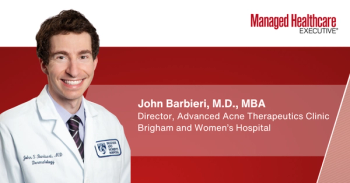
Barbieri, director of the Advanced Acne Therapeutics Clinic at Brigham and Women's Hospital in Boston, provided an update on spironolactone at the American Academy of Dermatology meeting in Denver.
Barbieri, director of the Advanced Acne Therapeutics Clinic at Brigham and Women's Hospital in Boston, provided an update on spironolactone at the American Academy of Dermatology meeting in Denver.
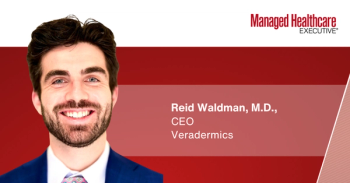
CEO of Veradermics, Reid Waldman, M.D., shared that faster hair growth and shifting patient views on prescription treatments could play a key role in improving adherence and outcomes for pattern hair loss.
At the 2026 American Academy of Dermatology meeting, Reid Waldman, M.D., shared data showing that Veradermics’ investigational oral drug VDPHL01 produced faster, more consistent and greater hair growth than existing minoxidil treatments.

Results of a study done at Cedars-Sinai Medical Center in Los Angeles and Brigham and Women's Hospital in Boston suggest that older patients with low medication adherence and literacy might benefit from a pharmacist-led medication management as they are leaving the hospital.
Pharmacists have the training and are employed by the health system so it makes sense to put them in charge of postdischarge medication planning and management
Joshua M. Pevnick, M.D., M.S.H.S., discusses medications and the risk of an adverse drug event among older people after they get discharged from the hospital.

IBX and Jefferson target earlier dementia diagnosis, support caregivers and use AI data to keep patients safely at home and cut costs in new dementia care program.

Utah's Office of Artificial Intelligence Policy has approved demonstration projects testing AI for prescription drug renewals and certain dental diagnoses.
Primary care dementia program adds community health workers to streamline screening, workups, and family guidance for earlier Alzheimer’s care.
Demonstration projects testing AI for prescription renewals and certain dental diagnoses have been approved by Utah's Office of Artificial Intelligence Policy.
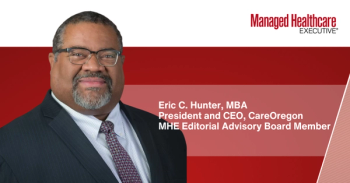
The state of Oregon has a commitment to keeping people covered and created a bridge program that extended Medicaid eligibility, Hunter noted.
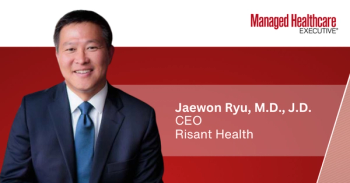
Shorter hospital stays are a "good barometer" for quality and patient experience, says Risant Health CEO Jaewon Ryu.
The need for translation and navigation services — the staffing to support them has increased, says Hunter, particularly in immigration communities.
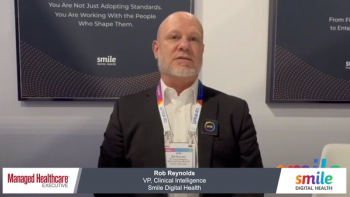
Smile Digital Health’s Intelligence Hub operationalizes computable clinical knowledge into measurable outcomes. Learn how payers and providers use unified data, digital HEDIS, and guideline-driven intelligence to close care gaps, reduce friction, and deliver real ROI.
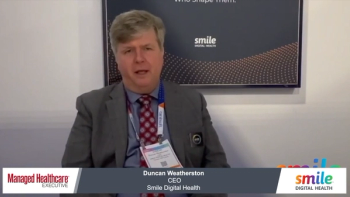
As Smile Digital Health enters its 10th year, CEO Duncan Weatherston shares why 2026 marks a strategic shift from data interoperability to unified data and intelligence. Discover how Smile Omni transforms fragmented systems into computable, actionable healthcare ecosystems.

HHS Secretary Robert F. Kennedy Jr.’s vaccine policies, the federal government shutdown, most-favored-nation drug pricing and the future of Medicare Advantage were among the topics discussed by a panel of Washington, D.C., healthcare policy professionals during a Managed Healthcare Executive webinar. Ryann Hill, M.P.H., of Indigo Hill Strategies; Patrick Cooney of The Federal Group; and Lindsay Greenleaf, J.D., MBA, of ADVI Health, provided insights and observations about the Trump administration’s approach to healthcare and drug pricing policy. Peter Wehrwein, managing editor of Managed Healthcare Executive, moderated the discussion.
The costs are high, and the care system is designed for episodic intervention, “but then what happens?" asks Hunter.
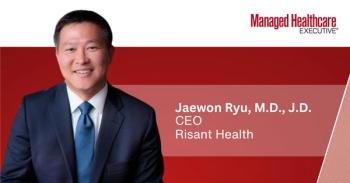
Risant Health comprises Geisinger Health in Pennsylvania and Cone Health in North Carolina. Risant CEO Jaewon Ryu, M.D., J.D., discussed how the two systems are prime candidates for adopting value-based care practices
James Ellison, M.D., M.P.H., and IBX’s Rodrigo Cerdá, M.D., M.P.H., back Jefferson Health primary care screening to catch dementia care needs early and coordinate support.
Jaewon Ryu, M.D., J.D., sees prevention and early recognition of disease as central to value-based care practices and programs at health systems.
Jaewon Ryu, M.D., J.D., CEO of Risant Health, discusses the role of accountable care organizations in supporting value-based practices at health systems.

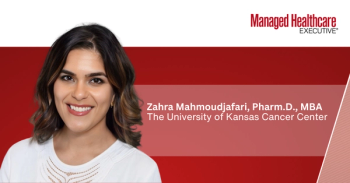
Zahra Mahmoudjafari shares how The University of Kansas Cancer Center builds sustainable cell and gene therapy programs amid new CMS access rules.
In the first segment of a video interview with MHE, the CEO of Risant Health discusses the role of scale in following value-based practices.