



Mulugeta Gebregziabher, Ph.D., spoke with Managed Healthcare Executive ahead of his presentation at IAS 2025 in Kigali, Rwanda, about the risks posed by U.S. cuts to global HIV prevention funding.
Mulugeta Gebregziabher, Ph.D., spoke with Managed Healthcare Executive ahead of his presentation at IAS 2025 in Kigali, Rwanda, about the risks posed by U.S. cuts to global HIV prevention funding.

At the IAS 2025 conference in Kigali, Rwanda, Banky Olatosi, M.P.H., M.S., Ph.D., of the University of South Carolina, shed light on how systemic racism and social determinants of health influence HIV diagnoses and care across U.S. regions.

While successes have been seen because of HIV self-testing, funding cuts to USAID and PEPFAR will make continued research difficult, according to Anna Bershteyn, Ph.D., associate professor in the Department of Population Health, NYU Grossman School of Medicine.
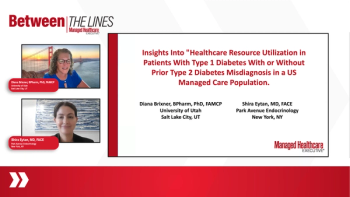
Panelists discuss how to improve diagnostic accuracy through increased awareness and education among healthcare providers, simplifying antibody testing processes and identifying high-risk patients who should be screened for type 1 diabetes, including those with family history or other autoimmune conditions.

Experts, such as Lloyd Mulenga, M.Sc., M.B., Ch.B., Ph.D., discuss long-acting injectable HIV PrEP's potential in Zambia, emphasizing community involvement and sustainable rollout amid funding challenges.

Alarice Marsh, M.P.H., a deputy director in the National Department of Health of South Africa and program lead of HIV testing services, spoke with MHE editors about her thoughts on the new recommendations for HIV and sexually transmitted diseases that were issued by the World Health Organization (WHO) today.
There is currently a movement to “de-medicalize" PrEP by pushing for more availability at more casual settings than government clinics, according to Anna Bershteyn, Ph.D., associate professor in the Department of Population Health, NYU Grossman School of Medicine.


The most common HIV antibody blood test is called an “A-0” test, which is available for approximately 70 cents in many low- and middle-income countries, according to Anna Bershteyn, Ph.D., associate professor in the Department of Population Health, NYU Grossman School of Medicine.

In this part three interview of a video series, Hari Prasad, CEO of Yosi Health, told Managed Healthcare Executive editors that cutting administrative burdens through digitized prior authorizations could improve patient outcomes and restore valuable time to physicians.
In this part two interview of a three-part video series, Hari Prasad, CEO of Yosi Health, said in an interview with MHE that AI can reduce administrative delays in prior authorization, but it must be paired with oversight to ensure patient safety.
A panelist discusses how given PODIUM-303's benefits across all subgroups, the primary patient population that should receive chemotherapy alone rather than the combination with retifanlimab would be those with contraindications to checkpoint inhibitors, specifically patients with autoimmune diseases such as irritable bowel disease, organ transplant recipients or those with severe rheumatoid arthritis requiring immunosuppressants, where the risks of checkpoint inhibitor administration outweigh potential benefits, while noting that no validated biomarker currently exists to exclude patients from retifanlimab treatment.
An expert discusses how vitiligo patients commonly develop thyroid disease as a comorbidity and face increased skin cancer risk while highlighting the urgent need for new treatments beyond the single FDA-approved ruxalitinib cream to prevent disease spread and reduce reliance on problematic steroids.
An expert discusses how vitiligo significantly affects patients’ psychosocial health due to its visible nature, unpredictable course, slow treatment response, and particularly severe impact on younger patients and those with darker skin tones who may experience depression and social isolation.
A panelist discusses how the POD1UM-303 trial showed that no patient subpopulation was clearly excluded from benefiting from retifanlimab plus carboplatin/paclitaxel in terms of progression-free survival, though PD-L1-negative patients (representing only 10% of the study population) demonstrated a less robust overall survival signal compared to their positive progression-free survival benefit, suggesting that while PD-L1 status is not a validated exclusion biomarker, further research is needed to better understand the optimal benefit in PD-L1-negative patients given prior data showing lower response rates with PD-1 inhibitors in this subgroup.
In an interview with Managed Healthcare Executive, Yosi Health CEO Hari Prasad praised insurers' new voluntary pledge to simplify prior authorization, calling it a key step toward faster care and reduced administrative burdens for providers and patients.

Period-induced alcohol cravings and societal changes are contributing to a rising trend in women drinking, according to new research from Sarah McKetta, M.D., Ph.D., assistant professor, Mailman School of Public Health, Columbia University and Layne Robinson, clinical psychology doctoral student and graduate research assistant in the RISK Laboratory, University of Kentucky.

Michael Abrams, M.A., managing partner at Numerof & Associates, warned that without clear eligibility rules, the new $50 billion rural hospital relief fund could end up helping the wrong providers instead of the rural hospitals most in need.
Panelists discuss how patients with prior type 2 diabetes misdiagnosis showed significantly higher healthcare utilization rates across all categories (inpatient admissions, emergency visits, outpatient visits, lab procedures, and medications) compared to those correctly diagnosed with type 1 diabetes from the beginning.
Managed Healthcare Executive spoke with Michael Abrams, M.A., managing partner at Numerof & Associates, to discuss the newly passed $50 billion rural hospital relief fund and what it could mean for rural health systems. In a conversation that took place just before the legislation passed in the Senate on July 1, Abrams expressed cautious support for the fund while warning that without proper structure, it could fall short of meaningful change.
In an interview with Managed Healthcare Executive ahead of the Senate and House vote and under President Trump's official seal of approval on July 4, Michael Abrams, M.A., warned that without clear eligibility rules, the newly approved $50 billion rural hospital relief fund could be exploited by non-rural providers and fail to support the facilities it was meant to save.

Menopause therapy coverage varies by insurance type and is dependent on FDA approval status, clinical guidelines and prior authorizations, all of which are best navigated with the help of a managed care pharmacy expert, according to Susan Cantrell, CEO, Academy of Managed Care Pharmacy.

Peripheral blood stem cell transplants are safer and easier for the donor and with contemporary graft-vs-host disease (GVHD) prophylaxis, they don't appear to pose any additional GVHD risk for the recipient.

Although improved prophylaxis with post-transplant cyclophosphamide has reduced the chances of graft-vs-host disease developing, the problem has not disappeared entirely, says Antonio Jimenez Jimenez, M.D., of the Sylvester Comprehensive Cancer Center at the University of Miami Miller School of Medicine.

"We're trying to move away a little bit from the notion that seven out of eight or six out of eight is better than five out of eight," say Antonio Jimenez Jimenez, M.D., of the Sylvester Comprehensive Cancer Center, about HLA matching.

Less emphasis on full HLA matching means clinicians can find an appropriate donor for any patient, says Antonio Jimenez Jimenez, M.D., of the Sylvester Comprehensive Cancer Center at the University of Miami Miller School of Medicine, and a leading stem cell transplant researcher.
A panelist discusses how the POD1UM-303 randomized phase 3 trial demonstrated that adding retifanlimab (a PD-1 inhibitor) to carboplatin and paclitaxel significantly improved progression-free survival from 7.4 to 9.3 months with a 37% reduction in progression risk, showed strong trends toward overall survival improvement (23 to 29.2 months despite 45% crossover), increased complete response rates from 14% to 22% and doubled median duration of response from 7.2 to 14 months, establishing this combination as the new standard of care for advanced squamous cell anal carcinoma despite manageable immunotherapy-related side effects.
A panelist discusses how the most effective therapy for squamous cell anal carcinoma is prevention through human papillomavirus vaccination (which may reduce cancer rates in 10-20 years), while acknowledging significant unmet therapeutic needs including personalized approaches for high-risk locoregional disease with 40% recurrence rates and improved treatments for metastatic disease where median survival remains under 20 months, leading to the recent adoption of carboplatin/paclitaxel plus retifanlimab as the new NCCN-preferred first-line regimen based on the PODIUM-303 trial results.