

Opinion|Videos|August 20, 2026
FSGS Payer Policy: Aligning Coverage with the Sparsentan Label
Author(s)Kirk Campbell, MD, Howard Trachtman, MD
The FDA label reaches further than the pivotal trial's inclusion criteria, and DUPLEX's own subgroup data reveals where the treatment effect holds strongest and where it does not.
Advertisement
Episodes in this series

"FSGS Payer Policy: Aligning Coverage with the Sparsentan Label" takes up the gap between DUPLEX's enrollment criteria and the broader population the FDA label actually covers.
Dr. Campbell clarifies the FDA's approved label: sparsentan is indicated to reduce proteinuria in patients age 8 and older with FSGS who do not have nephrotic syndrome, defined either by documented history or by the concurrent presence of substantial proteinuria, low serum albumin, and edema. He notes the label doesn't set a minimum UPCR threshold and doesn't exclude any FSGS subtype, meaning primary, secondary, genetic, and undetermined-cause patients are all technically eligible for treatment. Breaking down the DUPLEX population, Dr. Campbell explains that non-nephrotic patients made up 68% of the trial and showed a clear treatment effect, with a 48% proteinuria reduction on sparsentan versus 27% on irbesartan, alongside a meaningful eGFR advantage. Among the 32% of patients who did have nephrotic syndrome, however, sparsentan showed no real advantage over irbesartan, 39% versus 37% proteinuria reduction, essentially indistinguishable results between the two arms.
Dr. Trachtman is asked to clarify the confusion some clinicians have around this distinction, since it's easy to assume a histologic FSGS subtype, rather than the nephrotic syndrome criteria themselves, determines eligibility. He traces the term nephrotic syndrome back to nephrologists recognizing that glomerular disease could present along a nephritic-to-nephrotic spectrum, and notes the FDA's definition required all three classic criteria together, not any single feature. He points out that average proteinuria was still in the nephrotic range across both trial arms, so proteinuria level alone doesn't explain the split in outcomes. Instead, Dr. Trachtman raises the possibility that patients with edema in the trial may simply have had more clinically active, less stable disease at enrollment, which could account for the muted treatment effect, rather than nephrotic syndrome itself blunting the drug's underlying biology.
Up next, in "Communicating with Payers: Practical Guidance for Sparsentan Access in FSGS," the experts close the series with practical guidance for aligning payer coverage with the evidence.
Advertisement
Related to this article

As the pharmacist pipeline tightens, leaders from UC Davis Health, UCSF Health, and Sutter Health say financial sustainability now depends as much on capacity as on cost.

GLP-1 use in adults 65 and older with MASLD was linked to a 45% lower risk of death, and a 28% lower risk of hepatic decompensation, a new Houston Methodist Research Institute study shows.

New data from Sutter Health suggest the real gap in GLP-1 access is physician awareness, not insurance coverage — and fixing it closed outcome disparities across every racial and ethnic group.

Research findings presented at the CHEST meeting show that false positives may make patients more adherent to screening. Qualitative research shows that patients want more explanation and results communicated verbally.

David Chen, PharmD, explains how physician-led formulary decisions — not rebates — power Kaiser Permanente’s biosimilar strategy, and why he thinks other health systems could do the same.

10 research abstracts presented at the CHEST meeting are split on whether hospital admission during the weekend is assoicated with worse outcomes than admission on weekdays.

Research findings scheduled to be presented at the CHEST meeting show broad positive cardiopulmonary effects from GLP-1s and an association with a reduced risk of acute respiratory failure.
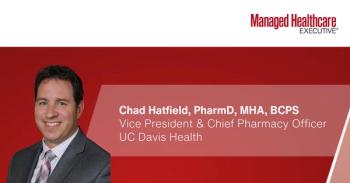
Chad Hatfield, Pharm.D., of UC Davis Health, says 340B savings fund free clinics and mental health care that could shrink as the program’s future shifts.
Advertisement
Advertisement
Trending on Managed Healthcare Executive
1
Kaiser’s formulary chief makes his case for a ‘total value’ model on biologics | HSES 2026
2
Long-acting lenacapavir plus cabotegravir kept all 46 patients with HIV virally suppressed in recent trial
3
More pluses for GLP-1s for obstructive sleep apnea | CHEST 2026
4
Chad Hatfield, Pharm.D., on the 340B uncertainty facing health systems| HSES 2026
5