

Opinion|Videos|August 20, 2026
Communicating with Payers: Practical Guidance for Sparsentan Access in FSGS
Author(s)Kirk Campbell, MD, Howard Trachtman, MD
Aligning payer criteria with the FDA label, rather than the trial's narrower enrollment rules, may determine how many patients with this costly, progressive disease actually gain access to treatment.
Advertisement
Episodes in this series

In "Communicating with Payers: Practical Guidance for Sparsentan Access in FSGS," the panel closes the series with practical guidance on aligning payer coverage with the evidence behind sparsentan.
Dr. Campbell asks how payer coverage criteria should be worded given the gap between DUPLEX's trial inclusion rules and the broader FDA label. Dr. Trachtman argues that if a patient has proteinuria above 1.5 grams and a physician prescribes sparsentan, coverage should follow, with clinical judgment guiding use rather than the trial's stricter enrollment criteria. He stresses that careful, timely follow-up should justify continued coverage rather than closing the door on the drug outright, placing the burden on practitioners to confirm effectiveness and safety over time. Asked for practical advice on communicating with payers, Dr. Trachtman points clinicians toward the DUPLEX summary data as the strongest available evidence, and urges providers to advocate directly for patients, since confirmed FSGS carries roughly a 40% to 50% chance of progressing to kidney failure within five to ten years and sparsentan remains the only approved therapy. He calls for collaboration with patient advocacy groups to help payers recognize that risk, alongside disciplined monitoring so resources aren't wasted on ineffective treatment.
Dr. Trachtman emphasizes that real-world, post-approval data on proteinuria reduction and kidney function preservation will be essential for updating both the FDA and payers as more evidence accumulates over time. Asked for final takeaways, Dr. Trachtman calls DUPLEX's completion, by the sponsor, investigators, and patients, a monumental accomplishment and the first step in an ongoing dialogue between patients, regulators, and payers, rather than a finished answer. He reminds payers that untreated, unresponsive FSGS carries real costs, in lost work and school time and progression to end-stage disease, that can outweigh a drug's sticker price. Dr. Campbell agrees, noting a promising therapeutic pipeline behind sparsentan and expressing hope that FSGS care is entering a precision-medicine era with multiple treatment options ahead for patients.
Thank you for watching this Managed Healthcare Executive Between The Lines series on focal segmental glomerulosclerosis. Please subscribe to our eNewsletter for information on upcoming video series.
Advertisement
Related to this article

As the pharmacist pipeline tightens, leaders from UC Davis Health, UCSF Health, and Sutter Health say financial sustainability now depends as much on capacity as on cost.

GLP-1 use in adults 65 and older with MASLD was linked to a 45% lower risk of death, and a 28% lower risk of hepatic decompensation, a new Houston Methodist Research Institute study shows.

New data from Sutter Health suggest the real gap in GLP-1 access is physician awareness, not insurance coverage — and fixing it closed outcome disparities across every racial and ethnic group.

Research findings presented at the CHEST meeting show that false positives may make patients more adherent to screening. Qualitative research shows that patients want more explanation and results communicated verbally.
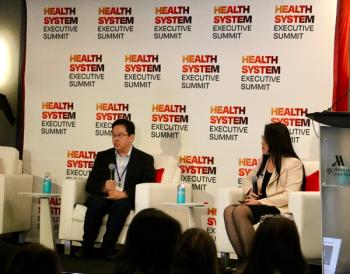
David Chen, PharmD, explains how physician-led formulary decisions — not rebates — power Kaiser Permanente’s biosimilar strategy, and why he thinks other health systems could do the same.

10 research abstracts presented at the CHEST meeting are split on whether hospital admission during the weekend is assoicated with worse outcomes than admission on weekdays.

Research findings scheduled to be presented at the CHEST meeting show broad positive cardiopulmonary effects from GLP-1s and an association with a reduced risk of acute respiratory failure.
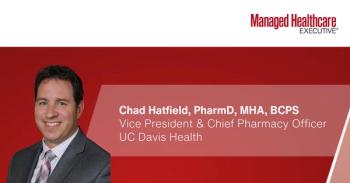
Chad Hatfield, Pharm.D., of UC Davis Health, says 340B savings fund free clinics and mental health care that could shrink as the program’s future shifts.
Advertisement
Advertisement
Trending on Managed Healthcare Executive
1
Kaiser’s formulary chief makes his case for a ‘total value’ model on biologics | HSES 2026
2
Long-acting lenacapavir plus cabotegravir kept all 46 patients with HIV virally suppressed in recent trial
3
More pluses for GLP-1s for obstructive sleep apnea | CHEST 2026
4
Chad Hatfield, Pharm.D., on the 340B uncertainty facing health systems| HSES 2026
5