






Dermatology
Latest News
Advertisement
Latest Videos






Shorts
1:03
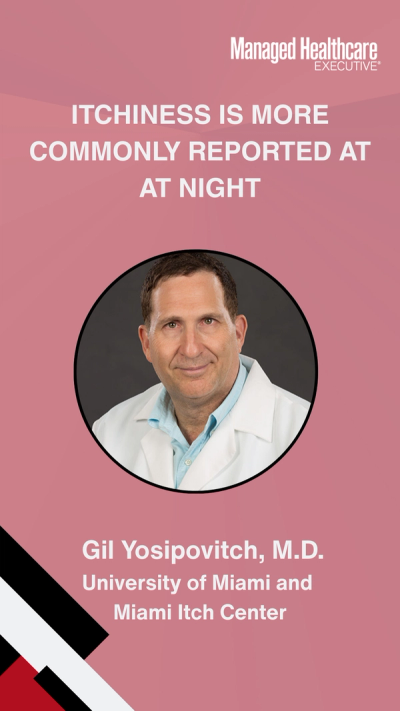
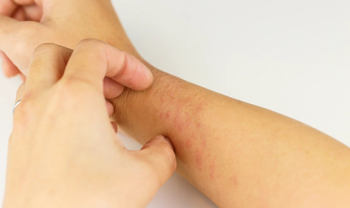
Itchiness is more severe at night than in the daytime, study finds
7 months ago
by
Logan Lutton























Advertisement
More News
Some dermatologists are calling for the switch because resistance to antifungal medications is growing.

Line-field confocal optical coherence tomography (LC-OCT) and reflectance confocal microscopy (RCM) have good specificity and sensitivity. Cost may be an issue.

The finding is not novel, but it adds to the evidence base that atopic dermatitis makes people more susceptible to developing shingles.

The researchers used efficiency frontier analysis, an alternative to quality-adjusted life years (QALYs), to rank adalimumab, secukinumab and bimekizumab, biologics used for hidradenitis suppurativa.
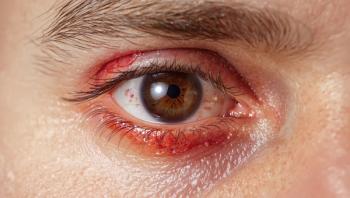
Research suggests that uveitis could be a clinical marker for the cancer-targeted immune response that Keytruda and other immune checkpoint inhibitors are designed to produce.

Experts agreed that staging and surveillance imaging should be used when there is a 15% risk of metastasis.

University of Vermont Health dermatologists argue that is wasteful and causes undue worry to routinely test patients taking isotretinion for elevated liver enzymes and triglycerides.

The findings from a matched cohort study add to the body of evidence that people with vitiligo are likely to contend with other health problems.

Skinvive by Juvéderm recently received FDA approval as the first hyaluronic acid injectable indicated for reducing horizontal neck lines, with 74.8% of trial participants achieving clinically significant improvement at one month.

The FDA has approved the sunscreen ingredient bemotrizinol, which blocks both UVA and UVB rays.

The FDA has approved a new maintenance dosing schedule for Ebglyss that reduces injections to as few as six per year for patients with moderate to severe atopic dermatitis.

The FDA has approved Epiduo for over-the-counter use, a combination acne gel previously available only by prescription, a decision experts say could expand access to effective treatment for the millions of Americans who face cost and logistical barriers to dermatological care.

A French study found that a higher dose of ivermectin was not more effective than the standard dose when combined with topical therapy for treating severe scabies.

A pilot study of demodex mites and antimicrobial peptides published in the Journal of the American Academy of Dermatology found biologic differences between sensitive skin syndrome and rosacea, suggesting the conditions are distinct despite sharing similar symptoms and triggers.

Skin cells can actively help the rabies virus multiply and pass into nearby nerve cells, explaining how even small bites or scratches, particularly from bats, can lead to infection.

A study in JAMA Dermatology found that people using an AI tool were more accurate and confident in identifying skin conditions than those using standard methods, though it did not improve their understanding of next steps for care.

A large study of more than 780,000 adolescents found that atopic dermatitis is not associated with lower academic performance on national exams in Denmark or England.

Vitiligo is a chronic autoimmune disease that affects skin pigmentation and, while not painful or contagious, requires greater attention in managed care due to its long-term nature and psychosocial impact.

The FDA has approved Icotyde as the first and only IL-23R targeted oral peptide for the treatment of moderate-to-severe plaque psoriasis.

The FDA has approved Cosentyx as the first interleukin-17A (IL-17A) inhibitor approved for pediatric hidradenitis suppurativa.

The FDA has approved Sotyktu (deucravacitinib) as the first selective TYK2 inhibitor for adults with active psoriatic arthritis.

UT Southwestern researchers found that testosterone may increase susceptibility to staph infections by activating bacterial communication pathways.

A conversation with Gil Yosipovitch, M.D., explores why itch worsens at night, how it rivals chronic pain in quality-of-life impact, and why better assessment of nighttime itch and sleep disruption is urgently needed.

Advertisement
Advertisement
Trending on Managed Healthcare Executive
1
Christine Johnston on why biosimilars are losing formulary ground
2
Medical debt burdens more than 1 in 4 adults in the U.S., survey finds
3
McKesson, private equity firm buy home infusion company, Option Care Health
4
Medicare Advantage needs fixing. Here are 3 feasible repairs
5