






















Healthcare providers can consider these strategies when developing a plan to transition to more frequent in-office treatment.

Healthcare providers can consider these strategies when developing a plan to transition to more frequent in-office treatment.

Paying attention to the social determinants of health may be a powerful way of improving cardiovascular outcomes.

In this week’s episode of Tuning In to the C-Suite podcast Briana Contreras, associate editor of Managed Healthcare Executive, spoke with David Lareau, CEO of Medicomp Systems about four areas that must be addressed to improve the usability of health IT, address interoperability issues, and minimize clinician burden.

In this second part of a two-part article series, Curtis Gattis, CEO and co-founder of LeadingReach, discusses how healthcare organizations participating in risk-based contracting or value-based financial and care delivery models are currently facing major challenges with integrating, managing and tracking care coordination and communication capabilities within provider networks.

In this first of a two-part article series, Curtis Gattis, CEO and co-founder of LeadingReach, discusses how healthcare organizations participating in risk-based contracting or value-based financial and care delivery models are currently facing major challenges with integrating, managing and tracking care coordination and communication capabilities within provider networks.
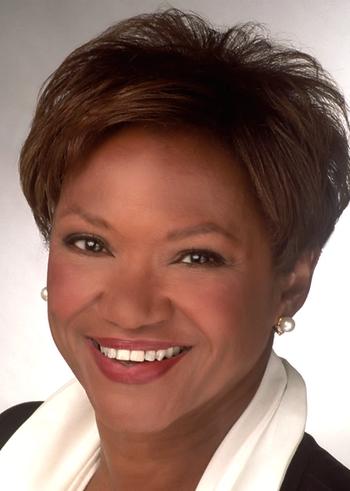
In this final video of three-part video interview series, MHE spoke with founder and CEO of Gray Matter Analytics. In the discussion, Sheila addressed the topic of how healthcare organizations are missing out by not actively expanding their efforts to seek out and fast track talented individuals across many minority populations, especially in the c-suite.
In this second of three-part video interview series, MHE spoke with founder and CEO of Gray Matter Analytics. In the discussion, Sheila addressed the topic of how healthcare organizations are missing out by not actively expanding their efforts to seek out and fast track talented individuals across many minority populations, especially in the c-suite.

Especially during the COVID-19 pandemic, healthcare systems and a variety of other healthcare entities have been sending lots of text messages to patients. Reminders about appointment, prompts to take medications, health information updates — they are part of healthcare’s new enthusiasm for all things digital and remote.

Since the start of the COVID-19 pandemic, a lot of progress has been made toward a better future, but it’s clear there’s still significant room for improvement. While progress is made in one area, other issues that live beneath the surface bubble up. That’s certainly the case for the current state of mental health.

The healthcare system is facing an onslaught of patients with new and worsening conditions due the COVID-19 pandemic, but it is nowhere near ready to accommodate them.

Amid the nursing shortage, hospitals can create better working conditions through these three technology solutions.

Medicine is both an art and a science. Some physicians would contend that science—specifically data science—has overtaken medicine and limited their ability to make decisions based on informed intuition and personal experience.

The State of Texas remains to recover from the winter storm blackout back in February. While the state still has much rebuilding and catching back up to do by covering damages and other economic losses, new operations among the state's and nation’s healthcare providers are coming out of it.

Briana Contreras, associate editor of MHE, spoke with Sheila Talton, founder and CEO of Gray Matter Analytics, in this week's episode of Tuning In to the C-Suite podcast. In the discussion, Sheila addressed the topic of how healthcare organizations are missing out by not actively expanding their efforts to seek out and fast track talented individuals across many minority populations, especially in the c-suite.

Dark skin is significantly underrepresented in medical literature and curricula, comprising an average of just 4.5% of images in medical textbooks. In response, clinicians of all licensures and specialties are often insufficiently trained to recognize disease patterns in patients of color. To confront this issue, Project IMPACT was created to raise awareness and adoption of educational and clinical resources and solutions that strengthen clinicians’ ability to accurately diagnose disease in black and brown skin and improve health equity.

The Covid-19 pandemic remains to leave challenges on our economies, well-beings and more. After a year of battling rising Covid-19 cases, other behavioral epidemics such as the tobacco, obesity and mental health epidemic seem to be sky-rocketing.

Now more than ever, dental providers are on the front lines of chronic disease. How? Before the pandemic, the Centers for Disease Control and Prevention (CDC) reported that older adults were more likely to visit a doctor than a dentist. Even though older adults with chronic conditions were more likely to have severe tooth loss than persons without chronic conditions, national data showed dental visits lagged behind medical.

MHE's Briana Contreras spoke with Bill Coletti, CEO, and Founder of Kith, a firm serving organizations in communication crisis and reputation management, in this week's episode of Tuning In to the C-Suite. Bill and Briana discussed how working with healthcare leaders during a crisis has changed since the COVID-19 pandemic, how leaders in the C-Suite can be prepared for a crisis and what to do in the journey post-crisis.

An industry-wide shift toward consumerism and value-based care reflects modern consumers’ desire for transparency around their healthcare coverage. In order to meet these heightened expectations, insurers must adapt and identify new ways to educate, engage and support members who are taking ownership of their options.

Healthcare workers, residents of long-term care facilities, and many public leaders have been the first to receive a Covid-19 vaccine in the U.S., but it’s essential to consider disadvantaged communities for phase 2 of vaccine deployment.

How sharing patient info improves care and streamlines provider processes

By using proactive care approaches for mental health, we have a tremendous opportunity to provide better care, reduce costs, and improve quality of life for millions.

For practitioners, there are real and unsettling questions as to what awaits in the future. Practitioners will find a new and evolving landscape is searching for liability insurance for 2021 and beyond.

With the number of PCPs declining, health plans can come in to support PCPs and play an active role in improving overall health literacy.

MHE's Briana Contreras spoke with Amy Dirks Stevens, EVP of Digital Strategy Performance and Practice Lead at AVIA health, for this week's episode of Tuning Into the C-Suite. The two talked about automation in health systems and how it can be a solution to challenges such as budget issues and creating more efficiency in the workplace. Also discussed were areas where health system leaders can begin to leverage artificial intelligence.