

























Hiring assistants that work virtually and outsourcing medical coding are two ways that providers can navigate through these times of increasing cost pressures and staffing shortages.
Hiring assistants that work virtually and outsourcing medical coding are two ways that providers can navigate through these times of increasing cost pressures and staffing shortages.

Medicare and Medicaid programs that serve the most-vulnerable Americans facing SDOH barriers can be major facilitators of appropriate non-emergency transportation to non-medical sites. But how do we determine what is appropriate, and what do we know about transportation services to non-medical sites today?
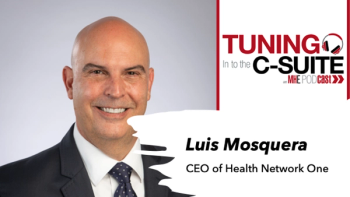
Briana Contreras, editor of Managed Healthcare Executive spoke with Luis Mosquera, CEO of Health Network One, a provider of specialty benefit management services for health insurers, in this week's episode. In this discussion, Luis and Briana talked about how value-driven decisions in a more value-based market can not only better manage costs for health plans, but create a plan of care to best meet patient’s needs. In order to do this, Luis strongly encouraged healthcare executives to experience alternative payment models and shared what payers should check off their list with a new model.

There is a bias in this country against people whose medical condition is perceived to be “their fault”– in other words, the result of their own lifestyle choices. To combat stigma and its harmful effects, there needs to be broader understanding, even among medical professionals.

A look inside six trends that will shape and influence care, planning and performance over the next year for health plans.

The true key to achieving high savings, more patient volume, and better health outcomes is to effectively use clinical and cost data with physicians to create interventions that improve performance.

Many have claimed that technology will be the great equalizer in healthcare. While technology is objective and purely data-driven and without prejudice, there can still be inherent biases that hamper the ultimate goal of health equity.

Hospital leaders who have historically viewed price transparency as potentially disastrous can tap into these three tips to leave that mindset behind and capitalize on the opportunities that price transparency provides.

In this interview, Briana Contreras, associate editor of Managed Healthcare Executive, spoke with Shara Cohen, CEO of Carallel, an organization built to support caregivers. Cohen not only spoke about who caregivers are and the vital role they play in healthcare, but the challenges they face. She also discussed ways health plans can do better to meet the needs of today’s caregivers.

Briana Contreras, associate editor of Managed Healthcare Executive, spoke with Shara Cohen, CEO of Carallel, an organization built to support caregivers, in this week's podcast. Shara shared not only who caregivers are and the vital role they play in healthcare, but the challenges they face. She also discussed ways health plans can do better to meet the needs of today’s caregivers.

Despite advances in medical science and technology, our healthcare system doesn’t always translate knowledge into practice. All too often, this leaves healthcare providers questioning the key business decisions that impact patient care. What caregivers need is a model for applying new technology safely and appropriately. Thankfully, such a model exists: the High Reliability Organization (HRO) model.

For health insurance executives, pursuing the Quadruple Aim is the name of the game.
Briana Contreras, associate editor of Managed Healthcare Executive, spoke with Josh Benner, founder and CEO of RxAnte, in this latest episode of Tuning In to the C-Suite podcast. In the conversation, Benner addressed the issue of medication misuse among patients based on access, demographics and more, as well as its solutions. The two also talked about the role technology has on the future of pharmacy and how solutions provided through RxAnte can assist plans to improve their CMS Start rating measures.
In this week’s episode, Managed Healthcare Executive Associate Editor Briana Contreras had the pleasure of meeting CEO of Quanterix and founder of Powering Precision Health, Kevin Hrusovsky. Quanterix is a blood-based biomarker analysis company. In this discussion, the two discussed Powering Precision Health and some tools like the Disruptive Innovation 5-step model that brings his vision closer of detecting and improving the health of patients sooner.
As IT outsourcing surges, finding the right partner is key. Below are five questions that can get you there.

Eighty-six percent of nurses said supply chain workflows cause them stress and 85% said documenting supplies is challenging.

In this final part of a two-part video series, Briana Contreras, associate editor of Managed Healthcare Executive, spoke with Summit Health’s Chief Quality Officer Ashish D. Parikh, MD, and Chief of Population Health Jamie Reedy, MD, about value-based care programs and contracts within Summit Health and what it takes to invest and implement these programs into your healthcare organization.

Engaging with payers in collaborative arrangements is critical for achieving quality outcomes at lower cost, while ensuring financial health for providers during good times and bad.
In this week's episode, Associate Editor, Briana Contreras spoke with Dr. Florian Otto, co-founder and CEO for Cedar, a complete healthcare financial engagement platform. Dr. Otto discussed the topic of compassionate billing and how this particular payment model is becoming triumphant over traditional healthcare payment models where patients are experiencing an increase in insurance deductibles and out-of-pocket medical expenses.

To say that Covid-19 has permanently transformed the meetings and events landscape would be stating the obvious, authors share in this opinion piece.
In this week's episode of "Tuning In to the C-Suite" podcast, Managed Healthcare Executive Senior Editor, Peter Wehrwein and Associate Editor, Briana Contreras, spoke with yet another Editorial Advisory Board Member for a segment of the "Meet the Board" series. The two had the pleasure of chatting with Meg Murray, M.P.A., founding CEO of the Association for Community Affiliated Plans, about her journey in healthcare, her organization and were able to look into some of her views about the ACA, equity and racism in healthcare and the Biden Administration’s effects on healthcare.

COVID-19 forced providers and health plans to hit the brakes on traditional approaches to managing care—and then continue the journey in another vehicle, at a pace that seemed to approach 100 miles per hour.
Briana Contreras, associate editor of MHE, spoke with Edmundo Gonzalez, CEO of Marpai Health, for this week's episode of Tuning In to the C-Suite podcast. The two talked about the significance of AI and deep learning in healthcare and how they will benefit the self-insurance market.

The CDC estimates that on any given day, 1 in 31 hospital patients and 1 in 43 nursing home residents has a healthcare-associated infection, which is an infection that occurs while being treated in a medical facility.
There are three key facets that must be considered in order to meet the demands of an endemic - the ongoing acceptance of a baseline of COVID-19 infection rates that will be maintained for the foreseeable future.