

A specialty pharmacy model presented at AXS26 shows how expanding pharmacist roles into care management can improve outcomes and support shared savings in value-based care.
A specialty pharmacy model presented at AXS26 shows how expanding pharmacist roles into care management can improve outcomes and support shared savings in value-based care.
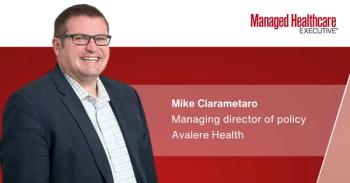
In this clip, Mike Ciarametaro, managing director of policy at Avalere Health, explains all the “moving pieces” that could affect the health policy landscape in the coming months.

Ahead of Asembia’s 2026 Specialty Pharmacy Summit, Avalere Health's Mina Allo and Mike Ciarametaro discussed the potential impact of PBM reform on the employer market and the likelihood of partisan legislative gridlock ahead of the upcoming elections.

IQVIA's Luke Greenwalt, MBA, and Lucille Accetta, RPh, M.P.H., MBA, chief pharmacy officer and head of CVS Specialty, are speaking at tomorrow's general session. Lindsay Greenleaf, J.D., MBA, of ADVI Health, and Will Shrank, M.D., co-founder and CEO of Aradigm, also have speaking slots during the meeting.

Rebates aren’t disappearing, but PSG's 2026 survey suggests payers increasingly favor lower net costs, biosimilars and price transparency over traditional specialty drug rebate programs.

This action follows an Executive Order issued earlier this week to speed review of psychedelic drugs that have shown potential to treat serious mental health issues

A UC Health system-wide hypertension medication algorithm improved blood pressure control across tens of thousands of patients and was associated with estimated reductions in strokes, heart attacks and deaths.

Major health insurers say they have cut prior authorizations, but the AMA says physicians report that the burden of prior authorization remains high.

The resistome is the term for resistance genes present in both harmful and nonharmful bacteria. In the lung, this genetic reservoir can be shaped by factors such as repeated antibiotic exposure, chronic inflammation and changes in the airway environment.

Regeneron is making Otarmeni, which treats patients with biallelic variants in the OTOF gene, available at no cost. This is the second therapy that was approved under the FDA’s new National Priority Voucher program.

Skin cells can actively help the rabies virus multiply and pass into nearby nerve cells, explaining how even small bites or scratches, particularly from bats, can lead to infection.

The FDA has approved Merck’s once-daily single-tablet HIV treatment Idvynso (doravirine/islatravir) for virologically suppressed adults, based on phase 3 trials showing high rates of maintained viral suppression and generally manageable safety outcomes.

$50M fuels Cleveland Clinic AI efforts, launching a "Digital Front Door" to guide patients to the right care, cut ER crowding and improve access.

A study in JAMA Dermatology found that people using an AI tool were more accurate and confident in identifying skin conditions than those using standard methods, though it did not improve their understanding of next steps for care.

The pulmonary manifestations of antineutrophil cytoplasmic antibody (ANCA)-associated vasculitis is well recognized. This research fills in gaps about the prevalence and prognostic impact of interstitial lung disease in people with the autoimmune disease.
In an earning call, UnitedHealth Group executives, including CEO Stephen Hemsley, discussed the company’s strategy, which is focused value-based care, its Medicare Advantage programs transparency, AI and its transparency efforts.

Chronic low back pain develops from a mix of clinical, psychological, biological and social factors and highlights the subacute phase as a key period for early coordinated care, according to findings from a recent study.

His company has developed and is marketing a blood-based test for liver cancer that Tewarie says would outperform ultrasound scans for finding liver cancer early in people at risk for developing liver cancer.

Timely diagnosis of transthyretin amyloid cardiomyopathy (ATTR-CM) could potentially reduce excess healthcare utilization and spending, according to a poster at AMCP annual meeting 2026 in Nashville.

The Pharmacy Quality Alliance recognized 10 out of 613 Medicare Part D plans for exceptional or improved medication quality based on Centers for Medicare & Medicaid Services Star Ratings.

At the AMCP Annual Meeting this week, experts from Prime Therapeutics said virtual navigation and clinical pathways are helping lower acute care use, guide treatment decisions and improve outcomes for patients with cancer.

Julie Kendle, Pharm.D., senior director of clinical pharmacy at IPD Analytics, explains the evolution of HIV PrEP from daily oral medications to long-acting injectables and how health policy and payer strategies can improve access, adherence and outcomes.

In this interview, Luis Ortiz, M.D., explains the current and emerging therapies for narcolepsy type 1 treatment.

Evernorth’s Nicole A. Caffiero said specialty drugs dominate the pipeline, FDA approvals and the expenditures on pharmaceuticals during a keynote presentation at the AMCP annual meeting.

A CVS Caremark formulary change in May 2025 led to a short increase in patients switching GLP-1 drugs before prescribing trends leveled off, according to Truveta data presented at AMCP.
In this interview, Luis Ortiz, M.D., explains how burdensome a narcolepsy diagnosis can be for a patient and why listening to their experiences helps shape new guidelines and treatments.
Julie Kendle, Pharm.D., senior director of clinical pharmacy at IPD Analytics, explains how managed care organizations can support patients at risk of HIV.

The Maximum Fair Price (MFP), established by the Inflation Reduction Act, and the Most Favored Nation policy are reshaping how drugs are priced, paid for, and accessed.

Brian MacDonald, Pharm.D., of Prime Therapeutics discusses the low utilization of the gene therapies for hemophilia. Pfizer and BioMarin have pulled their FDA-approved hemophilia gene therapies from the market, citing low demand.
Pfizer and BioMarin have pulled their hemophilia gene therapies, citing low demand.