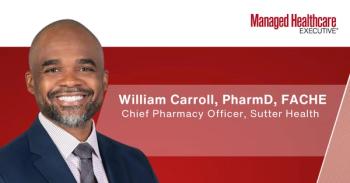
Will Carroll, Pharm.D., of Sutter Health says future pharmacy leaders need business, finance and AI skills, and health systems need real sponsorship.
This action follows an Executive Order issued earlier this week to speed review of psychedelic drugs that have shown potential to treat serious mental health issues
The FDA has issued National Priority Vouchers to three psychedelic medications. The
This follows an
“There is a growing recognition of the potential of psychedelic medications to address multiple different psychiatric conditions that are notoriously difficult to treat,” Tracy Beth Hoeg, M.D., Ph.D., acting director of the FDA’s Center for Drug Evaluation and Research, said in a news release.
The three products granted priority review are:
Compass Pathways has been granted a rolling NDA review request for COMP360, a proprietary formulation of synthetic psilocybin for treatment-resistant depression (TRD). Phase 3 clinical trials show that COMP360 may demonstrate effects as quickly as within one day after administration with durability lasting at least through six months for those who achieve a clinically meaningful response after one or two doses. Most treatment-emergent adverse events (TEAEs) are mild or moderate in severity, and the vast majority resolved within 24 hours.
The company released results in February 2026 of the second phase 3 trial, which evaluated two fixed doses of COMP360. The primary endpoint was the difference in change from baseline in the Montgomery-Åsberg Depression Rating Scale (MADRS), a clinician-rated scale used to measure the severity of depression. Two fixed doses that were administered three weeks apart. The trial showed that COMP360 25 mg demonstrated a statistically significant reduction in symptom severity and a clinically meaningful difference of -3.8 points in change compared with the 1 mg dose.
Media reports say that Usona Institute said that it had received a voucher for its work with psilocybin to treat major depressive disorder, but the nonprofit has not yet submitted its application.
Transcend Therapeutics is evaluating TSND-201 (methylone) in adults with severe post-traumatic stress disorder (PTSD). Data from IMPACT-1, a phase 2 trial, was recently published in February 2026 in
TSND-201 was generally well-tolerated. The most frequently reported treatment-emergent adverse events included headache, decreased appetite, nausea, dizziness, blood pressure increase, dry mouth, and insomnia. These events were typically transient, occurring on the day of dosing and resolving within a day.
In March 2026, Otsuka America announced it will acquire Transcend for $1.225 billion. The acquisition is expected to be completed in the second quarter of 2026.
In addition, the agency is allowing an early-phase clinical study of noribogaine hydrochloride to move forward following an Investigational New Drug (IND) submission. DemeRx Inc. is investigating noribogaine as a potential treatment for alcohol use disorder, a condition that affects more than 29 million Americans. In January 2026, the company released results of a phase 1 trial of a dose-ranging study, with doses from 20 mg up to 80 mg daily. Results showed that noribogaine was safe and well-tolerated. Cardiac safety assessments showed normal vitals and a dose-related effect of the drug on the heart-rate corrected QT interval, which was not considered clinically relevant.
FDA officials also said they plan to release final guidance for developing these products.