



Rybrevant (amivantamab) plus chemotherapy reached a 34.3-month median survival in EGFR exon 20 insertion-positive lung cancer, Johnson & Johnson said.
Rybrevant (amivantamab) plus chemotherapy reached a 34.3-month median survival in EGFR exon 20 insertion-positive lung cancer, Johnson & Johnson said.

Optum Rx's PreCheck Prior Authorization tool automates 64% of approvals in under 30 seconds, getting patients onto therapy four days faster, Anne Mall, MHA, says.
Optum Rx's Anne Mall, M.H.A., says her company's AI is surfacing clinical details buried in providers' chart notes so clinicians can decide on therapy faster.

OrionRx's Don Anderson, Pharm.D., outlines near-term and long-term fixes for the blind spots created when members buy medications outside their pharmacy benefit.

StarkRx has launched as a modular, cost-plus pharmacy benefit management company for self-funded employers using Judi Health’s PBM, Judi Rx, to administer claims.
OrionRx's Don Anderson, Pharm.D., says drugs filled outside a member’s pharmacy benefit could result in excessive and duplicative prescriptions.

As PBMs plan for 2028 rollout of the PBM transparency provisions of the Consolidated Appropriations Act of 2026 (CAA 2026) cost-plus pricing will flip how drug costs look on paper, requiring far more data, says Milliman principal Kessler.

GLP-1 therapies now drive nearly half of prescription drug sales growth, IQVIA's Scott Biggs told PBMI 2026 attendees, reshaping diabetes treatment and pharmacy dispensing economics nationwide.
Kessler, a principal at Milliman, says employers need to pay attention to their claims and pharmacy benefit contracts.

Northwell Health reports rising 9/11-linked cancer rates tied to Ground Zero debris, as oncology teams expand screening and treatment for survivors and responders.

As concerns about GLP-1 costs grow, employers could be overlooking an even more pervasive condition driving healthcare spending.

A new randomized trial of criminal legal-involved people who use drugs found that 35.1% expressed interest in HIV pre-exposure prophylaxis, and of those, 60.8% preferred long-acting injectable formulations over daily oral PrEP.

The president of Vivid Clear Rx says PBMs should limit point solutions early on and warned against farming out too many services to vendors that a PBM should provide itself.
Yes, breaking up is hard to do, acknowledged the president of Vivid Clear Rx. But employers should be "brave" about severing their ties to one of the “big three” pharmacy benefit managers (PBMs) and contracting with mid-size PBMs like hers, says Amy Wadstrom, RPh.
A principal and product owner at Milliman, Kessler discusses some of the reasons for heightened attention and scrutiny of plan sponsor fiduciary responsibility when it comes to pharmacy benefits.
The president of Vivid Clear Rx says finding a GPO partner whose goals align with a PBM's moves transparency forward for clients.

Federal and state laws now require PBMs to report drug pricing, rebates, and prior authorization data, creating compliance challenges, said panelists PBMI's annual meeting in Orlando.

Preschoolers who are constantly "on the go" or interrupt others are up to six times more likely to receive an ADHD diagnosis, new national data show.

Prime Therapeutics taps Manmohan Mahajan as CFO, aiming to curb rising drug costs and expand affordability programs for health plans.

PBM, employer and pharmacy leaders at the Pharmacy Benefit Management Institute annual meeting said actionable data and real-time technology, not just transparency, are needed to control rising costs.

FDA expands accelerated approval of oral sevabertinib for first-line HER2-mutant lung cancer, offering targeted treatment with strong response rates versus standard chemotherapy.

Get the identity layer right, and every system in the health plan can answer the one question everything else depends on. Who is this person, and who are they connected to?

FDA approval brings Abbott’s TactiFlex Duo to AFib ablation, combining RF and pulsed field energy for tailored treatment in complex cases.

David Chen, Pharm.D., explores how formulary strategy and biosimilar adoption are reshaping affordability across health systems.

A new review says outcome tools like IHS4-55 and HiSQOL should replace or supplement HiSCR to better measure hidradenitis suppurativa treatment success.

Researchers and drug developers are targeting pathways that activate mast cells as a way to treat cholinergic urticaria and other forms of inducible urticaria.
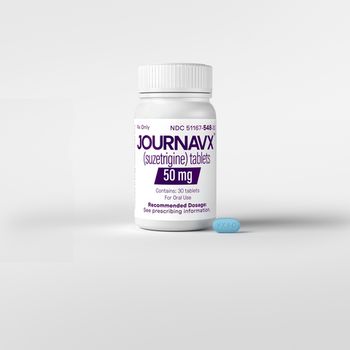
Journavx (suzetrigine) helps 76% of common-surgery patients avoid rescue opioids, signaling a new non-opioid option for acute pain.
In this discussion, Julia S. Feldman, Ph.D., a postdoctoral fellow in the Department of Psychiatry at the University of Pittsburgh, explains that ADHD symptoms in preschoolers can be meaningfully linked to current or future ADHD diagnoses, underscoring the importance of taking parents’ early concerns seriously.

Women with endometriosis had an overall 46% higher risk of developing Type 2 diabetes. The association was strongest among premenopausal women and women without obesity, groups not traditionally considered high-risk for Type 2 diabetes.

In this discussion, Tiffany Phung, Pharm.D., CSP, director of specialty pharmacy value, trade relations and market access at UC Davis Health, explores the challenges facing health system specialty pharmacies and how data-driven collaboration is shaping the future of patient care.