


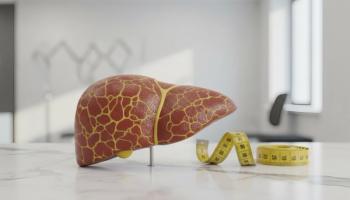
A meta-analysis found steatotic liver disease in 75% of patients with sleep-disordered breathing and that CPAP lowered liver enzymes but not liver fat.
A meta-analysis found steatotic liver disease in 75% of patients with sleep-disordered breathing and that CPAP lowered liver enzymes but not liver fat.

Blood tests reveal early, widespread inflammation in hidradenitis suppurativa, linking biomarkers to disease severity, quality of life, smoking, and potential cardiovascular risk.

A new review says outcome tools like IHS4-55 and HiSQOL should replace or supplement HiSCR to better measure hidradenitis suppurativa treatment success.

A pilot combining AI screening with structured nodule follow-up found early lung cancer in 1.6% of flagged patients.

Medicaid expansion was linked to improved insurance coverage, earlier diagnosis, and better survival for NSCLC patients, especially in underserved areas.

Phase 3 trials showed improvements in daytime wakefulness, cataplexy, and the disorder's full symptom range, including sleep paralysis and hallucinations.

Genomic testing among Medicare beneficiaries with cancer rose from 6% in 2016 to 16.7% in 2023, though NGS use stayed low, a study found.

Adding thoracic radiotherapy to atezolizumab maintenance tripled serious side effects in small cell lung cancer without improving survival, a trial found.

A cost analysis of nearly 30,000 anti-VEGF visits found travel and missed work, not drug price, drive most of patients' out-of-pocket burden.

Racial gaps in cancer mortality narrowed sharply since the 1990s, led by declines in certain cancer types, but disparities remain.

Enlicitide, a macrocyclic peptide that binds PCSK9 and blocks LDL receptor interaction, is the first oral PCSK9 inhibitor FDA-approved to lower LDL-C.

A new review suggests molecular biomarkers could help gauge lung cancer recurrence risk and guide surveillance, but the evidence is still thin.

Two-thirds of patients had leftover pills, and some used opioids beyond guideline-recommended durations, an FDA-backed study found.

The approval was supported by the pivotal phase 3 THRIVE and THRIVE-2 trials, which evaluated veligrotug in active and chronic TED.

The approach of pairing an ecological framework with AI methods offers a new way to identify where diabetes risk concentrates.

Age, skin phototype, and personal history of skin cancer are easily captured data elements that could form the basis of a practical, risk-stratified approach to surveillance.

The two conditions can have similar manifestations but differ in prognosis and treatment, which makes an accurate, early diagnosis important.

An electronic health record–based diabetes risk tool helped primary care teams target prevention and reduce progression to type 2 diabetes in prediabetes patients.

A genome-first study found familial melanoma gene variants exceed the genetic testing threshold in patients with multiple or early melanomas.

Thomas Martens, M.D., explains what drives adoption and how CONNECT's Level A evidence could move CGM coverage.
Thomas Martens, M.D., on why outcomes with CGM in CONNECT—including five more hours per day in range—came largely from lifestyle change, not added medication.
Thomas Martens, M.D., explains why CONNECT's 1.6% A1C reduction with continuous glucose monitoring is so exciting in patients with type 2 diabetes not on insulin.

A fully remote genetic screening program and a multicenter quality improvement initiative both advanced early detection of type 1 diabetes.

Evolocumab cut major cardiac events by 29% in high-risk diabetes without prior heart attack or stroke in VESALIUS-CV subgroup data from ADA 2026.

Survodutide's SYNCHRONIZE trials show weight loss driven by visceral and liver fat, not muscle.

Artificial intelligence models matched mid-career dermatologists but trailed seasoned experts in diagnosing skin lesions across real-world cases.

An electronic health record–based model could help health systems target diabetes prevention to the high-risk patients most likely to benefit.

The REIMAGINE 1, 2 and 3 trials each met their primary HbA1c end point and confirmatory secondary end points for body weight reduction.

Phase 3 data show survodutide reduced liver fat by 63% and visceral fat by 34% — effects investigators say go beyond what weight loss alone explains.
The experimental glucagon/GLP-1 dual agonist showed targeted reductions in metabolically harmful fat alongside meaningful weight loss in two distinct patient populations.

Published: July 1st 2026 | Updated: July 10th 2026
Published: July 1st 2026 | Updated: July 10th 2026


