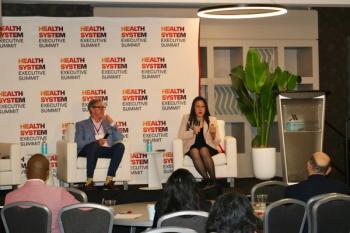
Rex Hoffman, M.D., MBA, says physician shortages and burnout are the most underestimated pressures on health system.
Results presented at ADA 2026 mark the first level A evidence supporting CGM use in this population.
Continuous glucose monitoring (CGM) with the Dexcom G7 produced a clinically and statistically significant reduction in hemoglobin A1c (HbA1c) among adults with Type 2 diabetes not using insulin, according to
The findings mark the first level A evidence — the highest grade recognized by the ADA — supporting CGM use in this population, and investigators say they expect the data to reshape diabetes management in primary care.
"Since many of the patients with Type 2 diabetes who use oral or noninsulin injectable therapies are seen in primary care settings, continuous glucose monitoring provides an opportunity to close a visible care gap," Thomas W. Martens, M.D., co-author of the study, said in a news
Participants using Dexcom G7 achieved an average 1.6% HbA1c reduction from baseline over 26 weeks — a 0.9% greater reduction than the routine care control group. At week 26, 68% of CGM users reached an HbA1c below 7.5%, and 46% reached below 7.0%. Among participants with a baseline HbA1C above 10%, the average reduction reached 3.1%, more than 2 percentage points greater than controls. Eighty-two percent of CGM users achieved a reduction of at least 0.5%.
“The CONNECT study released today is the first and only level A evidence demonstrating strong benefit of CGM for the type 2 non-insulin-using population,” Roy Beck, M.D., Ph.D., medical director of the JAEB Center for Health Research and senior author of the study, said in a
Time in the glucose target range of 70 to 180 mg/dL was five hours per day greater for CGM users compared with controls, with the CGM group averaging 62% time in range versus 41% in the control group. Improvements in time in range appeared as early as weeks one through four and were sustained through the full 26-week study period. Median device usage was 97% throughout the trial.
CONNECT enrolled 283 adults with type 2 diabetes not on insulin therapy across 22 primary care practices in the United States, and a total of 265 patients completed the trial. Eligible participants had an HbA1c ranging from 7.1% to 14.9% and were randomly assigned 1:1 to Dexcom G7 CGM or routine care with standard blood glucose meter testing for 26 weeks. The mean patient age was 60 years, 32% of participants identified as a racial or ethnic minority, and the mean baseline HbA1c was 8.8%, with 31% of participants at or above 9.0%.
All participants received education on diet and exercise for diabetes management at study entry and continued prestudy glucose-lowering medications. Approximately 40% of participants were using an incretin-based medication such as a GLP-1 receptor agonist, and 37% were using a sodium-glucose cotransporter 2 (SGLT2) inhibitor.
The CGM benefit was additive across medication classes. Among participants using GLP-1-based therapies, CGM produced a 1.4% HbA1c reduction compared with 0.2% in controls. Among SGLT2 inhibitor users, the reduction was 1.8% versus 0.7%. CGM users also reported greater treatment satisfaction and meaningfully reduced diabetes distress and disease burden compared with the routine care group.
A six-month extension phase is currently underway and will provide durability data through 12 months.