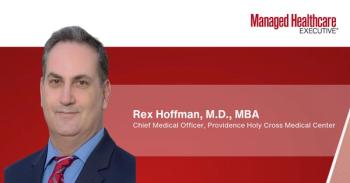
Rex Hoffman, M.D., MBA, says physician shortages and burnout are the most underestimated pressures on health system.
A cost analysis of nearly 30,000 anti-VEGF visits found travel and missed work, not drug price, drive most of patients' out-of-pocket burden.
Patients receiving anti-VEGF injections for retinal disease pay more, on average, in travel and lost wages than they do for the drug and office visit combined, according to a poster presented at the
Anti-VEGF injections like bevacizumab, ranibizumab, aflibercept and faricimab are the standard treatment for retinal conditions such as wet age-related macular degeneration and diabetic macular edema, which require repeated office visits, often monthly, to sustain vision gains. The U.S. has the highest per capita health expenditures among high-income countries, and drug prices are considered a major driver of that trend, but few cost analyses of ophthalmic care have accounted for the indirect costs patients absorb just to get to appointments, the researchers noted.
“Ophthalmic conditions are associated with high costs worldwide, particularly retinal conditions that require treatment with specialized therapeutics like anti-VEGF injections,” the authors explained. “Few healthcare cost estimates currently incorporate indirect variables related to patient care access, which likely increase costs to patients.”
Emily C. Davis, MPH, of Tennessee Retina in Nashville, Tennessee, and colleagues retrospectively analyzed records from a single retina practice, sourced through AthenaHealth's Snowflake database, for patients who received at least one anti-VEGF injection and an optical coherence tomography scan at the same visit between Jan. 1, 2023, and Sept. 30, 2024. After excluding self-pay patients and visits with bilateral injections or no OCT, the analysis included 29,250 eyes. Direct costs covered the exam, imaging, medication, procedure and copay. Indirect costs combined transportation, calculated from round-trip mileage at the General Services Administration's 2024 reimbursement rate of $0.67 per mile, and the opportunity cost of missed work, based on 2022 census median hourly wages and categorized as either a half-day (four hours) or full-day (eight hours) of absence.
Direct costs made up less than half of the total patient expense for eight of the nine therapeutics studied; only ranibizumab-eqrn 0.5 mg saw direct costs narrowly exceed half, at 52.6%. For the healthcare system, the pattern reversed: direct costs, largely medication price, accounted for most of the total spending across all nine therapeutics analyzed.
The researchers illustrated the tradeoff with an example: a patient on monthly bevacizumab (about 12 injections a year) who takes a half-day off for each visit would incur a cost equivalent to receiving roughly 9.4 annual aflibercept 2 mg injections, 11.1 aflibercept 8 mg injections, or 9.2 faricimab 6 mg injections — all less-frequent, more durable options. For the healthcare system, that same annual bevacizumab regimen cost about as much as just 3.1, 3.2 and 2.5 annual injections of those same three drugs, respectively.
“Results showed patient costs were driven primarily by indirect costs,” the authors concluded. “…Reducing the frequency of patient visits by using more durable therapeutics might help lower the overall cost of anti-VEGF care.”