



Humana’s 2023 Medicare pharmacy benefits updates include $0 copays, simplified access to prescriptions and Veteran’s focused-plans that add pharmacy benefits.
Humana’s 2023 Medicare pharmacy benefits updates include $0 copays, simplified access to prescriptions and Veteran’s focused-plans that add pharmacy benefits.

If approved, valoctocogene roxaparvovec would be the first commercially-available gene therapy in the United States for the treatment of severe hemophilia A.

Researchers at the National Eye Institute have designed a gene therapy approach that could help prevent blindness in children with Leber congenital amaurosis, a rare form of blindness.
The FDA has approved several new therapies this week, including Amylyx’s oral treatment for ALS, a fourth Avastin biosimilar, a new glaucoma treatment and another indication for Duxipent. The agency also accepted an NDA for therapy for rare immunodeficiency disease.
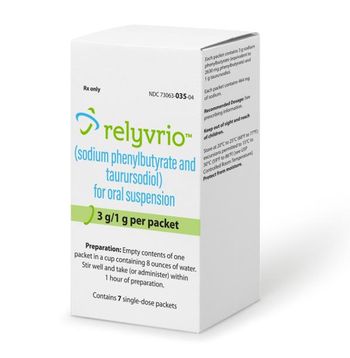
Now with the brand name Relyvrio, the new therapy should be available within four to six weeks. It will have a wholesale acquisition cost of $158,000 per year.

Jing Yang from IQVIA discusses how national payers are using formulary exclusions for oncology therapeutics.

Carl Black, pharmacist-in-charge at Optum Rx, talks about how the PBM has decreased dispensed opioids by 62% since 2018.

But researchers found that only a small percentage of plans use available real-world evidence studies and economic evaluations in their coverage policies.
Committee members felt the data on overall survival for patients treated with Copiktra was difficult to interpret, and the therapy was associated with a higher risk of serious side effects and deaths compared with Kesimpta.
The FDA approved a tumor agnostic treatment for cancer, a lower dose MRI contrast agent, the first generic of Tazorac gel, and a gene therapy for a rare disease. Advisory committees vote down poziotinib for NSCLC and Pepaxto for multiple myeloma and give positive vote for microbiotic-based C. diff therapy. The agency has accepted sNDA for Tukysa for HER2 positive colorectal cancer.
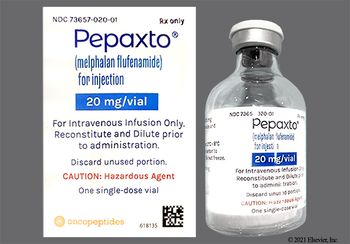
While some patients with relapsed or refractory multiple myeloma saw a benefit in a confirmatory trial, the main issue concerning the committee members was a high rate of death in the study.

RBX2660 — now with the brand name Rebyota — is a potential first-in-class microbiota-based live biotherapeutic that aims to reduce recurrent C. difficile infection.

Several concerns factored into the decision, including a low overall response rate and high rate of adverse events, a dose that was not optimized and a confirmatory trial that will not likely see results until 2026.

Hospitalization, disability, having private high-deductible, Medicare Advantage, or no coverage were risk factors associated with medical debt.
The FDA has approved new therapies for psoriasis and kidney dysfunction. The agency has also scheduled an advisory committee meeting for nonprescription birth control and accepted applications for longer-acting aripiprazole, Rett syndrome drug, and an enzyme replacement therapy. Additionally, Clovis has submits supplemental applications for Rubraca.
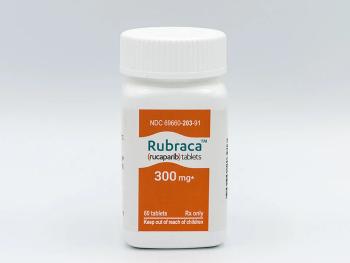
The applications are based on progression-free survival data even though the FDA has recommended that the company wait for more mature overall survival data.

Terlivaz is the first approved therapy to treat hepatorenal syndrome, a rare form of kidney disfunction related to advanced liver disease.

Timothy Mizak and Nicole Bulochnik of Abarca talked about how can PBMs help payers manage costs through a hybrid network model that leverages value-based and other innovative drug contracts at the Pharmacy Benefit Management Institute (PBMI) annual meeting in Orlando.

Jeffrey A. Shaman, Ph.D., chief science officer at Coriell Life Sciences, talked about how pharmacogenomics can inform medication management.

Jeffrey A. Shaman, Ph.D., chief science officer at Coriell Life Sciences, talked about how pharmacogenomics can inform medication management.

Greg Warren, partner and consulting actuary at Axene Health Partners, discussed the many solutions that have been put forth to address the prescription drug challenges that could bring value to healthcare.
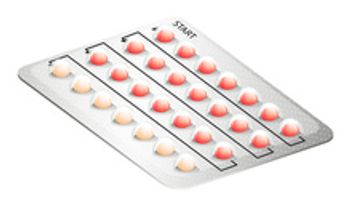
If approved, Perrigo’s Opill could be the first-ever over-the-counter birth control pill. The advisory committee meeting is scheduled for Nov. 18, 2022.

Kali Panagos, Pharm.D., of ARMSRx discussed ways that pharmacy benefit managers are coping with specialty drug spending.

Kali Panagos, Pharm.D., at ARMSRx, discusses the growing trend of copay assistance programs and alternative funding solutions that can help provide access to expensive specialty therapies.

Doug Long, vice president, industry relations IQVIA, talk about the growth of the specialty medication market and the impact of biosimilars that are expected to be introduced next year.
In COVID-19 news, the FDA indicated Eiger’s treatment not supported by data. An advisory committee switched its vote to yes for new ALS drug. The FDA approved Stimufend, a biosimilar to Neulasta, as well as Imfinzi for biliary tract cancer, a longer-lasting treatment for frown lines, an oral suspension for gastric ulcers, and generics of Revlimid. The agency accepted applications for novel dry eye disease and alopecia therapies. Additionally, Seres completed rolling BLA for microbiome therapeutic.

Because of a generic is now available, Toviaz has been removed and up-tiered on Prime’s Medicare formularies.

Although Xeljanz, Olumiant and Rinvoq are in the same drug class, the risk of serious adverse events from these three products to treat rheumatoid arthritis and other inflammatory conditions may not be similar.

In a second committee meeting, FDA advisors supported approval of AMX0035 after the company presented additional analysis of phase 2 data of AMX0035 to treat patients with ALS. The Prescription Drug User Fee Act (PDUFA) target action date is Sept. 29, 2022.

Prime Therapeutics’ predictive model was able to identify members with high breast cancer pharmacy and medical claims to help clients better manage drug spend.