


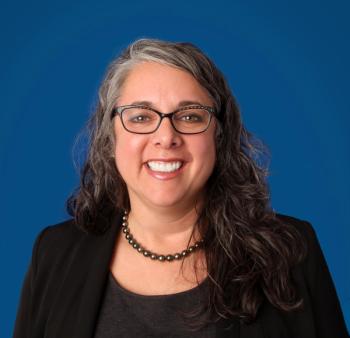
Kelly Stanton, director of quality at Qualio, talks about the impact on patients of prescription drug recalls.
Kelly Stanton, director of quality at Qualio, talks about the impact on patients of prescription drug recalls.

This follows a move by Bayer to import Ultravist with non-U.S. labeling also to address pandemic-related shortages of iodine-containing contrast media used in imaging procedures.
FDA approves Xalkori for rare tumor, as well as Opzelura for skin conditions. The agency has accepted applications for a supplemental indication for the biosimilar Hyrimoz and pegcetacoplan for advanced macular degeneration. Additionally, Acadia submits NDA for trofinetide.
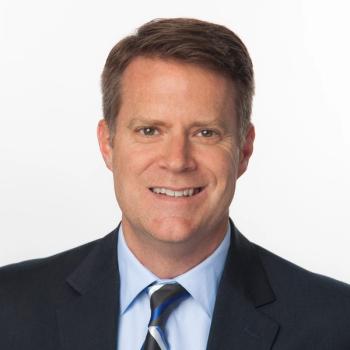
David Lassen, Pharm.D., chief clinical officer at Prime, discusses a pilot program that used a predictive model to identify patients at high risk of overusing opioids.
The organization claims that direct and indirect remuneration fees and other clawback programs amount to a breach of contract.
Navitus senior vice president and chief pharmacy officer Brent Eberle talks about how partnering with CivicaScript fits into its cost-plus model.
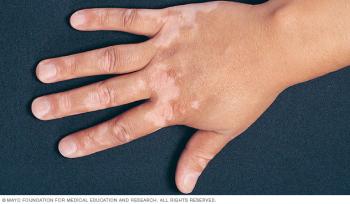
Opzelura is first therapy approved to treat patients with vitiligo, a disease that causes the loss of skin color.
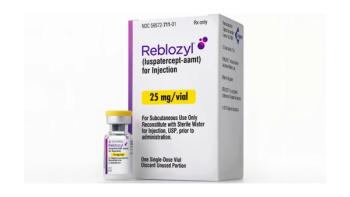
BMS warns about the risk of extramedullary hematopoiesis, a rare complication in which the production of blood cells occurs outside of the bone marrow.
In COVID-19 news, the FDA grants EUA for Novavax’s COVID-19 vaccine. The agency approved a novel diagnostic dye and another indication for Xalkori, but delayed a decision on a therapy for esophageal cancer. FDA has also accepted a BLA for advanced HER2 breast cancer therapy. Finally, Can-Fite BioPharma plans submission for psoriasis therapy.
Some insulins, as well as some drugs used in emergency care, will now be offered at $0 copay for eligible patients.

A novel therapy in early development aims to permanently turn off the PCSK9 gene in the liver and lower cholesterol with a one-time treatment. It is being developed for a genetic form of high cholesterol.

Drugs approved with an FDA breakthrough designation can provide value that offsets their higher costs, finds study conducted by Tufts Center for the Evaluation of Value and Risk in Health.
In 2023, a wave of biosimilar launches is expected, including seven biosimilars of Humira.

In the future, payers plan to leverage reinsurance and value- or outcomes-based contracting to provide access to high-cost therapies.
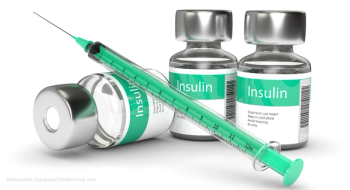
As Congress considers legislation that would cap out-of-pocket costs for insulin, Walmart and Civica Rx are taking steps that could make less expensive versions of the diabetes medication more available.

Those with age-related macular degeneration like the port delivery system for ranibizumab because it requires fewer treatments and there is less discomfort.
The FDA expands label for Krystexxa. Agency has granted priority review for two therapies: lecanemab for Alzheimer’s disease and a novel immunotherapy for follicular lymphoma. The FDA will convene a second advisory committee for ALS therapy. Additionally, Bausch + Lomb submits NDA for dry eye disease therapy.

Blue Cross Blue Shield of North Carolina found that uptake of Trikafta was rapid after approval and total cost of care increased 52% despite reductions in hospitalizations and nonpharmacy costs.

Reproxalap is a potential new therapy for dry eye disease with a novel mechanism of action.

NOV03 (perfluorohexyloctane) is a first-in-class eye drop with a novel mechanism of action. If approved it will be the first to address signs and symptoms of dry eye disease.

Under a new add-on program, plan members will have access to an expanded list of FDA-approved specialty generic medications with no copays.

Lecanemab is monoclonal antibody that targets beta amyloid to treat mild cognitive impairment. The FDA has assigned a Prescription Drug User Fee Act (PDUFA) action date of Jan. 6, 2023.

In a study, both common and rare HMGCR variants were associated with an increased risk for cataract.
In COVID-19 news, the FDA has declined an EUA request for Zyesami and Pfizer has submitted NDA for Pavlovid. The regulatory agency has accepted several applications, including an sBLA for Eylea in diabetic retinopathy and the NDA for palovarotene for a rare genetic disorder. The FDA also issued a CRL for a UTI therapy and extended the review of diabetes therapy. And finally, Gilead has resubmitted its twice-year HIV therapy.

Effective July 1, 2022, CVS Caremark has removed 16 drugs and added 14 to its Standard Control Formulary.
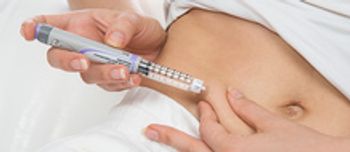
Sanofi has lowered the out-of-pocket cost for those without insurance of its insulins to $35 for a 30-day supply through the company’s savings program.

If approved, lenacapavir would be the first HIV-1 treatment administered twice-yearly.

Labels now warn that buprenorphine products that dissolve in the mouth can cause dental problems. Buprenorphine is used to treat opioid use disorder and pain.
FDA approves tumor-agnostic cancer therapy, Clovis pulls Rubraca indication, Purdue launches opioid reversal, FDA plans advisory committee meeting for Xphozah, and Manarini and AbbVie submit applications.
Benefits leaders surveyed in PSG’s Trends in Drug Benefit Design Report say the importance of the member experience has increased since the start of the pandemic.