


Prescryptive will offer a subscription-based program for employers that aims to provide a more predictable benefit for companies and their employees.
Prescryptive will offer a subscription-based program for employers that aims to provide a more predictable benefit for companies and their employees.
The Medicare Part D Senior Savings Model — a CMS effort to test $35 copays for insulin — led to lowered total costs for beneficiaries.

Moderna is developing an individualized cancer vaccine that uses mRNA technology to specifically target that person’s cancer.

This isn’t the first time pharmacy benefit managers (PBMs) have been ensnared in controversy. PBMs were first created in the 1960s to help insurance companies manage and administer claims for prescription drugs. Over time, they took on the roles of claims adjudication, rebate negotiation and benefit design.

Smaller and midsize pharmacy benefit managers are taking on Optum Rx, CVS Caremark and Express Scripts. They say they have better technology and are more transparent about their pricing.

Magellan Rx predicts oncology and high-cost rare disease treatments will continue to drive medical pharmacy spend in commercial, Medicaid and Medicare.

The acquisition provides Biocon Biologics with eight commercial biosimilars, and is part of Viatris’ efforts to pay down debt related to phase 1 research and the company’s acquisition of two ophthalmology businesses.
In COVID-19 news, the FDA has expanded the updated bivalent vaccines EUA to children. The FDA has requested athe removal of Pepaxto indication for multiple myeloma. Regulators have also accepted several applications for: Biogen’s Actemra biosimilar, Pfizer’s RSV vaccine, a resubmitted BLA for Fabry disease. Two companies — Janssen’s and Alnylam — have submitted new applications.
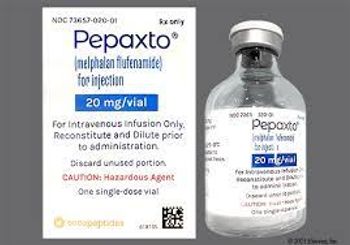
Oncopeptides disagrees with the FDA about Pepaxto and will make a decision about next steps by the end of the first quarter of 2023.

Health insurance premiums, especially in the ACA Marketplace, could increase if the federal government ends purchasing of COVID-19 vaccines and boosters.

Seven of the 10 top selling drugs with high price increases lack the clinical evidence to justify those increases.

Seven of the 10 top selling drugs with high price increases lack the clinical evidence to justify those increases.

The APOE gene is known for its association in Alzheimer’s disease. Investigators are beginning to understand its role in age-related macular degeneration and other eye diseases.

TauRx’s oral anti-tau therapy HMTM has shown in a phase 3 trial that it can stabilize cognitive decline in patients with Alzheimer’s disease.

Cigna and Express Scripts have not yet made a decision about which of the Humira biosimilars will be included but they will evaluate all products in the coming months.

In an umbrella review — a review of reviews — investigators found that so far, studies of ocular biomarkers to diagnose Alzheimer’s disease had important limitations. Longitudinal studies that use artificial intelligence could perhaps identify ocular biomarkers, the researchers suggest.
This week, the FDA made two approvals, the first-ever microbiota product and a second indication for Brexafemme, and issued a CRL for a therapy for brain metastasis from neuroblastoma. The regulatory agency also granted priority review for a Duchenne gene therapy, and accepted three applications: for a cutaneous T-cell lymphoma therapy, for an antibiotic for drug-resistant infections and Evkeeza for children with rare high cholesterol. Additionally, Genentech has withdrawn Tecentriq’s indication for bladder cancer and Aldeyra has submitted an NDA for the novel dry eye therapy reproxalap.

In October, an FDA advisory committee voted against omburtamab, saying the trials didn’t show evidence that the therapy improves overall survival.

Rebyota is the first fecal microbiota product to prevent recurrence of C. diff infection, a serious and potentially life-threatening disease.

Doctors surveyed by the Association for Clinical Oncology said payer prior authorization can cause disease progression and loss of life.
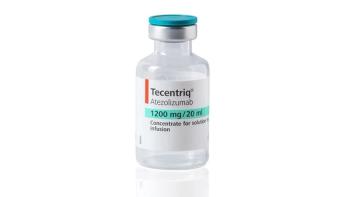
A confirmatory trial of Tecentriq in urothelial carcinoma failed to meet the co-primary endpoint of overall survival.
The FDA has approved a $3.5 million hemophilia B gene therapy and warned about Prolia in patients with kidney disease. The agency accepted for priority review two BLAs: for a dengue vaccine and for epcoritamab for large B-cell lymphoma. Additionally, GSK has pulled Blenrep from the U.S. market at the request of the FDA.

Hemgenix is the first one-time gene therapy treatment for adults with hemophilia B. It will have a list price of $3.5 million.

Formulary placement is crucial to the commercial success of newly approved products, so Acrutis put out a press release last week announcing that Express Scripts had put Zoryve (roflumilast), the company's PDE4 inhibitor cream for plaque psoriasis, on its formulary.
In a busy week, the FDA approved the first drug to delay diabetes, a second interchangeable Lantus biosimilar, and an alternate dosing schedule for Rylaze. The agency also granted accelerated approval of a novel ovarian cancer therapy, updated the target date for pegcetacoplan NDA review, and proposed prescription-to-OTC naloxone. In addition, an advisory committee supported the use of Xphozah in CKD.

OptumRx will offer Amjevita and two other biosimilars alongside Humira. OptumRx is the first large PBM to make public its plans for the seven Humira biosimilars that may come on the market next year.

Tzield addresses the underlying cause of the disease, where the immune system destroys the insulin producing cells in the pancreas. It will be available by the end of the year with a wholesale acquisition cost of $13,850 per vial.
OptumRx will offer Amjevita and two other biosimilars alongside Humira. OptumRx is the first PBM to make public its plans for the seven Humira biosimilars that could be introduced in 2023.

If approved, Xphozah will be the first phosphate absorption inhibitor for adults with chronic kidney disease who are on dialysis. An FDA decision is expected within 30 days.
OptumRx now requires prior authorization for 16 products, including 11 that are used to treat patients with diabetes.