



Renee Dua, M.D., chief strategy officer at Renee, discusses the digital health assistant and its subscription-based services for generic drugs.
Renee Dua, M.D., chief strategy officer at Renee, discusses the digital health assistant and its subscription-based services for generic drugs.

One of the drivers of a lowered payer satisfaction is the public perception of PBMs, said Morgan Lee, Ph.D., of PSG.
In COVID-19 news, the FDA issued an EUA for Novavax booster. The agency has extended review time for new ALS therapy and accepted a supplemental NDA for Camzyos. Additionlly, the FDA granted six months pediatric exclusivity for Eylea.

Most of the brands that have been removed fall into the categories of hormonal therapies, pain and inflammatory conditions or skin conditions or high blood pressure/heart medications.
In COVID-19 news, the FDA has authorized updated boosters for younger children. The FDA also approved an at-home heart failure therapy, but issued a CRL for a Parkinson’s therapy. The agency has assigned PDUFDA dates for several BLA, including a hemophilia A gene therapy and Eylea for retinopathy in premature infants. Regulators have also announced an Adderall shortage. Additionally, a nonprofit company has begun the application process for OTC version of naloxone.

The Amgen Biosimilars Trend Report found that competition is lowering prices of biosimilars but the largest PBMs are inconsistent in their management of these products.

Regence implemented a preferred infliximab biosimilar strategy and was able to achieve more than 90% adoption.

If approved, valoctocogene roxaparvovec would be the first gene therapy in the U.S. for the treatment of severe hemophilia A. A PDUFA action date has been set for March 31, 2023.

In total, CVS Caremark has removed 26 products and added 31 products effective Jan. 1, 2023.

The submission is expected to be complete by the end of the year, and if approved, could be available in early 2024.

Ashley Jenne, managing director, strategy and business development at Evernorth, discusses the evolution of the PBM’s digital health formulary.
The FDA uses real-world data to show how Boostrix prevents infections in infants. The agency also approves a label expansion for Oxlumo, a new administration method for Trogarzo, and accepts an sBLA for Takhzyro. In COVID-19 news, Eiger won’t submit EUA for COVID-19 treatment. Additionally, an OIG reports finds many accelerated approvals have delayed confirmatory trials.

This is the first study to use an artificial intelligence algorithm to break down visual field loss in new-onset glaucoma cases among U.S.-based population groups.

EmpiRx Health CEO Karthik Ganesh discusses how the PBM was able to decrease mental health drug spending at a time when utilization is increasing.

Medicare and Medicaid spent more than $18 billion on drugs without verified clinical benefit.

Older patients who had cataract surgery had almost a 30% lower risk of developing dementia compared with those who did not, a recent analysis finds.

Humana’s 2023 Medicare pharmacy benefits updates include $0 copays, simplified access to prescriptions and Veteran’s focused-plans that add pharmacy benefits.
If approved, valoctocogene roxaparvovec would be the first commercially-available gene therapy in the United States for the treatment of severe hemophilia A.

Researchers at the National Eye Institute have designed a gene therapy approach that could help prevent blindness in children with Leber congenital amaurosis, a rare form of blindness.
The FDA has approved several new therapies this week, including Amylyx’s oral treatment for ALS, a fourth Avastin biosimilar, a new glaucoma treatment and another indication for Duxipent. The agency also accepted an NDA for therapy for rare immunodeficiency disease.
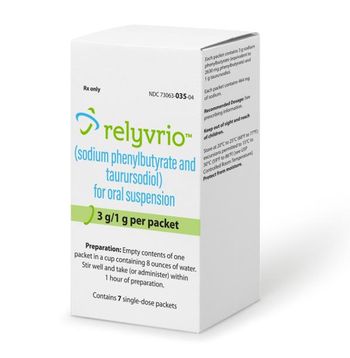
Now with the brand name Relyvrio, the new therapy should be available within four to six weeks. It will have a wholesale acquisition cost of $158,000 per year.

Jing Yang from IQVIA discusses how national payers are using formulary exclusions for oncology therapeutics.

Carl Black, pharmacist-in-charge at Optum Rx, talks about how the PBM has decreased dispensed opioids by 62% since 2018.

But researchers found that only a small percentage of plans use available real-world evidence studies and economic evaluations in their coverage policies.
Committee members felt the data on overall survival for patients treated with Copiktra was difficult to interpret, and the therapy was associated with a higher risk of serious side effects and deaths compared with Kesimpta.
The FDA approved a tumor agnostic treatment for cancer, a lower dose MRI contrast agent, the first generic of Tazorac gel, and a gene therapy for a rare disease. Advisory committees vote down poziotinib for NSCLC and Pepaxto for multiple myeloma and give positive vote for microbiotic-based C. diff therapy. The agency has accepted sNDA for Tukysa for HER2 positive colorectal cancer.
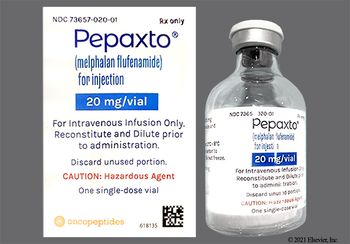
While some patients with relapsed or refractory multiple myeloma saw a benefit in a confirmatory trial, the main issue concerning the committee members was a high rate of death in the study.

RBX2660 — now with the brand name Rebyota — is a potential first-in-class microbiota-based live biotherapeutic that aims to reduce recurrent C. difficile infection.

Several concerns factored into the decision, including a low overall response rate and high rate of adverse events, a dose that was not optimized and a confirmatory trial that will not likely see results until 2026.

Hospitalization, disability, having private high-deductible, Medicare Advantage, or no coverage were risk factors associated with medical debt.