



In a recent conversation with Managed Healthcare Executive, Hunter shared reflections on his tenure, the challenges of expanding impact through partnerships and what he believes sets CareOregon apart from typical insurance organizations.

Briana Contreras is an editor at Managed Healthcare Executive, where she covers the clinical, business and policy developments that matter to payers and health plan leaders, with an additional focus in multiple clinical spaces. Her reporting spans from new cancer therapies and clinical trial data to drug affordability and biosimilars, pharmacy benefit management (PBM) and health plan operations, giving healthcare executives clear context on how new evidence can affect coverage and care decisions.
Experience:
Before joining MHE in 2019, Briana was a reporter at The Morning Journal in Lorain, Ohio, west of Cleveland, where she covered local government, community news and the issues affecting residents across Lorain and Erie counties. She reported on city council, downtown redevelopment, library and school projects, local business, nonprofits and breaking news in Elyria, Lorain and nearby communities.
Education:
Briana graduated from Cleveland State University with a B.A. in Journalism and Promotional Communication.
In a recent conversation with Managed Healthcare Executive, Hunter shared reflections on his tenure, the challenges of expanding impact through partnerships and what he believes sets CareOregon apart from typical insurance organizations.

Alcon, a global eye care company known for products such as Systane and GenTeal Tears, plans to launch Tryptyr in the U.S. market in the third quarter of 2025. International rollouts are expected to follow.

A phase 2 trial found that adding bevacizumab to alectinib significantly delayed disease progression, protected against brain metastases, and improved quality of life in patients with advanced ALK-positive lung cancer.
In a conversation with Managed Healthcare Executive, Hunter expressed that work requirements are an effective way to manage Medicaid eligibility, but what is proposed will cause more harm to those who can't afford commercial healthcare.
In this second part of a video series, Managed Healthcare Executive caught up with CareOregon CEO Eric C. Hunter, who voiced concern about the consequences of rising anti-DEI views and potential federal funding cuts.

Led by the University of Queensland’s research facility, Frazer Institute, the trial examining the drug ASITI-201 is the first of its kind in the world and has already dosed its first five participants.

Developed by Sarepta Therapeutics, Elevidys is a one-time, intravenous treatment that uses adeno-associated virus (AAV) technology to deliver a gene designed to produce a shortened form of the dystrophin protein, known as Elevidys micro-dystrophin, directly to skeletal muscle.
Eric C. Hunter, president and CEO of CareOregon, spoke with Managed Healthcare Executive about the state’s innovative programs and the risks posed by uncertain federal funding.

In this final interview of a three-part video series, Jeffrey Casberg, M.S., vice president of clinical pharmacy at IPD Analytics, told MHE, in response to our recent annual Pharmacy Survey results, that FDA drug approval delays due to government cuts are happening but not widespread yet. He added that early signs and staffing challenges suggest the situation could worsen over time.

Value-based healthcare programs are mostly used in rich countries and usually only in small parts of health systems. According to a study published in JAMA Health Forum, these tools can be harder to implement because of system problems, not enough long-term information and lack of research in low-income countries.
Jeffrey Casberg, M.S., vice president of clinical pharmacy at IPD Analytics, shared his insights on the results of Managed Healthcare Executive’s annual Pharmacy Survey in this part-two interview of a three-video series. In the interview, he discussed survey respondents’ views on Alzheimer’s disease as a leading driver of rising U.S. drug spending over the next three years. More than 100 healthcare industry experts took part in this year’s survey.
In this first of a three-part video interview series, Jeffrey Casberg, M.S., vice president of clinical pharmacy at IPD Analytics, shared his input on Managed Healthcare Executive’s annual Pharmacy Survey results. In this interview, he gave his thoughts on respondents’ answers regarding new treatments that are most likely to significantly impact payer budgets this year and early next. Over 100 healthcare industry experts participated in this year’s survey.

Alli Oakes, executive director of research at Trilliant Health, shared that upcoding is a “prime example” of healthcare waste—where visits are billed at increasing levels of intensity without clinical justification.

New research published in the American Journal of Health-System Pharmacy suggests a possible link between the GLP-1 drug semaglutide and allodynia, a painful skin sensitivity.

A Republican-led bill aiming to tighten Medicaid eligibility and impose work requirements sparked heated protests and clashes amongst House parties, with critics warning it could leave millions without health coverage.
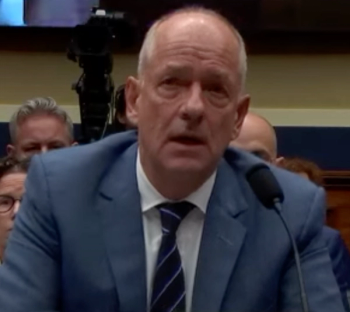
Witty was the top executive of the country's largest healthcare company during some of its darkest chapters, including the killing of the head of its health insurance business.

Their concerns come in response to the bill unveiled Sunday night by House Republicans that would tighten eligibility rules, create work requirements and freeze provider taxes under Medicaid—the federal-state program that insures nearly 80 million low-income Americans.

The House Energy and Commerce Committee has scheduled a public markup hearing for the Republican bill for tomorrow at 2 p.m.

A new survey by Johnson & Johnson revealed that oncologists are overwhelmed by the rapid pace of innovation in cancer care, with many calling for better tools, education and collaboration to help integrate new treatments and technologies into everyday practice.

In a conversation with Managed Healthcare Executive, 10XBeta CEO Marcel Botha warned that proposed Medicaid cuts, combined with federal budget reductions under the DOGE initiative, could exacerbate the rural healthcare crisis—threatening efforts to bring mobile, community-driven innovations to underserved areas.

A new JAMA Dermatology study found that once-daily Zoryve (roflumilast) foam, 0.3%, safely and effectively reduced scalp and body plaque psoriasis symptoms in patients 12 and older, offering a convenient, and more tolerated treatment option that may boost adherence and quality of life.

The latest report by Urban Institute warns that proposed Medicaid funding cuts could cost states like California, New York, Massachusetts and the District of Columbia hundreds of billions of dollars over the next decade.

A study found that while patients with atopic dermatitis often turn to social media for skincare advice, their decisions are most influenced by healthcare professionals, personal experience, and disease severity.

A new study by JAMA Health Forum found that universal annual depression screening for young adults during primary care visits is cost-effective and can result in greater benefits if paired with better treatment access and lower costs, particularly for multiracial and Hispanic females.

Treating hidradenitis suppurativa is complex and often requires taking a number of medications, including antibiotics, hormone therapies and immunosuppressants. However, many of these treatments are used off-label, and at this time, only two biologic therapies—Humira (adalimumab) and Cosentyx (secukinumab)— are approved by the FDA for HS treatment.
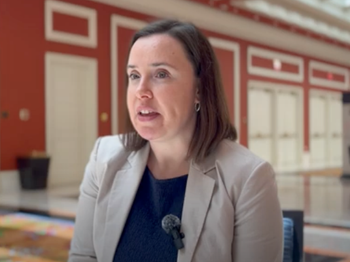
Becky Davis of Charles River Associates predicts that an influx of new and oral GLP-1 drugs, along with pricing pressures from policy and competition, will reshape the weight loss drug market in the next two years.
At the 2024 Asembia Specialty Pharmacy Summit, Becky Davis, principal at Charles River Associates, discussed how employer-based insurance coverage for GLP-1s remains uneven—and what factors are influencing decisions about access to these weight-loss treatments.

At this year’s Asembia Specialty Pharmacy Summit in Las Vegas, Managed Healthcare Executive spoke with John Beardsley, senior vice president of corporate business development at CoverMyMeds, and Fauzea Husain, vice president of public policy at McKesson, about what potentially lies ahead for the Inflation Reduction Act under this Trump administration.
At the 2025 Asembia Specialty Pharmacy Summit in Las Vegas, John Beardsley, senior vice president of corporate business development at CoverMyMeds, and Fauzea Husain, vice president of public policy at McKesson, discussed the future of Medicare drug pricing, including potential changes to the “pill penalty” and efforts to improve transparency in the negotiation process.
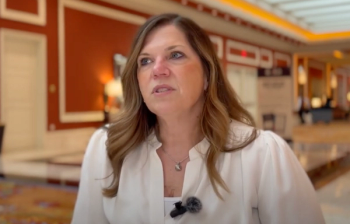
Kathi Henson, senior vice president of patient services, nursing and quality at Orsini, spoke with MHE editors at this year’s Asembia Specialty Pharmacy Summit in Las Vegas about how analytics and AI are shaping the future of specialty pharmacy. She highlighted the unique role data plays in improving patient outcomes, managing rising costs and maintaining high standards of care in an increasingly complex field.