

The difference between specialty drugs and traditional drugs and how each have vied for market competition, according to Jeff Casberg, MS, RPh, senior vice president of clinical pharmacy services at IPD Analytics.

Briana Contreras is an editor at Managed Healthcare Executive, where she covers the clinical, business and policy developments that matter to payers and health plan leaders, with an additional focus in multiple clinical spaces. Her reporting spans from new cancer therapies and clinical trial data to drug affordability and biosimilars, pharmacy benefit management (PBM) and health plan operations, giving healthcare executives clear context on how new evidence can affect coverage and care decisions.
Experience:
Before joining MHE in 2019, Briana was a reporter at The Morning Journal in Lorain, Ohio, west of Cleveland, where she covered local government, community news and the issues affecting residents across Lorain and Erie counties. She reported on city council, downtown redevelopment, library and school projects, local business, nonprofits and breaking news in Elyria, Lorain and nearby communities.
Education:
Briana graduated from Cleveland State University with a B.A. in Journalism and Promotional Communication.
The difference between specialty drugs and traditional drugs and how each have vied for market competition, according to Jeff Casberg, MS, RPh, senior vice president of clinical pharmacy services at IPD Analytics.


In this first part of a two-part video series, Jennifer Haley, principal research associate of the Health Policy Division at the Urban Institute, spoke with MHE about the impact the proposed Medicaid work requirements could have on millions and research that supports this belief.

A Q&A between Shawn Kwatra, M.D., professor and chair of dermatology at the University of Maryland School of Medicine, and Managed Healthcare Executive about new discoveries in chronic itch, how treatment options are improving and the challenges patients face in getting access to the right therapies.

The analysis from the Urban Institute breaks down projected coverage losses across the 40 Medicaid expansion states, where researchers based their estimates on previous work requirement rollouts in Arkansas and New Hampshire.

In a Q&A with Jeff Casberg, MS, RPh, senior vice president of clinical pharmacy services at IPD Analytics, Casberg explains the evolution of specialty drugs, the future of GLP-1 competition and what to expect from the traditional drug pipeline.

One particular application of AI on the rise at City of Hope is the development of a large language model (LLM) made specifically for oncology.

In this second part of a video series, Shawn Kwatra, M.D., professor and chair of dermatology at the University of Maryland School of Medicine, described a common scenario where patients with severe atopic dermatitis must first try and fail multiple topical treatments, all while having widespread symptoms, before insurers will approve systemic therapies.

United Health Foundation, the charitable branch of UnitedHealth Group, awarded more than $7 million in grants to organizations in Georgia, Michigan, New Mexico and Wisconsin to improve maternal and infant healthcare, reduce disparities and strengthen the doula workforce in underserved communities.
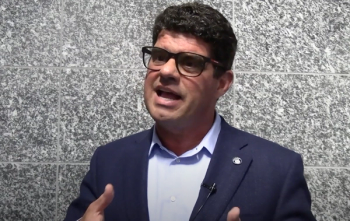
At the 2025 AMCP annual meeting in Houston from March 31 to April 3, John M. O'Brien, Pharm.D., MPH, president and CEO of the National Pharmaceutical Council (NPC), shared concerns and potential reforms in a conversation with Managed Healthcare Executive.

Doug Long, BA, MBA, vice president of Industry Relations at IQVIA, shares what's happening in the growing GLP-1 and biosimilars space. Long was a presenter at the annual AMCP 2025 meeting in Houston, where he discussed these topics and more earlier this week.

Experts across healthcare debunk 15 common myths about GLP-1 medications—covering everything from access and cost to lifestyle changes and long-term effectiveness—to help patients and providers separate hype from reality.

Maria Lowe, Ph.D., associate vice president of Pharmaceutical Intelligence at Institute for Clinical and Economic Review (ICER) addresses the possible gene therapies that we could see reach the market this year.
Maria Lowe, Pharm.D., BCPS, associate vice president of pharmaceutical intelligence at the Institute for Clinical and Economic Review, described specialty drugs as high-cost treatments requiring complex handling or disease management and highlighted key upcoming approvals, including a new PCSK9 inhibitor for lipid lowering and tolebrutinib, a Bruton's tyrosine kinase (BTK) inhibitor, which could become the first in its class approved for multiple sclerosis.

Julie Patterson, Pharm.D., Ph.D., of the National Pharmaceutical Council, tells Managed Healthcare Executive at the annual AMCP meeting in Houston that the Inflation Reduction Act of 2022 is a policy that seems to be leading to more consequences than it is benefits.
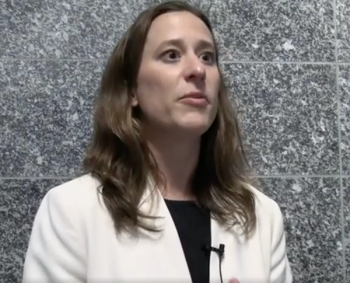
At the AMCP 2025 meeting, Julie Patterson, Pharm.D., Ph.D., of the National Pharmaceutical Council, explained that the impact of the IRA drug negotiation program on patient access is still unclear, but early research shows that coverage for selected drugs has been strong. However, as Medicare Part D undergoes changes, there are concerns about how plan incentives, formulary design and utilization management might affect future access.

At the AMCP 2025 annual meeting, Sean Shirk, Pharm.D., stressed the need for payers to stay informed and engaged with legislation to sustain site-of-service efforts despite growing restrictions.
Co-presenter, Sean Shirk, Pharm.D., director of specialty clinical solutions at Prime Therapeutics, discussed this topic during a presentation on legislative impacts on site of service at the AMCP 2025 annual meeting in Houston on Tuesday.

Connie Estep, Pharm.D., BCGP, director of specialty clinical solutions at Prime Therapeutics, presented on legislative impacts on site of service at this year's AMCP meeting in Houston.

Originally approved by the FDA in September 2023, Biogen's Tofidence became the first tocilizumab biosimilar available in the U.S. market, launching in May 2024.


Finerenone, a nonsteroidal mineralocorticoid receptor antagonist, has been studied extensively in patients with mildly reduced or preserved ejection fraction.


Marc Humbert, M.D., Ph.D., professor of respiratory medicine at Université Paris-Saclay and Inserm, believes that recent clinical trials have reinforced the potential of Winrevair (sotatercept) as a breakthrough in pulmonary arterial hypertension (PAH) treatment.
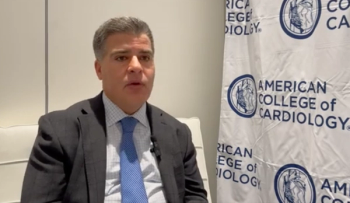
Factor XI Inhibitors are the alternative to DOACs, which are highly effective at preventing strokes. However, their bleeding risks often limit their use, especially in high-risk patients.
Experts at City of Hope, a cancer research and treatment center, believe that AI tools will continue to improve precision medicine, streamline patient care and increase access to clinical trials.

In a recent conversation with Jennifer McGuigan Babcock, senior vice president for Medicaid policy at the Association for Community Affiliated Plans (ACAP), and Gabe Scott, a partner at K&L Gates Health Care Group, the two discussed efforts to protect Medicaid’s role in the healthcare system and the consequences of the budget cuts announced in February.

During last year’s enrollment period, millions of Medicare beneficiaries reviewed their coverage options and selected new Medicare plans for the 2025 calendar year due to changes including the plans being offered, increases in premiums and more, according to an eHealth analysis.
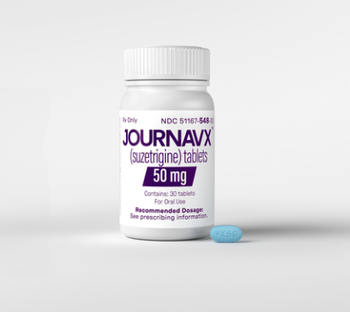
According to a Vertex spokesperson, the drug is seeing strong initial market adoption, with growing payer coverage and ongoing clinical studies aimed at expanding its use beyond acute pain management.