
Higher MRI-measured liver disease activity was linked to lower quality of life and more anxiety and activity problems in 802 adults with suspected MASLD/MASH in Europe.
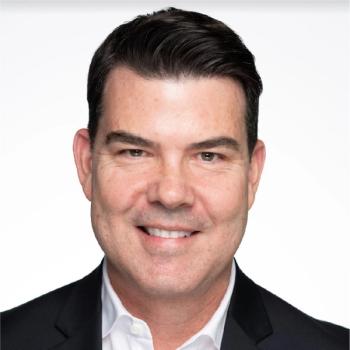
David Feldshon, M.D., a Yale gastroenterologist who still performs endoscopy two days a week at 75, discusses his approach to MASLD and life outside the clinic.
When patients with
Much of Feldshon's work with patients relies on the basics of motivational interviewing, which can be described through the OARS model. A visit begins with open-ended questions, followed by affirmation, where he lets patients tell their own story about what has worked, what hasn't, and where they have gotten stuck.
The R stands for "reflection"; the clinician repeats to the patient what they’ve heard, which confirms understanding and often gives patients more clarity. The last step is a short summary of the patient's conflicts. Clinicians can suggest solutions, but the motivation should come mostly from the patient.
“That's why it's called motivational interviewing,” Feldshon said in a recent interview with Managed Healthcare Executive. “You're trying to get the motivation for them to do what they need to do. All these conflicts have a resolution. It's just a question of whether they are ready and willing to do it.”
MASLD is the updated name for the condition previously known as nonalcoholic fatty liver disease. It is characterized by the excess buildup of fat cells on the liver, meaning fat accounts for
MASLD is linked to metabolic diseases such as obesity, type 2 diabetes and high cholesterol and can progress into metabolic dysfunction-associated steatohepatitis (MASH) if left unchecked. Patients with MASH experience liver cell damage, swelling and inflammation.
MASLD is prevalent in the United States, where obesity rates are high — more than 2 in 5 adults are considered obese — meaning about 100 million have MASLD.
Specifically, 75% of MASLD patients are overweight, and 90% are obese.
In the United States, nearly 25% of MASLD patients will develop MASH, and 11% of MASH patients will develop liver failure.
“It's difficult to focus on that many patients, so I try to subdivide the population by those you really want to home in on. If they're diabetic, because diabetics have a very high risk of developing progressive liver disease. The other group is people that have metabolic syndrome.”
Feldshon, 75, was born in White Plains, New York, and grew up in Jericho on Long Island. He attended the State University of New York at Albany and Albert Einstein College of Medicine in the Bronx, completed residency at LA County-USC General Hospital and a fellowship in Tucson, Arizona, and practiced in California for several years before moving to Minnesota.
The move to Minnesota followed his wife, Archelle Georgiou, M.D., who was recruited to serve as chief medical officer of UnitedHealthcare from 1999 to 2002. The couple has been married 38 years.
Feldshonwas cutting back his Minnesota practice when an opening in Yale's weight management program lined up with the couple's plans to move east. He joined about a year ago and commutes weekly by train from their home on Manhattan's Upper East Side.
“Most of my practice years were at a large GI group in Minnesota called MNGI Digestive Health. I've always had an interest in liver disease, and around 2012, it dawned on me that we were seeing all these patients with fatty liver, but we weren't offering them much—we didn't have the GLP-1 medications back then, so it was really a question of diet or nothing.”
Around the same time, the American Board of Obesity Medicine launched their obesity treatment certification program. Feldshon took his boards the first year they were offered and officially became an ABOM-Certified Obesity Medicine Physician.
He chose GI during residency because he wanted to work with his hands, and he calls it one of the best decisions of his life. He still performs endoscopy and colonoscopy two days a week.
MASLD and MASH can be reversed, especially if the liver damage caused by MASH if caught early enough.
The most effective way for patients to do this is by losing at least 10% of their body weight. However, this can be difficult for patients.
Feldshon shared some of the main barriers his patients report.
“People say, ‘I just don't have the time. I'm up early to go to work; I have to transport my kids around, but it all revolves around ‘It’s just hard for me to do it,.'” claimed Feldson. “A second complaint that I hear is patients get frustrated because they tried exercising in the past and didn’t lose much weight. A third one is that a lot of people have musculoskeletal complaints. They have arthritis and pain, and they just feel that exercise is impossible for them. Yet the data would show that if you do
Patients may also benefit from GLP-1s, but only see long-term benefit if they combine them with diet or exercise, Feldshon said.
In some cases, surgical interventions such as gastric bypass are the only viable option.
Feldshon recalled a patient interaction that left an impression on him.
“I recently had a patient that was not losing weight on the GLP-1s and was quite overweight and had multiple medical conditions associated with that. We realized that the only treatment for her was going to be an endoscopic sleeve procedure, and she had extreme hesitancy about that. We had a couple of visits where we just talked about it, and I just listened to her concerns, and then we finally had a breakthrough moment where I said, "You know, you're at such high risk; if you don't do anything, there's a risk either way, and the risk may be less if you pursue one of these surgical options than if you don't do anything." She’s now scheduled to have the procedure done sometime in the next few months.”
Hesitancy over these procedures is not unheard of. In one study published in the American Journal of Surgery,
“I'm not sure that it was formal motivational interviewing, but I think that it was that process where I elicited what her concern was, we gave it time, and I presented her with heroptions — I think that persuaded her to move forward.”
When Feldshon isn’t at work, you can find him and his wife dining at the endless selection of restaurants in New York City. When asked if they had a favorite spot, he simply couldn’t decide.
“We love everything. It's different to go to a different restaurant every night. There are all these social activities you can do, and I love taking the subway. I don't have to bother driving.”
Unsurprisingly, Feldshon is also an avid outdoorsman. He grew up fishing the bays on Long Island, and now that he's back on the East Coast, he’s been busy fishing for striped bass in Jamacia Bay. He has been a skier for many years and still goes on a skiing trip twice a year.
“I get my exercise in every day. You know, they say you have to walk the walk. I wasn't a jock growing up. It's just something I sort of acquired over time.”
His current favorite exercise? Krav Maga, which is an Israeli self-defense combat system with a focus on deescalation. It is a high-intensity interval training style because it uses the whole body, meaning it would be one of the many exercises beneficial for preventing or treating MASH. Feldshon explained that the “magic number” is getting between 150 and 300 minutes of aerobic exercise a week. “Even just fast walking is considered adequate,” he said.
“I worry about hurting myself, but on the other hand, it feels better to be doing it and gives you an assurance walking around the city that you don't get otherwise.”
“I've done several different types of martial arts, some Taekwondo and Hapkido. They all teach you something different.”
When asked if there were any parallels between his career and martial arts, he said the following:
“When I was in my residency, I thought, ‘I need to work with my hands.' "What can I do with my hands?’ The choices boil down to pulmonary cardiology or GI, and I decided I liked working with my hands, and I got to do the most of that with GI. It was one of the best decisions in my life.”
“There's a certain level of satisfaction in it. And I think that's the same thing when you're doing martial arts. It's very physical. In fact, if anything, it's heightened because you have to respond and do things very quickly. That there's some excitement to that.”
Feldshon’s next project is setting up a weight loss support group for patients.
“I think hearing other people talk about the same problem gives people more motivation,” Feldshon said. “The more people have contact with the healthcare system, the better they do.”