



Over the past 20 years, the age-adjusted mortality rate for obesity-related cardiovascular mortality increased by 415% for American Indian or Alaska Native individuals.
Over the past 20 years, the age-adjusted mortality rate for obesity-related cardiovascular mortality increased by 415% for American Indian or Alaska Native individuals.

Jason Prestinario, M.S., CEO, Particle Health, which unlocks the power of medical records in an intelligent platform that puts the focus of health back on the patient, is one of the 12 up-and-coming leaders in healthcare included in the annual Managed Healthcare Executive feature.

In a JAMA Network Open study published Sept. 11, researchers wanted to take a deeper look into PrEP regimens’ impact on cardiometabolic health, as it is understudied. To do so they examined the risk of incident hypertension and statin use among adult health plan members starting PrEP with tenofovir alafenamide fumarate (TAF) compared adults taking tenofovir disoproxil fumarate (TDF).

Nora Lozano-Evjen of Equality Health, is one of 12 winners in this year's Emerging Leaders in Healthcare feature. In an interview with MHE, Lozano-Evjen shared that after she moved to the United States from Mexico City, she became involved as a prevention specialist for two U.S. school districts, which introduced her to health and social disparities impacting underserved communities — especially those of color. The exposure to these realities pushed her toward the community health worker model she believes in today.

Nora Lozano-Evjen, community health worker manager at Equality Health, a value-based care leader focused on supporting independent primary care practices, is one of the 12 up-and-coming leaders in healthcare included in the annual Managed Healthcare Executive feature.

Managed Healthcare Executive's Managing Editor Peter Wehrwein, and Editor Briana Contreras, had a discussion in July with Mostafa Kamal, president and CEO of Prime Therapeutics, an organization in which Kamal acquired this position that same month.

Sanjula Jain, Ph.D., chief research officer at Trilliant Health, is one of 12 winners in this year's Emerging Leaders in Healthcare feature. In an interview with MHE, Jain shared that although she has an affinity for data-driven interpretations, she enjoys going down the rabbit hole of reading horoscope predictions and the personality descriptions of zodiac signs.

Sanjula Jain, Ph.D., chief research officer at Trilliant Health, combining industry expertise, market research and predictive analytics to form evidence-based strategy for healthcare, is one of the 12 up-and-coming leaders in healthcare included in the annual Managed Healthcare Executive feature.

Thompson, the president of the National Alliance of Healthcare Purchaser Coalitions, said if that 20% of the market changes way it deals with PBMs “it will change the market, it will change the conversation, it will change the practices of key players.”

This average rate decrease will lower total premiums by an estimated $130 million.

Kevonne Holloway, MBA, managing director, Global Content Partners, Elsevier, is one of 12 winners in this year's Emerging Leaders in Healthcare feature. In an interview with MHE, Holloway recommended " The Light We Carry," a book by Michelle Obama, as a must-read as it describes how everyone has a light inside of them that illuminates the way for others.

Kevonne Holloway, MBA, managing director of Global Content Partners at Elsevier, a world-leading provider of healthcare and research information, is one of the 12 up-and-coming leaders in healthcare included in the annual Managed Healthcare Executive feature.

In total, Medicare beneficiaries paid $21 billion for 100 drugs that receive the most rebates, while health plans paid $5.3 billion after rebates.

Vaccine manufacturers have publicly announced that the boosters would be ready this fall, and the FDA anticipates they will be available “in the near future.”
Thompson, the president and CEO of the National Alliance of Healthcare Purchaser Coalitions, said rebates and pass through are just the “tip of the iceberg” of the misalignment between employers and PBMs that disadvantages employers.

Panelists at the 2023 PBMI Annual National Conference mentioned post-marketing studies and changing the mind-set about what a prescription entails.

Russell Graney, Founder and CEO of Aidin, is one of 12 winners in this year's Emerging Leaders in Healthcare feature. In an interview with MHE, Graney talked about appreciating advice he received from healthcare veterans during the start-up of Aidin, but sifting through the right input for his business.

This House bill combines aspects of previously submitted bills — specifically on transparency related to prices on hospital services, laboratory tests, healthcare coverage and PBMs — into one package.

Russell Graney, Founder and CEO, Aidin, which helps patients find the best quality care after they leave the hospital while at the same time helping hospitals nationwide streamline the process of discharging patients, is one of the 12 up-and-coming leaders in healthcare included in the annual Managed Healthcare Executive feature.

Kyna Fong, Ph.D., CEO and co-founder, Elation Health, is one of 12 winners in this year's Emerging Leaders in Healthcare feature. In an interview with MHE, Fong shared a guilty pleasure of her's is Na Ya Dessert Cafe in San Francisco's Hayes Valley. In addition to a guilty pleasure, Fong also talked about a career turning point she experienced, and what book she recommends to healthcare professionals.

Mike Steelman, vice president, Managed Markets, Dexcom presented on the pathways to implement non-prescription digital therapeutics at the 2023 PBMI Annual National Conference in Orlando. In this interview with Managed Healthcare Executive, Steelman suggests that creating "certainty in an uncertain world" in the digital therapeutic space could potentially open up doors for further use of these tools.

Mike Baldzicki, chief commercial officer, Premier Pharmacy Services, shared some takeaways from his presentation on the rare-ultra orphan disease market and its therapies at the 2023 PBMI Annual National Conference in Orlando.
Research has shown that patients with inflammatory bowel disease, including ulcerative colitis, treated with TNF-alpha blockers have a lower antibody response and a shorter duration of immunity than those who receive integrin receptor antagonists, such as Entyvio (vedolizumab), or no medication at all.

There is a huge opportunity for savings from the recently launched Humira biosimilars and others expected to reach the market in the next few years. But plans and PBMs will need to step into the role that pharmaceutical manufacturers once did in supporting patients and prescribers.

At the 2023 PBMI Annual National Conference in Orlando, Ellen Feeney, director of Clinical Pharmacy Strategies at Highmark discusses how these new programs payers are using to control medication costs work, and shares how costs of the GLP-1s should be managed.
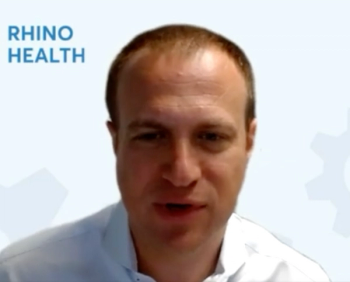
Ittai Dayan, M.D., M.P.H., co-founder and CEO of Rhino Health, is one of 12 winners in this year's Emerging Leaders in Healthcare feature. In this video interview, Dayan not only shares a good read for healthcare professionals, but also a turning point that changed his career trajectory and even a guilty pleasure of his — which involves finishing a scoop or more of his son's ice cream.
Ozempic (semaglutide) is second only to Humira (adalimumab) in sales, according to the IQVIA vice president of industry relations and a frequent speaker at conference. And for newly launched drugs, sales figures for Mounjaro (tirzepatide) are second only to what they were for Harvoni (ledipasvir and sofosbuvir), a hepatitis C antiviral, when the hepatitis C antivirals were new.

In an observational cohort study published in the September 2023 issue of The Lancet, Jiangwei Sun, Ph.D., from the Karolinska Institutet in Stockholm, Sweden, and his colleagues compared statin users with non-statin users to determine the risk of colorectal cancer in patients with IBD.

Kyna Fong, Ph.D., CEO and co-founder, Elation Health, the clinical-first technology platform for high-value primary care, is one of the 12 up-and-coming leaders in healthcare included in the annual Managed Healthcare Executive feature.

Payers are trying to figure out how to provide access to patients who would benefit from weight loss drugs such as semaglutide but also control costs.