


























People with HIV who smoke have a life expectancy 12.3 years shorter than non-smokers.
People with HIV who smoke have a life expectancy 12.3 years shorter than non-smokers.

Although there is a suspected connection between malaria and HIV, no malaria control strategies have been developed specifically for people living with HIV.

Results based on REPRIEVE study.
Adolescent uptake levels of PrEP are low among adolescents ages 16-24 years old.
Biktarvy can now be used to treat people with HIV who have a known or suspected M184V/I mutation, a common form of treatment resistance.

Duke researchers tested a program that involves hair stylists in raising awareness, possible uptake of HIV preexposure prophylaxis (PrEP) among Black women, a group that is disproportionately affected by new HIV infections.

Different levels of risk for HIV exist in the different subtypes of intellectual and developmental disabilities.
A small trial that combined the anticancer drug Zolinza with an immunotherapy had a modest impact on antiviral activity in patients with HIV. Researchers are hoping better approaches can be found to coax HIV out of hiding.

It’s likely droughts will become more common due to climate change.


An estimated 4 million people are living with advanced HIV.

ART-related weight gain is a relatively new phenomenon even though ART has been around for nearly 30 years.

Data from 17 longitudinal studies of adults with HIV treated with antiretroviral therapy how that proportion of deaths caused by AIDS has fallen from nearly 50% to 16% and that all-cause mortality has been sliced in half.
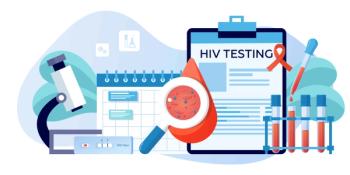
Disparities in mental health adherence in trans women with HIV.
Post-menopausal women with HIV also had significantly less teeth than those without HIV.
Annual report from the American Cancer Society says HIV is an underlying factor in a handful of cancer diagnoses.

Research findings reported in Health Affairs today show that relatively small increases in out-of-pocket costs for HIV preexposure prophylaxis (PrEP) have a disproportionate effect on the proportion of people who don't get the prescription filled.

An international study examines the possible inverse relationship between HIV/AIDS and multiple sclerosis (MS).

This year's top HIV articles include one sharing data from a group of researchers from University of Pittsburgh who looked to see if T cell activation is sufficient to drive SIV disease progression.
Some people still have low levels of HIV despite taking antiretroviral therapy as prescribed and lacking any indications of drug resistance. Understanding why could yield new strategies for dealing with HIV.

New infections are decreasing, but U.S. statistics reveal some significant disparities.
U.S. and United Nations health officials have set ambitious 2030 goals for ending HIV and AIDS. It looks like those efforts will fall short unless there is a burst of progress in the next few years.
PEPFAR, having invested $100 billion and saved 25 million lives in the global fight against HIV/AIDS, faces Congressional hurdles in its reauthorization due to abortion debates. Despite widespread support and no evidence of abortion-related activities, the legislative process is at a standstill. Members of PEPFAR and authors of a recent editorial stress the significance of PEPFAR and advocate for integrating behavioral and social science into healthcare programs to achieve UNAIDS targets and address barriers in HIV/AIDS testing and treatment.