



Lung cancer has shifted from a rare, smoking-driven disease to one increasingly seen in young non-smokers, especially women, with possible links to pesticide exposure from otherwise “healthy” diets.

Logan Lutton is the Associate Editor of Managed Healthcare Executive. She covers healthcare policy and the latest developments in schizophrenia, HIV and ADHD, with a focus on the advocates and researchers working in these areas.
Prior to joining MHE, Logan was a member of the editorial team at Medical Economics, which is also part of MJH Life Sciences. During her tenure, the publication marked its 100th anniversary, and she contributed to its centennial issue, which received a Jesse H. Neal Award. Her contribution, "The doctor is in...your TV," is a feature on the history of physicians in popular culture.
Logan earned her bachelor’s degree in Journalism and Mass Communication at Kent State in 2019.
Lung cancer has shifted from a rare, smoking-driven disease to one increasingly seen in young non-smokers, especially women, with possible links to pesticide exposure from otherwise “healthy” diets.
In this discussion, Jorge Nieva, M.D., professor of clinical medicine at the University of Southern California Norris Comprehensive Cancer Center, explores how pesticide exposure from otherwise “healthy” diets may help explain the rise of early-onset lung cancer in non-smokers.

Skinvive by Juvéderm recently received FDA approval as the first hyaluronic acid injectable indicated for reducing horizontal neck lines, with 74.8% of trial participants achieving clinically significant improvement at one month.

The FDA has expanded Capvaxive approval to include 2- to 17-year-olds at increased risk of pneumococcal disease, making it the only pneumococcal conjugate vaccine approved for this population in the United States.

A CDC-led test-negative case-control study using the VISION network found that the 2024-2025 COVID-19 vaccine reduced the odds of medically attended COVID-19 in adults, with an effectiveness of 26% against emergency department/urgent care encounters, 35% against hospitalization and 41% against critical illness, benefits that held up in older adults and immunocompromised patients but waned over time since vaccination.

The FDA has approved the sunscreen ingredient bemotrizinol, which blocks both UVA and UVB rays.

Things got messy fast after ADA security pulled researchers out of its 2026 conference for passing around an anti-NIH-cuts editorial — cue a walkout, a couple of high-profile resignations and a CEO apology video to try to smooth things over.

A University of Pittsburgh study found that one RSV shot during pregnancy cut the odds of a newborn landing in the hospital by nearly 70%.

Two food access interventions, one of which combined grocery delivery with community health worker coaching, showed significant improvements in diabetes control, food insecurity and overall health outcomes across both youth and adult populations.

The FDA has approved a new maintenance dosing schedule for Ebglyss that reduces injections to as few as six per year for patients with moderate to severe atopic dermatitis.
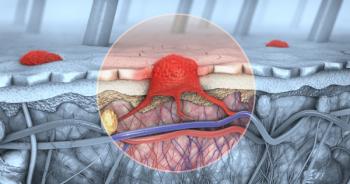
An individualized mRNA neoantigen vaccine added to pembrolizumab reduced the risk of recurrence by 49% and distant metastasis by 59% in resected high-risk melanoma, with benefits holding through five years of follow-up in a phase 2b trial.

Cambridge researchers have completed the first human trial of pEVAC-PS, an AI-designed vaccine intended to protect against the entire family of Sarbeco viruses, finding it safe and well tolerated across all dose levels, with modest immune responses that warrant further investigation in a phase 2 trial.

Shame, fueled by stigma, can deter care for HIV patients; recognizing it and responding compassionately can reduce harm, according to Abigail Bachelder, M.P.H., Ph.D., associate psychiatry professor at Boston University Chobanian & Avedisian School of Medicine.
Abigail Batchelder, M.P.H., Ph.D., clinical psychologist and associate professor at Boston University, explains the effect that shame can have on the healthcare outcomes of HIV patients and why “explicit compassion” is a step in the right direction when treating these individuals.

By partnering with pastors to navigate religious taboos and collaborating with public health agencies, researchers Jannette Berkley-Patton, Ph.D., and Kathryn Derose, Ph.D., demonstrated that African American churches — long-standing pillars of their communities — can serve as trusted, effective sites for HIV testing that reach not only congregants but also the broader community, helping to address the disproportionate impact of HIV on African Americans.

The FDA has approved Epiduo for over-the-counter use, a combination acne gel previously available only by prescription, a decision experts say could expand access to effective treatment for the millions of Americans who face cost and logistical barriers to dermatological care.

A phase 3 clinical trial presented at ASCO 2026 found that combining talazoparib with enzalutamide reduced the risk of cancer progression by 52% compared with enzalutamide alone in prostate cancer patients with specific DNA repair gene mutations, with even greater benefit seen in those carrying BRCA mutations.

A new investigational combination therapy for advanced KRAS G12C-mutant non-small cell lung cancer showed "highly promising" results with “manageable” side effects, according to the study’s lead author.
Ferdinandos Skoulidis, M.D., Ph.D., explains what’s next for this treatment for patients with previously untreated advanced or metastatic KRAS G12C-mutated non-small cell lung cancer.
Divarasib plus pembrolizumab shows strong responses in patients with advanced KRAS G12C+ non-small cell lung cancer, according to the results of the Krascendo 170 study, presented today at ASCO 2026.

Eli Lilly and Company is acquiring three vaccine companies to expand its reach into infectious disease research and prevention.

Women with high-grade serous ovarian cancer who fasted around chemotherapy sessions had lower insulin levels, improved chemotherapy responses and potentially longer progression-free survival compared with patients who ate normally, according to findings from an Italian study presented at the 2026 American Society of Clinical Oncology Annual Meeting.

In this conversation, Jerome Siegel, Ph.D., professor of psychiatry, David Geffen School of Medicine at UCLA and director of the Center for Sleep Research at the Semel Institute for Neuroscience and Human Behavior at UCLA, explains the findings of his latest study about the neuron damage associated with narcolepsy.

Affordable Care Act Marketplace deductibles hit a record 37% increase in 2026 as expired enhanced tax credits pushed millions of enrollees toward cheaper, higher-deductible bronze plans.

New research suggests that both insufficient and excessive sleep may be linked to faster aging throughout the body and an increased risk of conditions such as depression, diabetes and heart disease.

Young adults with HIV who experience financial instability are significantly more likely to struggle with adhering to antiretroviral therapy, highlighting how economic hardship can directly impact treatment success.

A French study found that a higher dose of ivermectin was not more effective than the standard dose when combined with topical therapy for treating severe scabies.

A pilot study of demodex mites and antimicrobial peptides published in the Journal of the American Academy of Dermatology found biologic differences between sensitive skin syndrome and rosacea, suggesting the conditions are distinct despite sharing similar symptoms and triggers.

A new study published in Cell Reports suggests the transition between wakefulness and sleep involves four distinct mental states, including dream-like thinking that can occur before a person is fully asleep.

Pennsylvania-based UPMC has reached a definitive agreement with CommonSpirit Health to acquire Trinity Health System, expanding its footprint into eastern Ohio.