
A five-session course of transcranial magnetic stimulation (TMS) improved processing speed in people with schizophrenia, a cognitive domain that is among the most severely affected in patients,

Logan Lutton is the Associate Editor of Managed Healthcare Executive. She covers healthcare policy and the latest developments in schizophrenia, HIV and ADHD, with a focus on the advocates and researchers working in these areas.
Prior to joining MHE, Logan was a member of the editorial team at Medical Economics, which is also part of MJH Life Sciences. During her tenure, the publication marked its 100th anniversary, and she contributed to its centennial issue, which received a Jesse H. Neal Award. Her contribution, "The doctor is in...your TV," is a feature on the history of physicians in popular culture.
Logan earned her bachelor’s degree in Journalism and Mass Communication at Kent State in 2019.
A five-session course of transcranial magnetic stimulation (TMS) improved processing speed in people with schizophrenia, a cognitive domain that is among the most severely affected in patients,

Hispanic HIV incidence rose 16.8% in antisanctuary counties after the 2018 public charge announcement, relative to baseline counties, a new study found.

A review of 57 studies found music eases pain through positive emotion, control and moving in time with the beat, according to recent research out of Drexel University.

Maladaptive coping at baseline raised relapse and symptom risk over 12 months in first episode psychosis, King's College London researchers found.

A new randomized trial of criminal legal-involved people who use drugs found that 35.1% expressed interest in HIV pre-exposure prophylaxis, and of those, 60.8% preferred long-acting injectable formulations over daily oral PrEP.

Preschoolers who are constantly "on the go" or interrupt others are up to six times more likely to receive an ADHD diagnosis, new national data show.

David Chen, Pharm.D., explores how formulary strategy and biosimilar adoption are reshaping affordability across health systems.
In this discussion, Julia S. Feldman, Ph.D., a postdoctoral fellow in the Department of Psychiatry at the University of Pittsburgh, explains that ADHD symptoms in preschoolers can be meaningfully linked to current or future ADHD diagnoses, underscoring the importance of taking parents’ early concerns seriously.

In this discussion, Tiffany Phung, Pharm.D., CSP, director of specialty pharmacy value, trade relations and market access at UC Davis Health, explores the challenges facing health system specialty pharmacies and how data-driven collaboration is shaping the future of patient care.

Luis Ortiz, M.D., of Johns Hopkins All Children's Hospital, explains the subtle signs of childhood narcolepsy that parents often overlook.
Pediatric sleep specialist Luis Enrique Ortiz, M.D., opens up about living with Type 1 narcolepsy with cataplexy, the long road to diagnosis and how the condition has shaped both his career and personal life.

A Swedish registry study of 58,641 patients found lower education levels were linked to higher mortality after hip fracture surgery.

A Johns Hopkins trial found low-dose hydrocortisone improved attention and verbal learning in women with HIV, with gains sustained over several weeks.

Gilead's Bixlenvo, the smallest once-daily HIV pill yet, has been approved by the FDA for virologically suppressed adults on complex regimens.

A phase 3 trial of intravenous arginine was stopped early after it did not meaningfully shorten acute pain sickle cell crises' recovery time.

The FDA approved ViiV Healthcare's Tivicay PD for children weighing at least 2 kg, making it the first second-generation HIV integrase inhibitor for this group.

Aon projects a fourth straight year of near double-digit health cost growth for U.S. employers, with 2027 costs set to top $19,000 per worker.

Oregon Health & Science University researchers found sensitive caregiving in infancy can offset ADHD risk linked to higher maternal inflammation in pregnancy, a new study shows.

HIV medication adherence rose after SNAP payments and fell nearly 12 points by the end of the benefit cycle, according to a new study of Philadelphia SNAP beneficiaries.
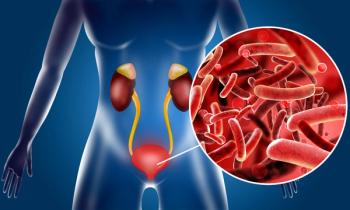
The results of an Australian mouse-model-based study show that the bladder nerves that detect urinary tract infections may drive the urinary urgency that helps clear infection.
Tiffany Phung, Pharm.D., CSP, of UC Davis Health, discusses an alternative approach to clinical research and practice improvement ahead of HSES 2026.

A new study found cannabis use was linked to more falls in older adults with HIV, though cigarette smoking explained most of the risk.

Will Carroll, Pharm.D., chief pharmacy officer at Sutter Health, discusses strategic priorities and his vision for specialty pharmacy growth.

Joseph Savasta, founder and CEO of pharmacy benefit manager HarmonyRx, discusses why the company keeps rejecting acquisition offers amid PBM consolidation.

In this discussion, Brian Coffman, Ph.D., Director of the Clinical Neurophysiology Research Laboratory at the UPMC Western Psychiatric Hospital and Director of Research at UPMC Brain Mapping Center, explores how cannabis-associated psychosis may differ biologically from schizophrenia and what these insights mean for patients and clinicians.

Raechele McMahan of Prescryptive Health says a cancer diagnosis at 17 and her son's type 1 diabetes made health care access personal before professional.

CMS has finalized a rule cutting federal Medicaid and CHIP funding for gender-affirming care for minors, effective Oct. 13, 2026.

In this discussion, Hanna Gustafsson, Ph.D. and Elinor Sullivan, Ph.D., who are researchers from Oregon Health & Science University’s Center for Mental Health Innovation, explain the potential relationship between early childhood caregiving and ADHD.

David Chen, Pharm.D., of Kaiser Permanente discusses how PBM reform could speed biosimilar adoption and lower drug costs.

Melody Chang, RPh, BCOP, MBA, of the American Oncology Network, discusses building outpatient infrastructure for bispecific antibody and CAR-T therapy.

October 11th 2024