

Opinion|Videos|November 6, 2026
DME Access Barriers: Anti-VEGF Costs, Prior Authorizations, and Coverage Denials
Author(s)Nicolas Yannuzzi, MD, Nimesh Patel, MD
Rising drug prices, limited plan coverage, prior authorization demands, and denials all constrain DME care. Dr. Patel describes how retina practices work to secure the most effective therapy for patients.
Advertisement
In "DME Access Barriers: Anti-VEGF Costs, Prior Authorizations, and Coverage Denials," our experts turn to the financial obstacles that stand between patients and effective therapy.
Dr. Yannuzzi closes the previous thought by noting that treatment burden contributes to poor outcomes in many patients. He then moves to a second barrier and asks Dr. Patel how he navigates the cost of anti-VEGF therapy, which can limit access to care.
Dr. Patel calls cost one of the biggest challenges that retina specialists and their patients face. The price of these treatments keeps rising, and so does the cost of insurance. Coverage for these medications is sometimes limited, depending on the patient's plan.
He adds that earlier-generation treatments are sometimes not enough to control the disease or to keep the treatment burden manageable. That creates a difficult conversation when a physician wants to change therapies, because the better option may be harder for the patient to obtain.
Dr. Patel describes a heavy administrative load on the practice side as well. Physicians must write prior authorizations to get patients onto the most appropriate and effective treatments. Even with that effort, denials still occur.
When that happens, the practice must work with patients, with its social work office, and with rebate programs. It may also turn to extra funding programs run through other organizations to get medications covered. Dr. Patel concludes that cost is a major limiting factor for care.
He also raises a more basic problem. Even holding insurance does not guarantee access, and many patients have no insurance at all. Those patients have trouble getting the care they need in the first place, before any questions about agent selection or coverage arise.
Dr. Yannuzzi acknowledges these as great points. Together, the two physicians describe a system in which rising drug prices, limited plan coverage, prior authorization work, and denials stack on top of the burden patients already carry.
Up next, in "DME Extended-Interval Anti-VEGF: Improving Adherence and Choosing the Right Agent," the experts discuss how longer dosing intervals reshape patient motivation and how Dr. Patel chooses among agents.
Advertisement
Related to this article

The first part of our conversation with Christopher Stanley, M.D., MBA, the newest member of the Managed Healthcare Executive editorial advisory board.
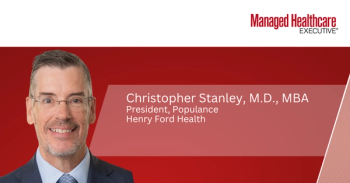
Unifying care management doubled patient outreach with the same staff, and virtual physical therapy is cutting costs, says Populance's Christopher Stanley, M.D.
Christopher Stanley, M.D., MBA, says Henry Ford Health's growth has led Populance to put its push for outside customers on hold and focus on its own system.
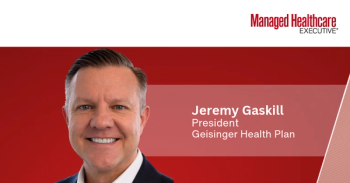
Geisinger Health Plan President Jeremy Gaskill says being owned by a health system aligns incentives, cuts payer-provider busywork and speeds care to patients.
Geisinger Health Plan expects Medicaid enrollment to fall roughly 10% as H.R. 1 takes effect, President Jeremy Gaskill says, though the timing is still unclear.
As other insurers pull back, Geisinger Health Plan isn’t exiting any Medicare Advantage plans for 2027 and expects to grow, President Jeremy Gaskill says.
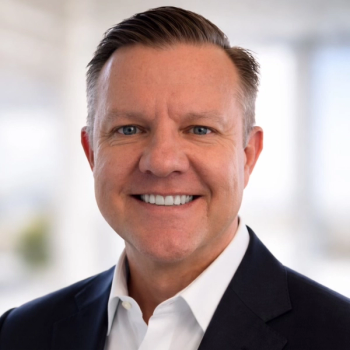
The second part of our interview with Jeremy Gaskill, the president of the Geisinger Health Plan. Gaskill discusses trends in the various segments of the health insurance market—Medicaid, Medicare Advantage, the employer-based commercial market and the ACA marketplace.

Democrats won Congress, but with Trump’s veto, their best healthcare tools are funding bills, hearings and bipartisan deals.
Advertisement
Advertisement
Trending on Managed Healthcare Executive
1
On Medicaid cuts, the Medicare Advantage market, commercial insurance and the future of U.S. health insurance: A conversation with Geisinger's Jeremy Gaskill
2
CVS Health is splitting in two, according to news reports
3
The CVS Health split. How separate will the two companies really be?
4
On the advantages of health system-owned health plan, what Medicaid cuts might mean and the future of U.S. health insurance: A conversation with Geisinger's Jeremy Gaskill
5