
Opinion|Videos|October 30, 2026
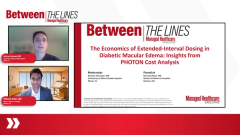
DME Treatment Landscape: Anti-VEGF Options and Prioritizing Eye Care in Diabetes
Author(s)Nicolas Yannuzzi, MD, Nimesh Patel, MD
Anti-VEGF therapy remains the standard of care for center-involved DME, yet eye care competes with dialysis, amputations, and other demands. Dr. Patel explains how disease severity should guide scheduling priority.
Advertisement
This episode, "DME Treatment Landscape: Anti-VEGF Options and Prioritizing Eye Care in Diabetes," features the panel reviewing standard treatment and weighing eye care against competing health priorities.
Dr. Yannuzzi begins by reviewing the current DME treatment landscape. The first step is educating patients about their diabetes and optimizing blood pressure, blood sugar, and lipid control. Each of these can slow progression of retinopathy and DME, and in some cases partly reverse it.
For center-involved DME, however, many patients still need treatment, and anti-VEGF therapy is the standard of care. Steroids are used here and there, but anti-VEGF remains the workhorse. Approved agents include aflibercept, ranibizumab, and faricimab. Dr. Yannuzzi describes faricimab as the only dual-pathway agent, since it inhibits both VEGF and angiopoietin-2.
He also points to a second-generation option, high-dose aflibercept, which delivers a higher dose than the original 2 mg formulation clinicians know well. Multiple pivotal trials have validated these therapies and shown significant visual improvement.
Dr. Yannuzzi then asks Dr. Patel where the eye appointment falls among the priorities of patients who are also managing cardiorenal and metabolic disease. Dr. Patel jokes that a retina specialist will always rank the retina first. He then notes that these patients juggle many appointments, and it can be hard to tell which organ system is most affected. Some are heading into the hospital for leg amputations or starting dialysis three days a week.
Dr. Patel says priority depends on severity. With very mild disease, he may tell patients to address other health issues first and return when needed. When a patient's A1C is good but proliferative disease and traction are developing, he stresses that the eye is the likeliest source of future morbidity and urges treatment with lasers and injections now. Severity fluctuates and does not always track A1C, so he recommends asking patients what else they have going on and what barriers to care they face.
Our next episode, "DME Treatment Burden: Why Patients Are Lost to Follow-Up," turns to why frequent injection schedules cause so many patients to fall out of care.
Advertisement
Related to this article

A truly transparent PBM arrangement starts with full disclosure of direct and indirect compensation.

The rule requires pharmacy benefit managers to disclose rebates and discounts, money made from spread pricing and incentives for formulary placement.

As pulmonary fibrosis treatment options grow, Rachael Prusi of Prime Therapeutics says health plans should lean on guidelines and strong case management.
Patients with pulmonary fibrosis wait about two years for a diagnosis. Rachael Prusi of Prime Therapeutics explains how health plans can find them sooner.
The FDA has approved three HIV products since June 2025, and the late-stage pipeline is testing how far apart doses can be spaced. Here are the milestones payers and health systems should track through 2027.

Hiva Pourarsalan at AMCP Nexus explains how MFP shifts Medicare drug pricing, disrupting rebates and contracting and forcing payers to rethink formularies.

EHRs miss many cancer deaths. Linking electronic health records with claims and third‑party death data sharply improves accuracy, Tempus reports at AMCP Nexus.

CMS projects roughly 2.3 million people will lose Medicaid coverage in 2027 under the new community engagement requirements, also referred to as work requirements: four in ten to paperwork, not noncompliance. Arkansas showed how that happens; here is what plans can learn before the clock starts.
Advertisement
Advertisement
Trending on Managed Healthcare Executive
1
5 things you should know about the midterms and healthcare
2
2.3 million reasons to rethink member communications before Jan. 1
3
Labor Department rule ushers in a new era of PBM transparency for self-insured employers
4
5 things you should know about intismeran, the Moderna-Merck cancer vaccine
5