

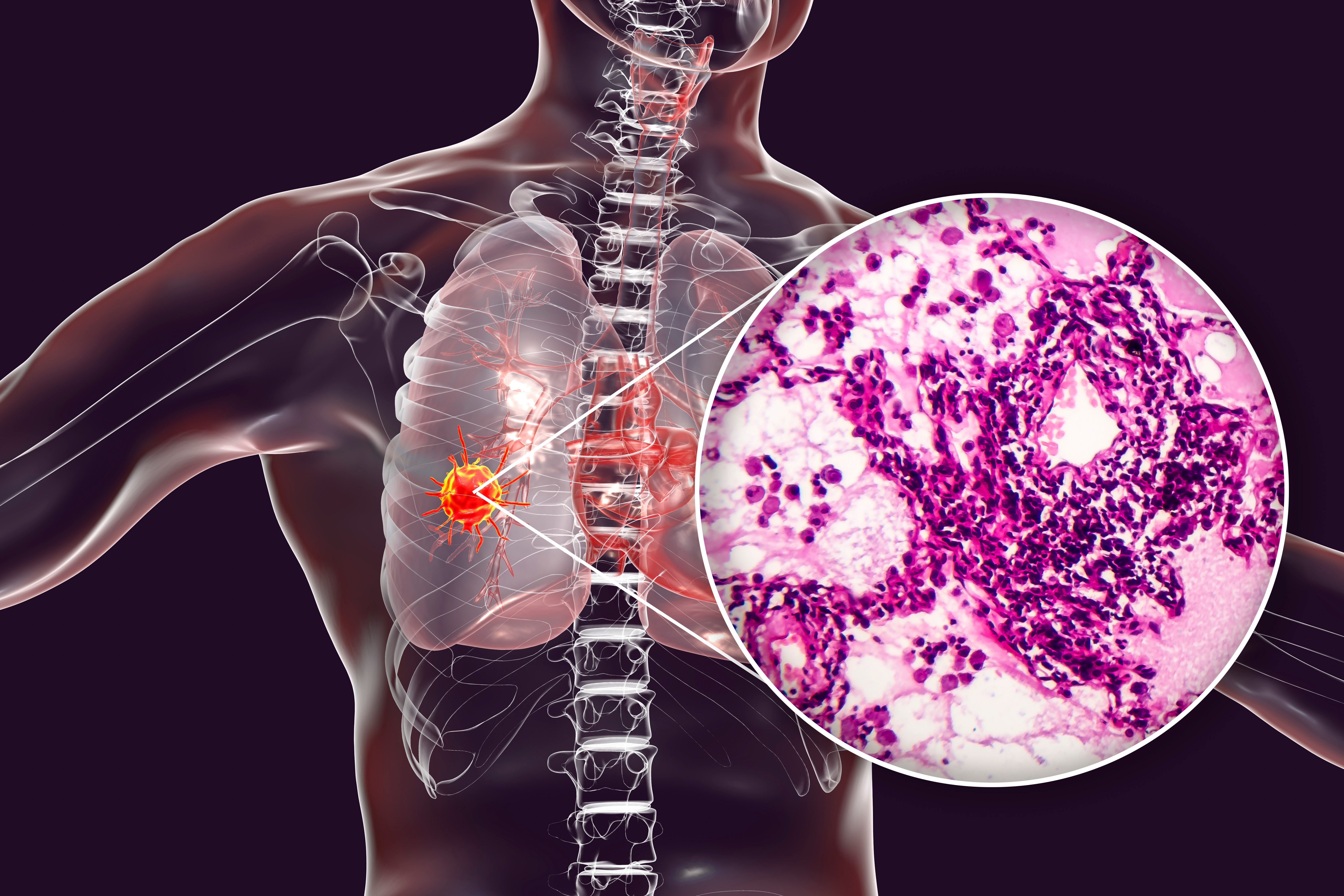











Gilead's share price fell 10% today after it announced that Trodelvy, an antibody-drug conjugate, failed to meet its overall survival end point in a trial testing it as treatment for metatstatic non-small cell lung cancer.

Gilead's share price fell 10% today after it announced that Trodelvy, an antibody-drug conjugate, failed to meet its overall survival end point in a trial testing it as treatment for metatstatic non-small cell lung cancer.

Post-operative mortality rates decreased 30 and 90 days after surgery.

While tissue biopsy is currently recommended as the gold standard for determining mutations in non-small cell lung cancer, its success is not guaranteed, prompting the consideration of the liquid biopsy method as a viable alternative.

Trial results revealed that tumors shrank in 40% of patients who received the 10-mg dose of tarlatamab and in about 32% of those who received the 100-mg dose.

Study suggests that low-fat meals may affect blood concentration levels, and high blood concentration has been correlated with a better response to the drug.
Findings from the ADAURA trial argue for starting treatment with the AstraZeneca drug early, says Yale’s Roy Herbst, M.D., Ph.D., the principal investigator.
In a clinical trial, researchers concluded that direct oral anticoagulants were non-inferior to low-molecular-weight heparin.
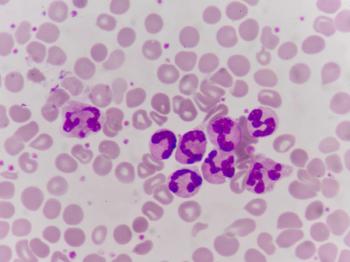
Researchers in Spain explore strategies for making tumor microenvironment less “tumor permissive.” Their experiments were in mice models of the lung cancer, so the findings are from early-stage research and far from the final word.
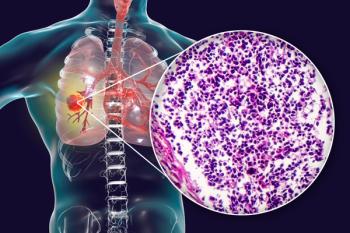
The findings provide evidence that the MYC family of oncogenes is a driver of resistance.

Study of patients treated with Tecentriq (atezolizumab) shows the risk of hyperprogression is .7% when the PD-L1 is used as a first-line therapy and 8.8% when it was used in later lines of therapy.

Researchers find an association between depression and biomarkers for inflammation, which may mean a poor prognosis.

South Korean researchers report results that show pencil-beam scanning proton therapy may lower the risk of severe radiation-induced lymphopenia in people treated for lung cancer.


A study of patients with incurable lung cancer suggests that volatile organic compounds may be useful, objective indicators of how soon someone may die.
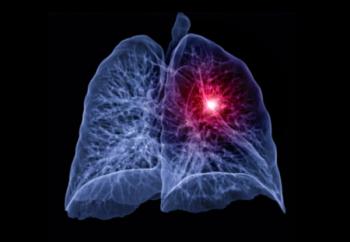
A real-world evidence study shows an advantage in median overall survival among non-small cell lung cancer patients who were treated with second-line immunotherapy compared to those treated with chemotherapy. Multivariable analysis showed healthcare resource utilization was comparable.

Side effects from Opdivo, Yervoy and Keytruda that affect the eyes are relatively rare but can be serious. A recent review identified 290 cases.
Treatments aimed at certain mutations have proliferated and moved upstream to earlier-stage lung cancers. But there are many questions about insurance coverage and which tests to use to identify the biomarkers that help guide treatment.
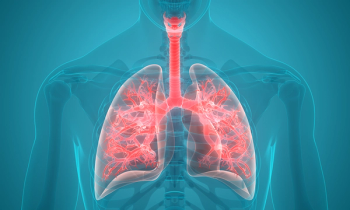
Although smoking is the predominate risk factor for lung cancer, about 1 in 5 cases cases are believed to be linked to genetic factors.

“Lung cancer screening is a great example of the problem,” says the former chief medical and scientific officer for the American Cancer Society in this third of four-part video series.
Lowering the age and smoking history standards would result in substantially more Blacks and women being eligible for screening.