
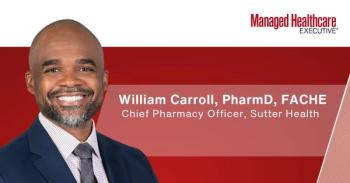
Will Carroll, Pharm.D., of Sutter Health says future pharmacy leaders need business, finance and AI skills, and health systems need real sponsorship.

Lauren Gordon is the Lead Strategic Content Lead at Managed Healthcare Executive, where she covers the policy, business, and clinical trends shaping the healthcare industry — from biosimilar market dynamics to payer strategy and specialty drug spending. Her reporting translates dense regulatory and financial data into clear, actionable insight for healthcare executives, payers, and providers.
Before joining MHE, Lauren wrote health profiles for Parade.com and helped launch the healthy eating vertical at The Daily Meal, building a foundation in consumer health journalism before shifting into healthcare policy and industry reporting. Throughout her career, she has worked directly with both patients and providers to develop accurate, accessible content on complex healthcare and policy topics.
A Temple University graduate, Lauren earned her B.A. in Journalism & Communications.
Will Carroll, Pharm.D., of Sutter Health says future pharmacy leaders need business, finance and AI skills, and health systems need real sponsorship.
Will Carroll, Pharm.D., of Sutter Health says pharmacy is often handed strategy to execute instead of shaping it, and must show value in C-suite terms.
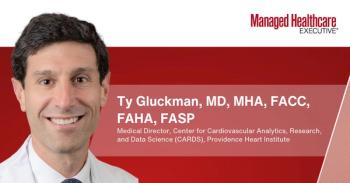
Ty Gluckman, M.D., says undertesting and undertreatment are the biggest gaps in lipid care and calls on leaders to invest in cardiovascular prevention.
Ty Gluckman, M.D., says the 2026 dyslipidemia guideline brings back risk-based LDL goals, and clinical inertia, not access, is now the biggest barrier.

Stanford Health Care’s Janjri Desai, Pharm.D., says pharmacists improve outcomes but often can’t bill for it, making billing parity key to growing services.
Stanford Health Care’s Janjri Desai, Pharm.D., says pharmacy should be treated as a clinical service line, not just a 340B financial workhorse.
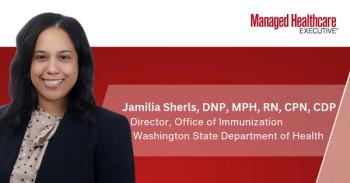
Jamilia Sherls, DNP, MPH, RN, CPN, CDP, of Washington’s health department says health systems should look to AAP and AAFP schedules and build on patients’ trust in providers.
Jamilia Sherls, DNP, MPH, RN, CPN, CDP, of Washington’s health department says a stayed schedule overhaul cutting recommended child vaccines from 17 to 11 could upend coverage.
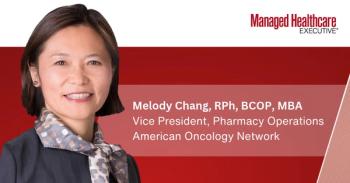
Melody Chang, R.Ph., says payers cover bispecific and CAR-T drugs but not the monitoring that lets community practices deliver them safely at lower cost.
American Oncology Network’s Melody Chang, R.Ph., says 18% of its first 70 outpatient bispecific patients had CRS, all low grade with no hospitalizations.

UC Davis Health’s Tiffany Phung, Pharm.D., and Tim Cutler, Pharm.D., say staff-driven ideas protect research independence in industry partnerships.
UC Davis Health’s Tiffany Phung, Pharm.D., and Tim Cutler, Pharm.D., say research justifies services and opens doors to limited distribution drugs.

Rex Hoffman, M.D., MBA, says physician shortages and burnout are the most underestimated pressures on health system.
Rex Hoffman, M.D., MBA, of Providence Holy Cross walks through a CMO’s day in a hospital that often runs 85% to 100% full, from safety huddles to discharges.

As the pharmacist pipeline tightens, leaders from UC Davis Health, UCSF Health, and Sutter Health say financial sustainability now depends as much on capacity as on cost.

A City of Hope-American Oncology Network panel on what community practices actually need — clinical governance, pharmacy authority, and hospital agreements — before they can safely deliver CAR-T and bispecifics outpatient.

New data from Sutter Health suggest the real gap in GLP-1 access is physician awareness, not insurance coverage — and fixing it closed outcome disparities across every racial and ethnic group.

David Chen, PharmD, explains how physician-led formulary decisions — not rebates — power Kaiser Permanente’s biosimilar strategy, and why he thinks other health systems could do the same.
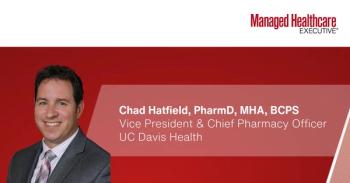
Chad Hatfield, Pharm.D., of UC Davis Health, says rebate model readiness starts with a spend review and data that pharmacy and IT can pull consistently.
Chad Hatfield, Pharm.D., of UC Davis Health, says 340B savings fund free clinics and mental health care that could shrink as the program’s future shifts.

During the Health System Executive Summit, Candy Tsourounis, PharmD, and Elise Wozniak, PharmD got candid about the barriers and financial risk surrounding this innovative therapy.

Foundational Pharmacy Strategies’ Christine Johnston on how rebate structures, pending legislation, and a stalled pipeline are reshaping — and threatening — the biosimilar market heading into 2027.

Fariha Abbasi-Feinberg, MD, discusses underdiagnosed sleep disorders, what a recent insomnia-stroke study does and doesn't prove, and where health plan policy still lags behind the evidence.

Topical steroids remain first-line for chronic hand eczema, but long-term use can thin the skin and leave patients with poorly controlled disease.

New unattended sleep testing codes take effect Jan. 1, 2027 — but a dispute over how CMS values them could shape access to the cheaper alternative to in-lab sleep studies.

As Congress weighs dueling bills to end the twice-yearly clock change, mounting research ties the transition to spikes in strokes, heart attacks and depression — a cost payers can’t afford.

The trade group argues CMS exceeded its authority with GLOBE, a Medicare Part B model tying drug rebates to prices in 19 other countries.

Biosimilars can cost $600 a month versus $6,000 for branded rivals, but PBM rebate incentives push formularies toward pricier drugs, says Christine Johnston.

The approval, alongside biosimilar Ponlimsi, completes Teva's denosumab portfolio spanning oncology and osteoporosis care, arriving as biosimilars continue to generate billions in savings for patients and the U.S. health system.

A recent study revealed that dermatology remains one of the most underserved areas of care and it is impacting both payers and patients.

September 23rd 2026


