


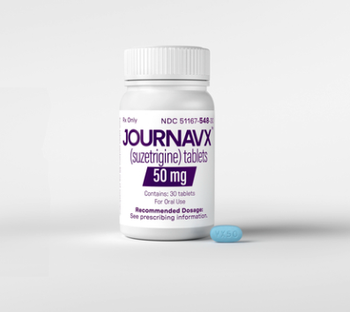
One year after FDA approval, Journavx (suzetrigine) offers a promising non-opioid option for acute pain, but experts have concerns about long-term safety, opioid-sparing effects and real-world use.

Briana Contreras is an editor at Managed Healthcare Executive, where she covers the clinical, business and policy developments that matter to payers and health plan leaders, with an additional focus in multiple clinical spaces. Her reporting spans from new cancer therapies and clinical trial data to drug affordability and biosimilars, pharmacy benefit management (PBM) and health plan operations, giving healthcare executives clear context on how new evidence can affect coverage and care decisions.
Experience:
Before joining MHE in 2019, Briana was a reporter at The Morning Journal in Lorain, Ohio, west of Cleveland, where she covered local government, community news and the issues affecting residents across Lorain and Erie counties. She reported on city council, downtown redevelopment, library and school projects, local business, nonprofits and breaking news in Elyria, Lorain and nearby communities.
Education:
Briana graduated from Cleveland State University with a B.A. in Journalism and Promotional Communication.
One year after FDA approval, Journavx (suzetrigine) offers a promising non-opioid option for acute pain, but experts have concerns about long-term safety, opioid-sparing effects and real-world use.

A new report found that despite widespread AI adoption in U.S. health systems, many patients still struggle to access care due to gaps in communication, trust and care navigation.

Get clear, expert-backed answers to the biggest questions surrounding the Great Healthcare Plan, with insights from Emma Wager of KFF and industry experts including Jeffrey Casberg, Lindsay Bealor Greenleaf and Luke Greenwalt. This FAQ breaks down what proposed changes to drug pricing, PBMs, subsidies and insurance coverage could mean for your organization — and what to watch as policies take shape.

Doctors should consider both cultural habits and genetic differences when diagnosing skin conditions in Asian children, according to Joseph Lam, M.D., as some are linked to traditions, others to inherited risks and some remain not fully understood.

CEO of Veradermics, Reid Waldman, M.D., shared that faster hair growth and shifting patient views on prescription treatments could play a key role in improving adherence and outcomes for pattern hair loss.
At the 2026 American Academy of Dermatology meeting, Reid Waldman, M.D., shared data showing that Veradermics’ investigational oral drug VDPHL01 produced faster, more consistent and greater hair growth than existing minoxidil treatments.

A new JAMA study compares the U.S. and South Korea, revealing sharper income-driven gaps in access, spending and outcomes, and why policy fixes matter.

Jefferson health and Ipendence Blue Cross are working together to improve early dementia detection and care coordination in primary care, helping patients receive support sooner and stay healthier at home
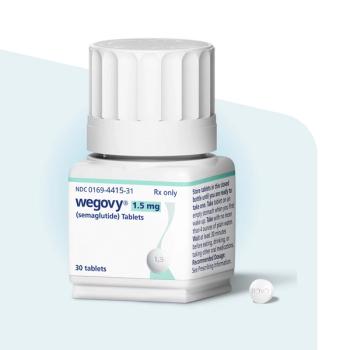
This FAQ outlines what managed care leaders need to know about emerging oral GLP-1 therapies, including their clinical uses, growing demand and potential impact on healthcare costs and coverage.

Chronic back pain amplifies sound unpleasantness; fMRI links it to sensory circuits, and pain reprocessing therapy may help normalize responses.

CLDN18.2-high gastroesophageal cancer appears more common and could predict a stronger HER2 therapy benefit but a weaker immunotherapy response.

IBX and Jefferson target earlier dementia diagnosis, support caregivers and use AI data to keep patients safely at home and cut costs in new dementia care program.
Primary care dementia program adds community health workers to streamline screening, workups, and family guidance for earlier Alzheimer’s care.
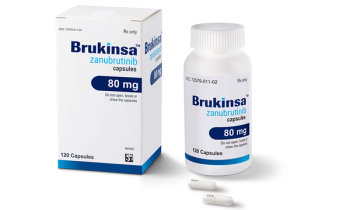
A study across B-cell lymphomas shows zanubrutinib delivers higher complete and overall response rates than acalabrutinib or ibrutinib, guiding BTK inhibitor choice.
James Ellison, M.D., M.P.H., and IBX’s Rodrigo Cerdá, M.D., M.P.H., back Jefferson Health primary care screening to catch dementia care needs early and coordinate support.

Phase 4 acute pain study shows Journavx helps more than 90% of plastic surgery patients achieve opioid-free recovery with strong ratings and mild side effects.


Vakharia was in the inaugural class of our Emerging Leaders in Healthcare recognition program in 2017. We circled back to find out what he is up to.

As World Obesity Day spotlights rising obesity rates, GLP-1s reshape treatment and coverage debates, with persistence, affordability and long-term value driving payer decisions.

Zahra Mahmoudjafari explains how cell and gene therapy programs succeed with strong infrastructure, pharmacy leadership, payer alignment, and workflows protecting safety and finances.
AI in managed care cuts documentation and burnout, but ROI, governance and transparency define success—learn what leaders must track and safeguard.

GLP‑1 drugs transform obesity and diabetes care, but soaring employer costs spark new coverage rules, safety concerns, and major pipeline updates.
Zahra Mahmoudjafari shares how The University of Kansas Cancer Center builds sustainable cell and gene therapy programs amid new CMS access rules.

Cardinal Health 2026 Biosimilars Report shows biosimilars’ savings surge, but predictable reimbursement drives physician adoption amid FDA streamlining.
Early pharmacy leadership helps health systems build safe, sustainable cell and gene therapy programs, aligning contracts, workflows, regulations and payer realities.
Health systems learn why cell and gene therapy success depends on workflows, staffing, and finances—not just science—and how to build them.