The purchase comes as the "big 3" drug wholesalers are coming under scrutiny for their market dominance and the possible perils of vertical integration.
In this interview, Marc Elia argues that monoclonal antibodies like VYD2311 offer a fundamentally different approach to COVID-19 prevention than vaccines, delivering protective antibodies directly rather than triggering an immune response, which he says could improve tolerability.
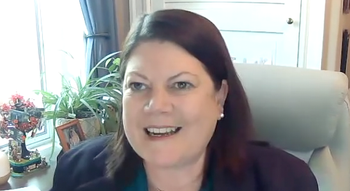
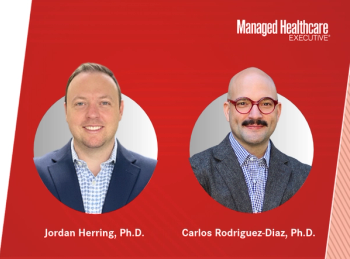
In this recent discussion with Managed Healthcare Executive, Marc Elia, Chairman of the Board at Invivyd, explains how the trials differ, how VYD2311 was engineered from Invivyd's earlier antibody pemivibart and which patient populations the company is targeting first.
This interview has been edited for length and clarity.
MHE: What is the objective of the LIBERTY trial, and how does it differ from the DECLARATION trial?
Elia: These are companion studies within the broader REVOLUTION clinical program, which is going to show the world what we think is possible from monoclonal antibody-based prevention of COVID-19. DECLARATION is more of a standard efficacy assessment vs. placebo; it asks the question, ‘To what extent does this monoclonal antibody reduce the incidence of symptomatic COVID-19?’ meaning ‘Do you get sick less?’ I think that endpoint is almost beyond the reach of vaccination today. Vaccines don't particularly stop people from getting sick. COVID vaccines are very good at stopping people from dying of COVID, but most of the intermediate to higher-end endpoints, like not getting sick — that’s a place where we think our technology can really shine.
LIBERTY asks the question, ‘How safe and tolerable is a monoclonal antibody versus a COVID vaccine?’ A lot of people haven't had a chance to think through the difference between a vaccine and a monoclonal antibody, but those differences are not just important scientifically; we think they're important experientially. Remember, a vaccine doesn't directly protect you; it educates your immune system, which then protects you. Now, that education, so to speak, can involve a huge amount of inflammation, and a lot of people, I think, including recent studies, have demonstrated once again that COVID vaccination can leave you feeling sick. Our belief is that one of the things that makes a monoclonal antibody more interesting is that we just give you the antibody your immune system wishes it could make.
We hope our medicines are much easier to tolerate than a vaccine. Poor tolerability is one of the biggest reasons people don't use the Covid vaccine.
MHE: How was VYD2311 engineered?
Elia: VYD2311 is our latest in a series of monoclonals, which are all derived from a common ancestor.
We looked at pemivibart, our current authorized antibody, and we delicately tweaked it at a handful of sites right in the binding region of the antibody. Those tweaks give us a much better antibody, more potent, with a longer half-life overall.
Which groups of people would be the most able to benefit from VYD2311?
Elia: One classically worries about three groups of humans: immunocompromised persons, the very old, and the very young, meaning essentially babies.
I think of those three big buckets as our destination for now. In the long run, it really ought to be for anyone who doesn't want to get sick.
What would the success of the REVOLUTION program look like for public health adoption?
Elia: There's never been a population vaccine that requires as much improvement as the COVID vaccine requires.
Our current monoclonal, which is not built for big populations but is built for much narrower populations, has been shown to be exceedingly effective in clinical trials.
Wouldn't it be a wonderful thing for public health if we could scratch this virus off the list? The last seven years have involved a certain amount of medical dismay and ongoing damage, whether it's in the form of acute infections or, for example, cardiothoracic issues and follow-ons from COVID. The world we exist in in 2026 is a lot less healthy than it was in 2018. The more we scale VYD2311, the closer we can get back to a time before this virus was pervasive and burdensome.