Hispanic HIV incidence rose 16.8% in antisanctuary counties after the 2018 public charge announcement, relative to baseline counties, a new study found.
Florida’s planned AIDS Drug Assistance Program cuts could strip more than 16,000 people of life-saving HIV medications, a move Colleen Kelley, M.D., M.P.H., warns will increase illness, deaths and HIV transmission while sowing fear among already vulnerable patients.
More than 16,000 Floridians could lose access to their HIV medication do planned cuts to the state’s AIDS Drug Assistance Program (ADAP), which is part of the Ryan White HIV/AIDS Program that provides free HIV medication for patients who cannot afford it.
Due to a lack of additional Ryan White funding and rising insurance premiums, the program plans to reduce income eligibility from 400% of the federal poverty level to 130%, a move that will save the state more than $120 million, according to a
Patients who depend on the government program could lose access starting March 1, when the changes are set to take place.
In the meantime, activists are speaking out and looking for ways to fight the change.
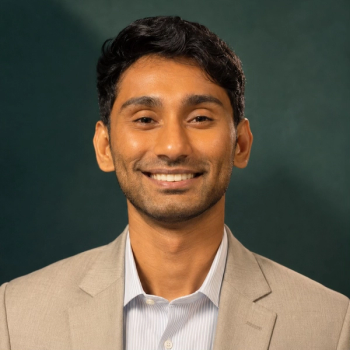
Colleen Kelley, M.D., M.P.H., immediate past chair of the HIV Medicine Association and infectious disease and HIV specialist in Atlanta, Georgia, recently sat down with Managed Healthcare Executive to discuss the fallout of these cuts going through, why they don’t make sense and how she’s helping her patients cope.
This interview has been edited for length and clarity.
MHE: The proposed cut is from at or below 400% of the federal poverty level to at or below 130% of the federal poverty level. Why such a drastic cut?
Kelley: Since most HIV medications come with a high price tag, my sense is that there's some thought that if they limit access to this medication, they can somehow cut costs in the state of Florida. This isn't a completely absurd idea. The problem is that we've seen none of the calculations that go into this, and none of the processes that would need to occur for people to access other medications have been laid out. All we've heard is that it's just going to come off the formulary in a few weeks, without any alternatives offered for people.
Much of the impetus for these cost-cutting discussions has come on the heels of the One Big Beautiful Bill Act, which proposed significant cuts to Medicaid and without an extension of the ACA subsidies as well. We anticipate that uninsured rates will go up because of these new policies, and that's what the Ryan White HIV/AIDS Program was designed to do—to fill the gap for people who are not insured.
MHE: How many Floridians could this affect?
Kelley: It's estimated these cuts in Florida could affect upwards of 16,000 people with HIV.
Florida has a high prevalence of HIV, and because there is a lack of Medicaid expansion in Florida, many Floridians rely on the Ryan White HIV/AIDS Program for their medications. These are not frivolous medications—these are medications that people need to survive. Without these medications, they will die.
It's not clear to me that Florida has done the calculations, the cost-effectiveness, and the cost-benefit ratio of making these cuts versus what will happen when people get sick and are in the hospital and are dying, and our increased rates of transmissions occur, because that is the outcome that we'll be looking at.
MHE: Biktarvy is one of the medications people are at risk of losing access to. Why is this especially devastating?
Kelley: Biktarvy is a single-tablet regimen, meaning it's one pill once a day to treat HIV. It is extremely well tolerated and has no side effects, but it is a brand-name medication, and like most HIV medications, it's quite costly.
I've seen estimates that about 60% of people with HIV may be taking Biktarvy in Florida. That is a market change from the beginning of the epidemic, when people were taking many pills, several times a day, with terrible side effects.
MHE: The change is set to take place on March 1, 2026. What are advocacy groups doing in the meantime?
Kelley: Advocacy groups have pulled out all the stops. People are reaching out to their elected officials. They are going to the media. They are trying to make people understand that when you cut access so abruptly, people will get sick and die and there will be increased rates of HIV transmission in Florida.
The AIDS Healthcare Foundation filed a suit that proposed that these rules were not implemented in the proper process, and we've seen announcements from Florida that they will start the rulemaking process with public comment and announcement prior to implementation. However, it's pretty opaque what’s going to happen beyond that.
MHE: Are similar cuts happening outside of Florida?
Kelley: I practice in Georgia, and I think, in the Southeast, people who practice HIV medicine are watching what happens in Florida very carefully. I think we're all very fearful that similar things will be following suit with our own state AIDS Drug Assistant Programs. While my patients and my practice are not directly affected by these decisions right now, we are all quite concerned that these decisions will have a ripple effect across the country.
MHE: What is the general morale amongst your patients currently?
Kelley: People are scared, many people are angry, and many people are confused about why someone would even think that this is a good idea, and so we do have to spend some time in the clinic, one-on-one with patients, trying to mitigate their fears and ensure that they're still paying good attention to themselves and their health and their families.
Many of our patients are gender non-conforming, transgender, or immigrants and these issues have hit them particularly hard, and so the fear and confusion and anger are just amplified in those populations.