


New findings reveal that early treatment with Syfovre significantly improves vision preservation in geographic atrophy patients, according to Robert Goldberg, M.D., MBA, of the Bay Area Retina Associates.
New findings reveal that early treatment with Syfovre significantly improves vision preservation in geographic atrophy patients, according to Robert Goldberg, M.D., MBA, of the Bay Area Retina Associates.

Interest in surgical advancements such as retinal detachment repair is driven by the need for balance within the field and a new generation entering the workforce, according to Gaurav K. Shah, M.D., program chair of ASRS 2025.
A session on a surgery technique to treat macular holes using amniotic membrane transplants will be one of the highlights at the 2025 meeting of the American Society of Retina Specialists, according to Gaurav K. Shah, M.D., program chair of ASRS 2025.
There will be a greater focus on surgical topics at the 2025 meeting of the American Society of Retina Specialists, compared with previous years, which reflects the need for balance within the industry, according to Gaurav K. Shah, M.D., program chair of ASRS 2025.
Surveys of American Society of Retina Specialists members have revealed a preference for physicians’ experiences with new therapies, rather than summaries of clinical trial data, according to Gaurav K. Shah, M.D., program chair of ASRS 2025.

Dante J. Pieramici, M.D., of the California Retina Research Foundation, explains changes made to the Susvimo port delivery system that are designed. to prevent the septum dislodgment that led to Genentech pulling the product off the market.
The two-year study period might not have been long enough to capture tadalafil's effect, which could be positive for dry age-related macular degeneration (AMD) and negative for wet AMD.

Here’s what you missed this week on Managed Healthcare Executive.

Results of the American Society of Retina Specialists annual survey provide insight into opinions of its members and their current and future practice patterns.

Results from retrospective real-world studies presented at American Society of Retina Specialists annual meetiing put the risk of retinal vasculitis from Syfovre at 1 in 1,330 patients. But other results presented at the meeting supplied evidence that Syfovre fends off vision loss caused by geographic atrophy, an advanced form of dry age-related macular degeneration.

Session on diabetic retinopathy includes results from trials of a variety of approaches to retinopathy.

Findings from an analysis of data from the pivotal PHOTON trial didn't show any increased risk of higher intraocular pressure building from injections of the high-dose, 8-mg version of Eylea.

Teleophthalmology enables earlier access to eye care for patients with diabetes, but vulnerable populations often have worse insurance coverage.

But the presenter downplayed the rivalry between the two new treatments for geographic atrophy. “I think we are lucky to have multiple therapies,” saidPaul Hahn, M.D., Ph.D. of NJRetina.

In this part two interview with Parisi Emami-Naeini from UC Davis Eye Center, she explains that improvements in methods and instruments, faster procedure time and declining reimbursement rates have made pars plana vitrectomy the preferred method for repairing detached retinas, along with reduced training in scleral buckle procedures for new retina specialists.
The study's results were presented today at the American Society of Retina Specialists meeting in Stockholm, Sweden, by Parisi Emami-Naeini, M.D., M.P.H., a retina specialist at the Tschannen Eye Institute at the UC Davis Eye Center.
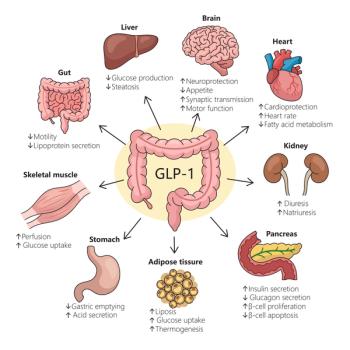
But the Mayo Clinic ophthalmologist who presented the findings stressed that it was “hugely reassuring” the GLP-1s were comparable to older diabetes drugs with respect to retinopathy given all their other advantages.
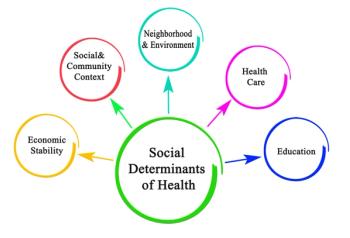
Economic instability and other social determinant of health can impact whether people with diabetes seek out healthcare for their eyes, putting them at risk for vision loss.

Dr. Charles C. Wykoff discusses how a one-time gene therapy could benefit patients with wet age-related macular degeneration.
Dr. Charles C. Wykoff discusses interim results from a phase 2 trial of a gene therapy to treat with patients with wet age-related macular degeneration.
Emerson, the program chair of ASRS and one of the organizers of the meeting's content, is a retina specialist at Retina Consultants of Minnesota and medical director at the Phillips Eye Institute in Minneapolis and an associate adjunct professor at the University of Minnesota.
Geoffrey G. Emerson of Retina Consultants of Minnesota and medical director at the Phillips Eye Institute in Minneapolis and an associate adjunct professor at the University of Minnesota, previews the 2024 annual meeting of the American Society of Retina Specialists (ASRS) starting Wednesday, July 17, in Stockholm, Sweden.
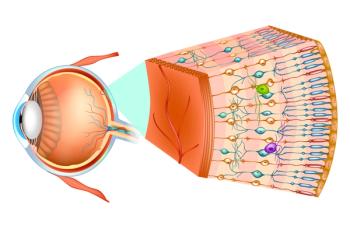
AXNOO7, an investigational agent for geographic atrophy, did not affect geographic atrophy lesions but showed positive effects of tests of visual acuity. A novel, neuroprotective mechanism of action may be why.
The approval of an ophthalmic bevacizumab biosimilar might mean the end of low-cost, repackaged Avastin as an anti-VEGF treatment for retinal diseases, with the unintended consequence of adding $457 million to Medicare B spending.
In an interview with MHE, Parikh, a retina specialist in New York and director of healthcare delivery research for the Department of Ophthalmology at NYU Grossman School of Medicine, described the current situation of biosimilars in retinal medicine and the attitudes of retinal specialists about using the lower-cost alternatives.

In an interview with MHE, Paul Hahn, M.D., Ph.D., vitreoretinal surgeon at NJRetina, talked about the latest geographic atrophy treatments, pegcetacoplan and avacincaptad pegol, from a coverage and healthcare resource utilization standpoint, as both will potentially be available for the chronic disease that previously had no treatments.
Paul Hahn, M.D., Ph.D., vitreoretinal surgeon at NJRetina, chatted with MHE about the latest geographic atrophy treatments and shared key takeaways found from clinical trials examining them. Hahn presented on macular degeneration today at the American Society of Retina Specialists annual meeting in Seattle.

ABBV-RGX-314 delivers a gene encoding a therapeutic antibody fragment to inhibit vascular endothelial growth factor (VEGF). Early results show it is well-tolerated and leads to improved disease.

Researchers used the American Academy of Ophthalmology's IRIS database to quantify the risk of endophthalmitis — inflammation of intraocular fluids — after injections with anti-VEGF drugs. They found that post-injection endophthalmitis occurs, on average, once every 3,500 injections.

Samsung Bioepsis' SB15 was comparable to Eylea (aflibercept) in a 56-week randomized clinical trial that included a rerandomization at 32 weeks. The rerandomization resulted in 111 study volunteers switching from Eylea to the biosimilar for the last part of the study.