A new survey of Medicaid-eligible New England residents examines healthcare inequities in detail.

A new survey of Medicaid-eligible New England residents examines healthcare inequities in detail.

This latest grant is part of a larger $500 million CMS program designed to identify and support communities in need.

A recent study predicts a $34 to $145 billion annual cost for semaglutide due to Medicare’s decision to cover semaglutide for overweight patients with cardiovascular disease.

Here’s what you missed this week on Managed Healthcare Executive.

Having a first-degree relative with colorectal cancer increases risk by two to four times.

Manuka honey inhibited the growth of breast cancer tumors by 84% in mice.

Death and infection rates this year caused by the latest clade 1b strain have already surpassed last year's numbers. At this time, it’s unclear if having HIV increases the risk of mpox.

Here’s what you missed this week on Managed Healthcare Executive.

The Rx Save Card is a new, employer-funded, pre-paid pharmacy discount service that allows consumers to pick between PBM prices and prices available through traditional discount cards.

This therapy is a first-in-class treatment for chronic graft-versus-host disease, which develops in roughly 42% of those who receive a stem cell of bone marrow transplant.

In 2016, Medicare expenses for traumatic brain injuries totaled more than $16 billion and car crashes were the third-leading cause of hospitalizations, emergency room visits and deaths.

Although half of all BRCA1 and BRCA2 mutation carriers are men, cancer screening rates lag when compared with women.

This first-in-class treatment targets multiple disease mechanisms such as itch and inflammation associated with this condition.

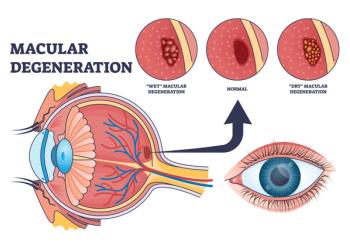
Enzeevu is biosimilar to Eylea (aflibercept), which was FDA-approved in 2019.

Here’s what you missed this week on Managed Healthcare Executive.

Neffy is the first epinephrine product that does not need to be administered by injection and the first new epinephrine delivery method in 35 years. It will be available at a starting price of $25.

Crexont kept symptoms at bay for an extra 30 minutes a day when compared with other Parkinson’s drugs.

Breast cancer treatment delays can lead to a higher mortality rate and more expenses.

Experts predict that from 2024 to 2032, the breast cancer market will grow at a CAGR of 7.09%.

Both regions experience disproportionately high HIV case numbers due to social stigmas and isolation.

Here’s what you missed this week on Managed Healthcare Executive.

Adults with heart failure with preserved ejection fraction and obesity reported a 38% overall decrease in heart failure outcomes such as hospitalization and death when compared with placebo.

Long-acting HIV treatments could be the key to diminishing HIV cases and getting Medicaid beneficiaries the help they need.

This is the latest funding announcement made by the Health Resources and Services Administration’s Enhancing Maternal Health Initiative.

New research expands on previous knowledge that breast cancer survivors are more at risk for depression than people without breast cancer.

Here’s what you missed this week on Managed Healthcare Executive.

Keri Althoff, Ph.D., discusses how a model developed at Johns Hopkins can assess the comorbidities that patients with HIV may face by 2030.

Improving equity for people with HIV requires health leaders to recognize that patients have different risk factors, Keri Althoff, Ph.D., of Johns Hopkins says.

An overview of the complex relationships between herpes simplex virus, human papillomavirus, cytomegalovirus and HIV.

Younger transgender and gender diverse individuals see a greater stigma around PrEP, but experts are still unsure why.